








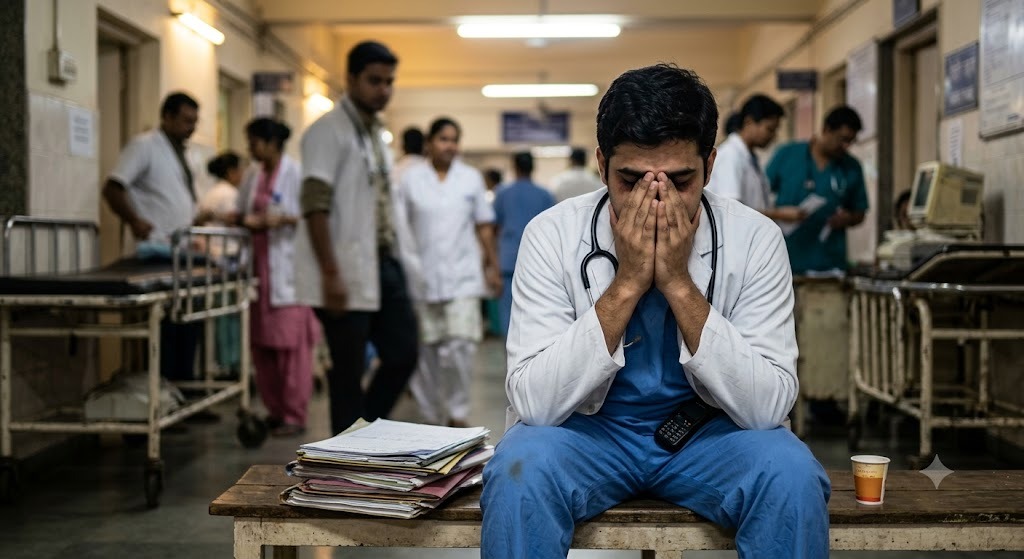
Every day, doctors are expected to make important decisions, care for patients and remain alert during emergencies. But who looks after their own well-being when the demands of medical training and hospital work become overwhelming?
The recent death of Dr Shivasharanappa Patil, a first-year postgraduate resident at Mumbai’s Lokmanya Tilak Municipal General Hospital, also known as Sion Hospital, has brought this question into focus. The doctor, who was from Karnataka, was found dead in his hostel bathroom on Saturday, 10 October. Police registered an accidental death report, and an investigation was underway, according to reports published on 11 and 12 October 2026. The circumstances surrounding his death must be established through the investigation.
When caring for others becomes a demanding job
Resident doctors play an important role in India’s healthcare system. They examine patients, assist in procedures, respond to emergencies and work alongside senior doctors while pursuing postgraduate medical education.
Their responsibilities can involve long shifts, irregular sleep and limited opportunities to rest. When hospitals face staff shortages or heavy patient loads, managing these responsibilities can become even more challenging.
However, demanding work should not mean that rest and well-being become optional. Doctors need adequate recovery time to maintain their own health and provide safe, attentive care to patients.
The Maharashtra Association of Resident Doctors (MARD) raised concerns about prolonged duty hours, excessive workloads and insufficient staffing following Patil’s death. The association called for regulated working hours, mandatory rest periods and accessible mental health support.
These demands highlight a wider question for medical institutions: how can hospitals maintain patient care standards while ensuring that the people delivering that care are not neglected?
The mental health challenge in medical education
The need for support is also reflected in official research.
The National Medical Commission’s Task Force on Mental Health and Well-being of Medical Students reported that 31.23 per cent of postgraduate medical students surveyed had experienced suicidal thoughts at some point in their lives. This finding points to a serious concern among the students who participated in the survey, although it does not represent every postgraduate doctor in India.
A separate peer-reviewed study examining reported suicide deaths among medical students, resident doctors and physicians between 2010 and 2019 identified 105 reported deaths among resident doctors. The researchers also noted the lack of comprehensive, nationally representative data on suicide among medical professionals in India.
These findings underline the importance of taking mental health concerns seriously. They do not establish the cause of any individual death, but they show why institutions need reliable support systems and better monitoring of doctors’ well-being.
Building a healthier environment for doctors
Addressing these concerns requires more than expressing grief after a tragedy. Hospitals and medical authorities need to examine staffing levels, monitor duty hours, ensure adequate rest and make professional mental health support accessible without stigma.
Senior doctors and medical educators also have a role in creating an environment where residents can discuss difficulties and seek help without fearing humiliation or professional consequences.
Equally important is recognising that mental health concerns can have many causes. Workload may be one factor, but individual circumstances should not be assumed without evidence.
Caring for caregivers is a public responsibility
A hospital’s responsibility extends beyond treating patients. It also includes creating working conditions in which medical professionals can learn, recover and ask for help when they need it.
Dr Patil’s death has brought renewed attention to the challenges faced by resident doctors. Meaningful change will depend on whether the concerns raised lead to practical improvements in medical training and hospital working conditions.
Doctors dedicate their lives to caring for others. Ensuring that they, too, receive care, rest and support is an essential part of building a healthier healthcare system.
Subscribe Deshwale on YouTube


