






Think about the last time you went somewhere nice. A beach, a concert, a family dinner, or just a café you’d been meaning to try. Chances are you took a photo. Then another. Maybe a video. You might have screenshot the menu, saved the location, and later put up a story. None of this feels strange anymore. It feels automatic.
We live in a time when documenting life has become part of living it. Our phones are always there, ready to catch birthdays, sunsets, meals, holidays, conversations, and even the small moments that used to exist only in our heads. But here’s the quiet question behind all those photos and videos: Are we recording more because we’re scared of forgetting? Or are we remembering less because we record everything?
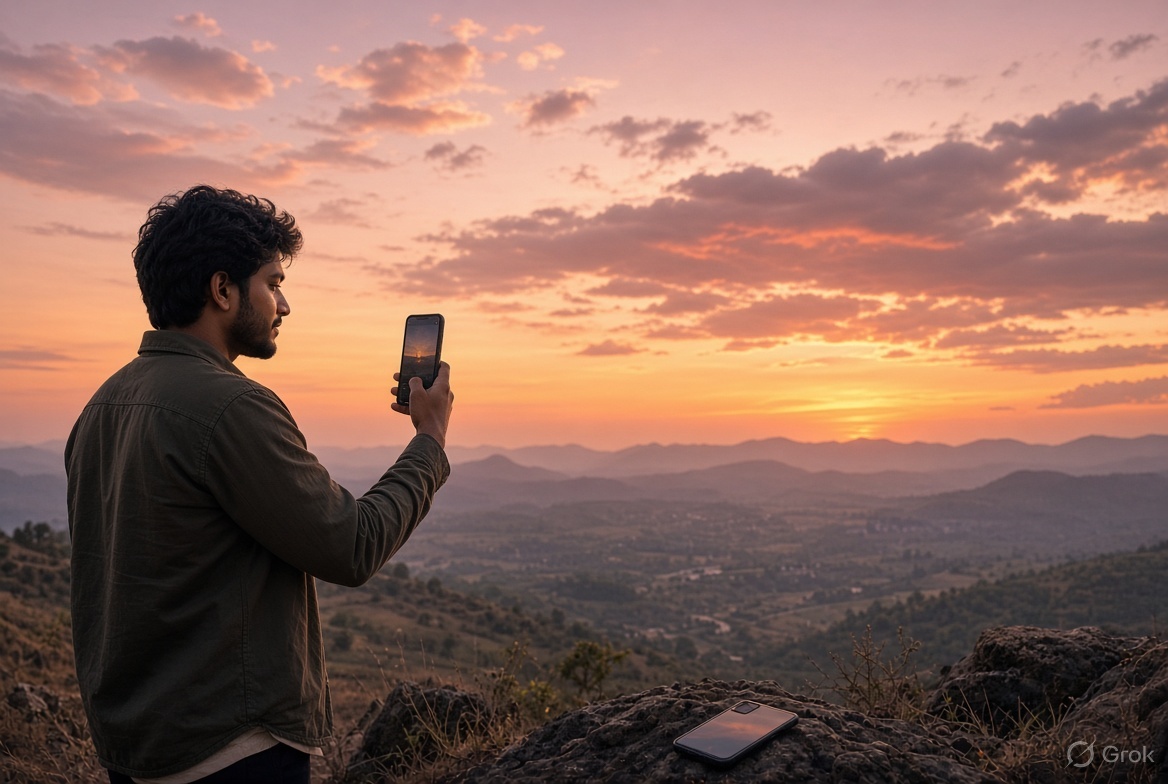
There’s nothing wrong with taking photographs. Photos help us hold on to people and moments that matter. Years later, one picture can bring back a face, a place, or a feeling you thought you’d lost. The problem starts when taking the picture becomes more important than being in the moment. Picture a beautiful sunset. Instead of just looking at the sky, you spend a few minutes finding the right angle, adjusting the light, and recording a video. You might even start thinking about how it will look on Instagram. By the time you put the phone down, the sun is gone. You end up with a perfect recording of the sunset but only a weak memory of actually watching it. Our phones make it easy to save moments. But saving something and remembering it are not the same thing.
Screenshots work the same way. We screenshot a funny message. We save an article to read later. We capture a recipe, a travel tip, a product, or a quote we like. The trouble is that “I saved it” can start to replace “I remember it.” Our phones fill up with thousands of screenshots we almost never open again. We save things because we’re afraid of losing them, but the pile becomes so big that finding anything later feels impossible. At some point the camera roll and screenshot folder turn into a giant external hard drive for our lives. And when everything is stored somewhere else, we feel less need to remember it ourselves.
Human memory was never meant to work like cloud storage. We don’t remember every detail of every day. We forget conversations, dates, faces, places, and small events. That can feel like a flaw, but forgetting helps us make sense of what we experience. Our minds keep what feels meaningful. A smell can take you back to your childhood home. A song can pull you into your school days. A certain street can remind you of someone you loved. Those memories are not perfect recordings. They are personal and incomplete, shaped by how we felt at the time. A photograph can show you what a room looked like. Your memory can tell you how it felt to sit in that room. That difference matters. When we lean heavily on photos and videos, we sometimes remember the act of recording more than the experience itself. We remember looking at the camera. We remember taking the picture. We remember posting it. The moment gets tied to the documentation.
There was a time when most photographs were taken for ourselves and our families. Now many are also taken for an audience. That changes how we experience things. At a concert, someone holds their phone up for a whole song. At a restaurant, the first thought after the food arrives is often, “Wait, let me take a picture.” A holiday can turn into a list of places to photograph. A wedding can become content. Even ordinary moments can feel unfinished if they aren’t documented. We are no longer only asking, “Do I want to remember this?” Sometimes we are also asking, “Will other people want to see this?” That small shift pulls our attention away from what’s right in front of us.
Constant documentation also brings pressure to make life look better than it feels. We don’t usually photograph the boring parts of a trip. We don’t post the argument before the family photo. We don’t upload the twenty minutes spent waiting for a delayed train. We capture the best angle, the best meal, the best smile, the best sunset. Over time this can create a strange relationship with our own memories. We start remembering an event through the polished pictures we made rather than through the full, messy experience we actually had. The camera roll becomes a highlight reel. Real life was always more complicated.
It would be too simple to say smartphones are ruining our memory. Technology can also help us remember. Photographs can be valuable. They help families keep old memories, let us revisit important moments, and keep people connected across distance. Digital records can protect information that might otherwise disappear. The problem is not the documentation itself. The problem is attention. If we are fully present while taking a photograph, there’s no issue. If we are constantly thinking about recording, posting, saving, and checking, we give less attention to the experience happening in front of us. And attention is one of the main ingredients of memory.
Perhaps the answer isn’t to stop taking pictures. Maybe we just need to be more selective. Take the photograph, then put the phone away. Record the first few minutes of the concert, then watch the rest without a screen. Save the recipe you actually plan to cook instead of collecting hundreds you will never open. Take a picture of the people at dinner, but also listen to what they are saying. Most of all, let some moments exist without evidence. Not everything needs to be photographed. Not every thought needs a screenshot. Not every beautiful place needs to become a post. Some experiences can stay a little imperfect, partly forgotten, and completely ours.
Years from now we may not remember most of the pictures sitting in our cloud storage. We may not even remember why we saved most of those screenshots. But we might remember the evening when we left the phone in the bag, watched the sunset until it disappeared, and simply stood there. Sometimes the moments we don’t document are the ones that stay with us the clearest.
Subscribe Deshwale on YouTube


