






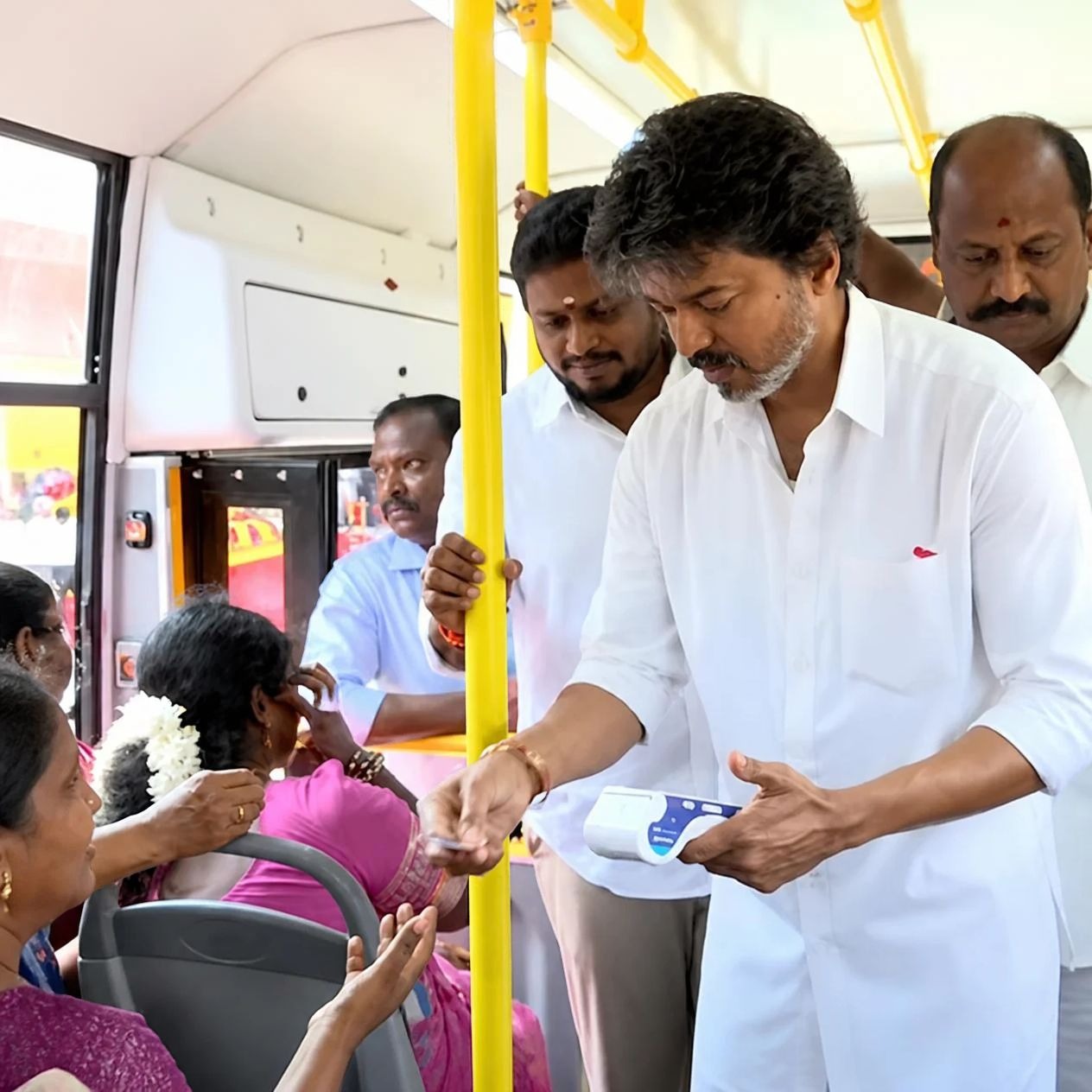
A bus ticket may look like a small expense, but for someone who travels every day, those small amounts can quietly become a significant part of the monthly budget. For a student travelling to college, a woman going to work, or someone travelling to a hospital or another essential service, the cost of reaching a destination can sometimes influence whether that journey is made at all. This is the larger human story behind Tamil Nadu’s expanded Vettri Payanam free travel scheme, which was launched on October 2. At the launch in Chennai’s Koyambedu bus terminus, Tamil Nadu Chief Minister C. Joseph Vijay took on a symbolic role as a bus conductor and personally handed tickets to women passengers.
Under the expanded scheme, women and transgender persons can travel free on several additional categories of government buses across Tamil Nadu. The expansion brings 12,692 government buses under the programme, covering about 69% of the scheduled buses operated by the state’s seven transport undertakings. Around 84.32 lakh women are expected to benefit every day. The newly covered services include Express, Limited Stop Service and Deluxe buses in cities and urban areas, along with Mofussil Ordinary and Ghat Ordinary buses on longer and hill routes. State Express Transport Corporation, or SETC, buses are not included.
The scheme does not introduce free bus travel for women for the first time. Tamil Nadu already had a free travel programme, earlier known as Vidiyal Payanam, which was available mainly on ordinary government buses. The latest expansion widens the number and types of services covered, including longer-distance routes.
And this is where a bus ticket becomes more than just a ticket.
For a woman who makes several journeys every week, removing the fare can mean keeping some money aside for household needs. For a student, it can make travelling to a college farther from home less expensive. For a working woman, it can reduce one recurring cost of commuting. The government has specifically cited education, employment, healthcare and essential journeys among the reasons for expanding the scheme.
There is also an important practical side to the programme. Electronic Ticketing Machines on the buses covered by the scheme have been integrated to record these free journeys, with testing and trial runs completed before the rollout. The government expects the expanded programme to cost around ₹6,000 crore annually.
The interesting part of this story is that the impact of such a scheme may not always be visible in one dramatic moment. It can appear in thousands of ordinary journeys: a student boarding a bus for college, a woman travelling to work, or a patient reaching a hospital without first calculating the fare in her head.
A free journey does not solve every problem connected with mobility, employment or opportunity. But removing one regular expense can make everyday travel easier for many people.
That is perhaps why the image of a Chief Minister handing out bus tickets is less important than what happens after the bus leaves the depot. The real story is happening on the roads, where those tickets represent journeys that people can now make without paying a fare.
Sometimes, a major social change does not begin with a grand gesture.
Sometimes, it begins when someone simply gets on a bus and goes where they need to go.
Subscribe Deshwale on YouTube


