









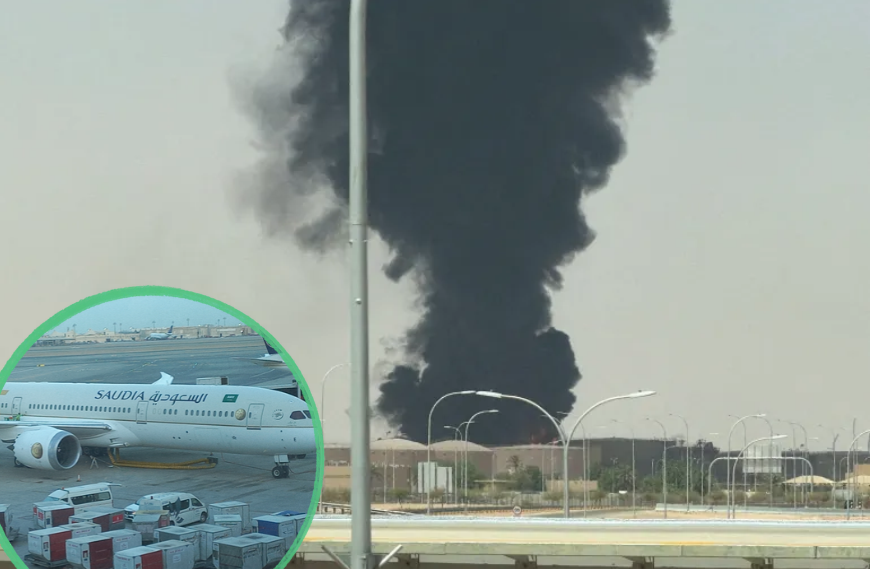
An airport is usually a place where people begin holidays, return home or travel for work. But in Saudi Arabia, a major international airport has become part of an escalating conflict, raising concerns about civilian safety and the possibility of a wider regional war.
Saudi Arabia’s King Khalid International Airport in Riyadh has faced repeated attacks attributed to Yemen’s Houthi movement. The latest reported strike on Sunday, 11 October, killed one person and injured 11, according to Saudi authorities. It followed a deadly attack on 10 October that killed 12 people and injured more than 300. <Cite refs={[“turn238900news3″,”turn238900news21”]}/>
The attacks are not just a security concern for Saudi Arabia. They highlight how a conflict within one country can affect neighbouring nations, international travel and regional stability.
Why Is Yemen Fighting Intensifying?
Yemen has been caught in a prolonged conflict between the Houthis and the internationally recognised government. The Houthis have controlled the capital, Sanaa, since 2014. Saudi Arabia has supported the Yemeni government in its fight to regain control of the country.
Fighting has intensified again following a renewed military offensive by government forces in October 2026. The Houthis have responded with missile and drone attacks targeting Saudi territory, including airports and other strategic facilities. Both sides have reported military gains, although some claims remain independently unverified. <Cite refs={[“turn238900news21″,”turn238900search17”]}/>
The breakdown of the relative calm that followed earlier ceasefire efforts has increased fears that the conflict could become more difficult to contain.
What Does This Mean for Ordinary People?
The impact of such attacks extends well beyond military targets. When airports come under fire, passengers face cancellations, delays and uncertainty. Airline crews and airport workers also face potential danger.
The attacks have already disrupted airport operations and prompted security warnings. Some airlines have suspended services, while authorities have taken precautions to protect people in affected areas. <Cite refs={[“turn238900news21″,”turn238900news13”]}/>
Civilians in Yemen face a different but equally serious danger. Renewed air strikes and ground fighting threaten homes, livelihoods and access to essential services. Reports have also described growing fear among residents of Sanaa as attacks reach areas away from the main front lines. <Cite refs={[“turn238900search17”]}/>
For ordinary families, the consequences can mean losing income, leaving home or living with uncertainty about what might happen next.
Could the Conflict Spread Further?
Saudi Arabia has warned that it will respond firmly to the attacks. US President Donald Trump has also left open the possibility of American military involvement, although the report published on 11 October did not confirm a final decision. <Cite refs={[“turn238900news21″,”turn238900news8”]}/>
Any further escalation could make diplomatic efforts more difficult and increase risks to civilian infrastructure. The situation also matters for regional shipping and trade, given the strategic importance of nearby waterways.
However, a wider war is not inevitable. Diplomatic efforts and restraint could still help prevent further escalation.
Why the World Is Watching
The latest attacks demonstrate that conflicts do not remain confined to national borders. An intensifying war in Yemen can affect airport security in Saudi Arabia, international travel and the safety of people across the region.
The immediate concern is protecting civilians and preventing further attacks. What happens next will depend on the military response, the decisions of regional powers and whether diplomatic efforts can prevent another dangerous phase of the conflict.
Subscribe Deshwale on YouTube


