





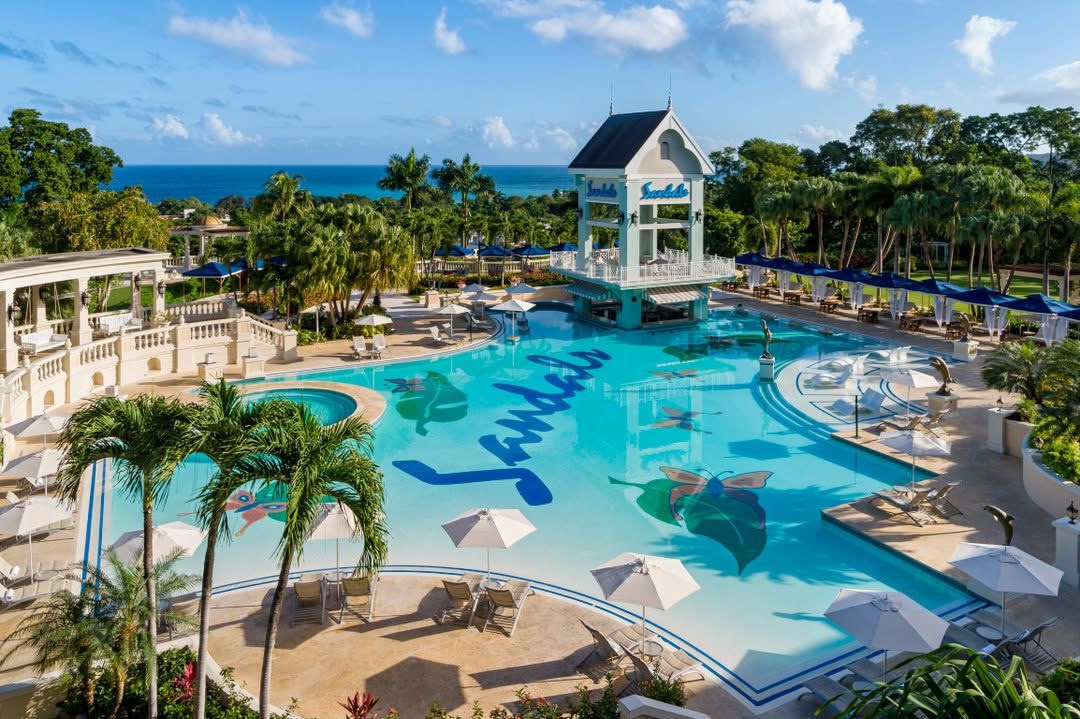
Sandals Resorts International has announced a major investment initiative across three of its leading Jamaica properties, signalling strong confidence in the country’s tourism recovery and long-term hospitality growth. The development comes as Jamaica continues rebuilding and strengthening its tourism sector following the impact of Hurricane Melissa and prepares for a busy Winter 2026 travel season.
The company confirmed that extensive renovation and redevelopment work is currently underway at Sandals Montego Bay, Sandals Royal Caribbean and Sandals South Coast. According to the company, Sandals South Coast is expected to reopen in November 2026, while Sandals Montego Bay and Sandals Royal Caribbean are scheduled to resume operations in December 2026 ahead of the island’s peak winter tourism season.
The reopening of these resorts is expected to significantly restore Jamaica’s hotel room inventory at a time when international travel demand to the Caribbean continues to rise. Tourism industry experts believe the investment will further strengthen Jamaica’s position as one of the region’s leading holiday destinations.
The upgrade programme includes redesigned arrival spaces, refreshed accommodations, expanded dining experiences and enhanced beachfront and poolside facilities. The company is also introducing new room categories and upgraded guest experiences aimed at attracting both returning and first-time international travellers.
The investment reflects a broader effort to modernise Jamaica’s tourism infrastructure and improve visitor experiences across the island. Tourism remains one of Jamaica’s most important economic sectors, contributing significantly to employment, foreign exchange earnings and local business growth.
The announcement also arrives during a period of strong tourism recovery for Jamaica following the disruptions caused by Hurricane Melissa. Government officials have stated that the majority of hotels, attractions and tourism services across the island are now fully operational again. Recovery efforts were supported through coordination between government agencies, tourism stakeholders and private sector partners.
Edmund Bartlett praised the resilience shown by the tourism industry during the recovery process. According to Bartlett, Jamaica’s tourism rebound reflects both the strength of local communities and the effectiveness of the country’s recovery systems.
Meanwhile, Donovan White emphasised that the country remains focused on maintaining high-quality visitor experiences while building long-term tourism growth. Officials believe continued investment in tourism infrastructure will help Jamaica remain competitive in the global travel market.
Beyond resort redevelopment, Jamaica is also working on broader reforms within its tourism sector. The government is currently developing a new Tourism Authority Act to replace the older Tourist Board Act as part of its wider “Tourism 3.0” vision. Officials say the updated framework is intended to modernise tourism governance, strengthen industry regulation and improve collaboration between tourism and local industries.
Bartlett explained that Jamaica’s tourism sector has evolved significantly over the years and now requires a more modern administrative structure to support future growth. The proposed Tourism Authority Act is expected to play a key role in shaping the next phase of the country’s tourism development strategy.
Industry observers believe the combination of private investment, infrastructure upgrades and policy reforms could help Jamaica strengthen its position as a leading Caribbean tourism destination in the coming years. The reopening of major Sandals properties is also expected to generate employment opportunities and support local businesses connected to the tourism economy.
As global tourism continues recovering after years of disruptions, Jamaica appears focused on using this period not just for recovery, but for long-term transformation and expansion across its hospitality sector.
Subscribe Deshwale on YouTube