









Think about the last time you had a headache. What did you do? Chances are you did not call a doctor, you did not wait it out, and you definitely did not rest. You walked to your medicine cabinet, popped a Crocin or a Combiflam, and got on with your day. It felt like the smartest, most efficient thing to do.
Most of us do exactly the same thing. In India, self-medication is not just a habit, it is a way of life. But what we do not realise is that every time we reach for that pill without a prescription, we are starting a slow and silent war inside our own bodies.
A country that runs on pills
India is one of the largest consumers of over-the-counter medicines in the world. Paracetamol, ibuprofen, antacids, antihistamines, and antibiotics are not just medicines here, they are household names.
Every family has a small stash of these drugs tucked away somewhere. Headache? Crocin. Fever? Dolo. Stomach upset? Gelusil. Cold? Any cough syrup from the chemist. No prescription needed, no questions asked. The chemist hands it over, you take it, and life moves on.
The pill you trust the most is the one hurting you
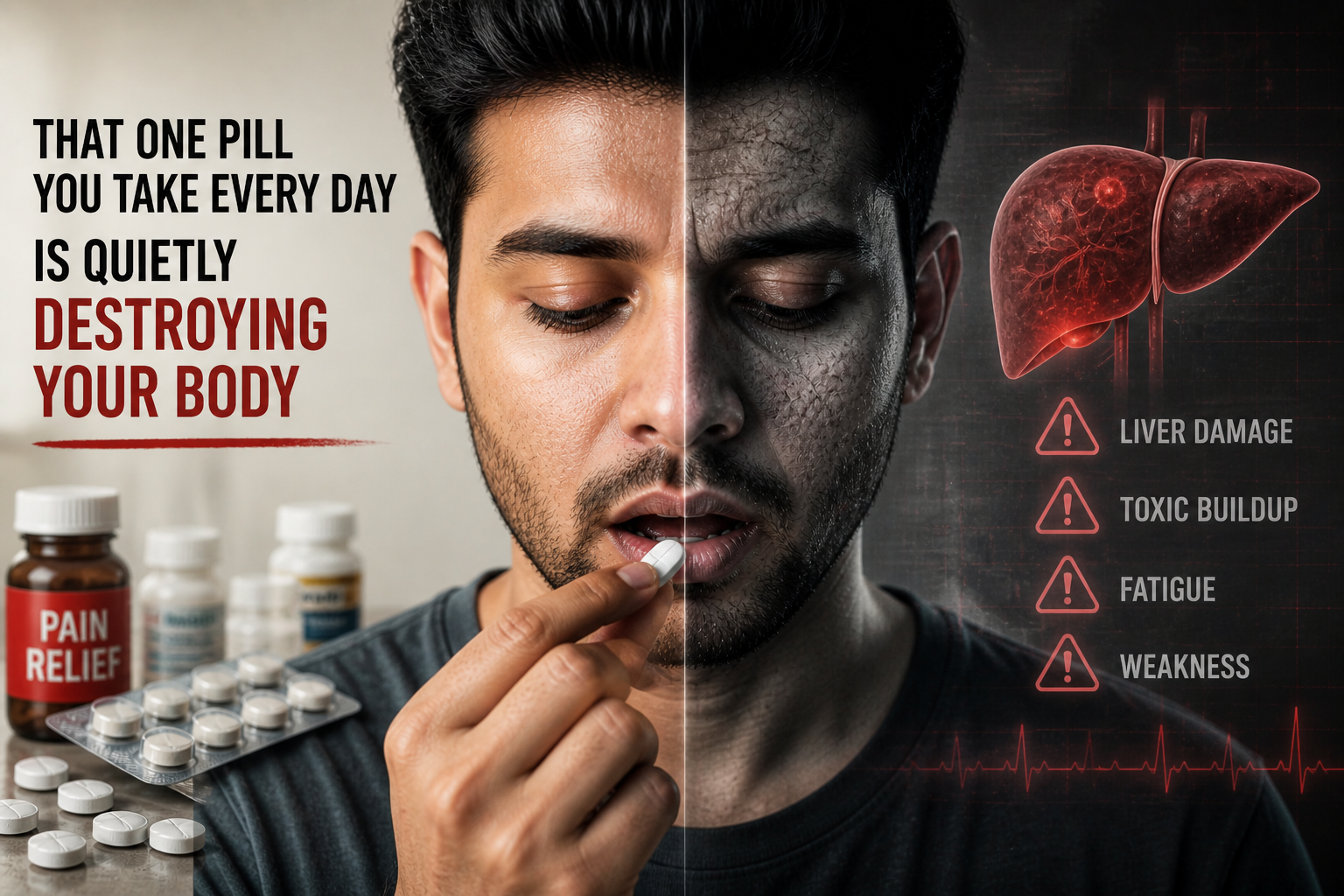
Paracetamol is the most trusted and widely consumed painkiller in the country. It is also one of the leading causes of acute liver failure in the world when taken in excess.
The drug itself is not dangerous when used correctly and in the right doses. The problem is that most people have no idea what the right dose is or how often they can safely take it. Many people take two tablets every few hours thinking it will work faster. Others take it for days together without realising they are pushing their liver to its absolute limit.
And some people unknowingly double the dose by taking two different medicines that both contain paracetamol, something that happens far more commonly than people realise.
Your liver is paying the price
The liver is the organ that processes every single drug you consume. Every pill you swallow eventually reaches your liver, which breaks it down and flushes it out. When you take medicines occasionally and in the right amounts, the liver handles it just fine.
But when you take medicines regularly, in higher doses, or without proper gaps the liver starts struggling. Over time this strain quietly builds up. What begins as a mild elevation in liver enzymes can slowly progress into something far more serious.
The frightening part is that liver damage does not announce itself. There is no sharp pain, no dramatic warning sign in the early stages. By the time symptoms like yellowing of the skin, fatigue, or abdominal pain show up, the damage is already significant.
Antibiotics are an even bigger problem
Painkillers are not the only concern. Antibiotics are perhaps the most dangerously misused medicines in India. Every time there is a fever or a throat infection, people either reach for leftover antibiotics from a previous prescription or buy them directly from the chemist without any prescription.
This is not just harmful for the individual, it is a public health crisis. Overuse of antibiotics is creating drug-resistant bacteria at an alarming rate. Infections which could once be treated with a simple antibiotic are now becoming untreatable because the bacteria have grown stronger.
Doctors across the country are already seeing cases where standard antibiotics are simply not working anymore. We are slowly heading towards a world where a common infection could become life-threatening and our casual attitude towards antibiotics is a big reason why.
Why we do it and why that is not an excuse
The reasons why Indians self-medicate are not hard to understand. Healthcare is expensive. Doctors are not always accessible, especially in smaller towns and rural areas. Waiting in a hospital queue for hours just to treat a mild headache feels unnecessary.
These are all understandable reasons. But understandable does not mean safe.
The real danger missing what is actually wrong
What makes this habit even more dangerous is that self-medication often masks the real problem. A fever that keeps coming back is not just a fever it could be dengue, typhoid, or something far more serious.
Taking paracetamol repeatedly will bring the temperature down temporarily but will not treat the underlying infection. By the time the real diagnosis is made, valuable time has already been lost.
What you can do starting today
Breaking this habit does not require a dramatic lifestyle overhaul. It starts with small and simple steps. Never take antibiotics without a prescription. Do not exceed the recommended dose of any painkiller. Avoid taking medicines on an empty stomach unless specifically advised. And if a symptom keeps coming back, see a doctor instead of reaching for another pill.
That tablet you take so casually every morning for that nagging headache is not as harmless as it looks. Your liver is working overtime so that you do not have to feel the pain the least you can do is not make its job any harder.
Subscribe Deshwale on YouTube


