



– Sonal Parekh
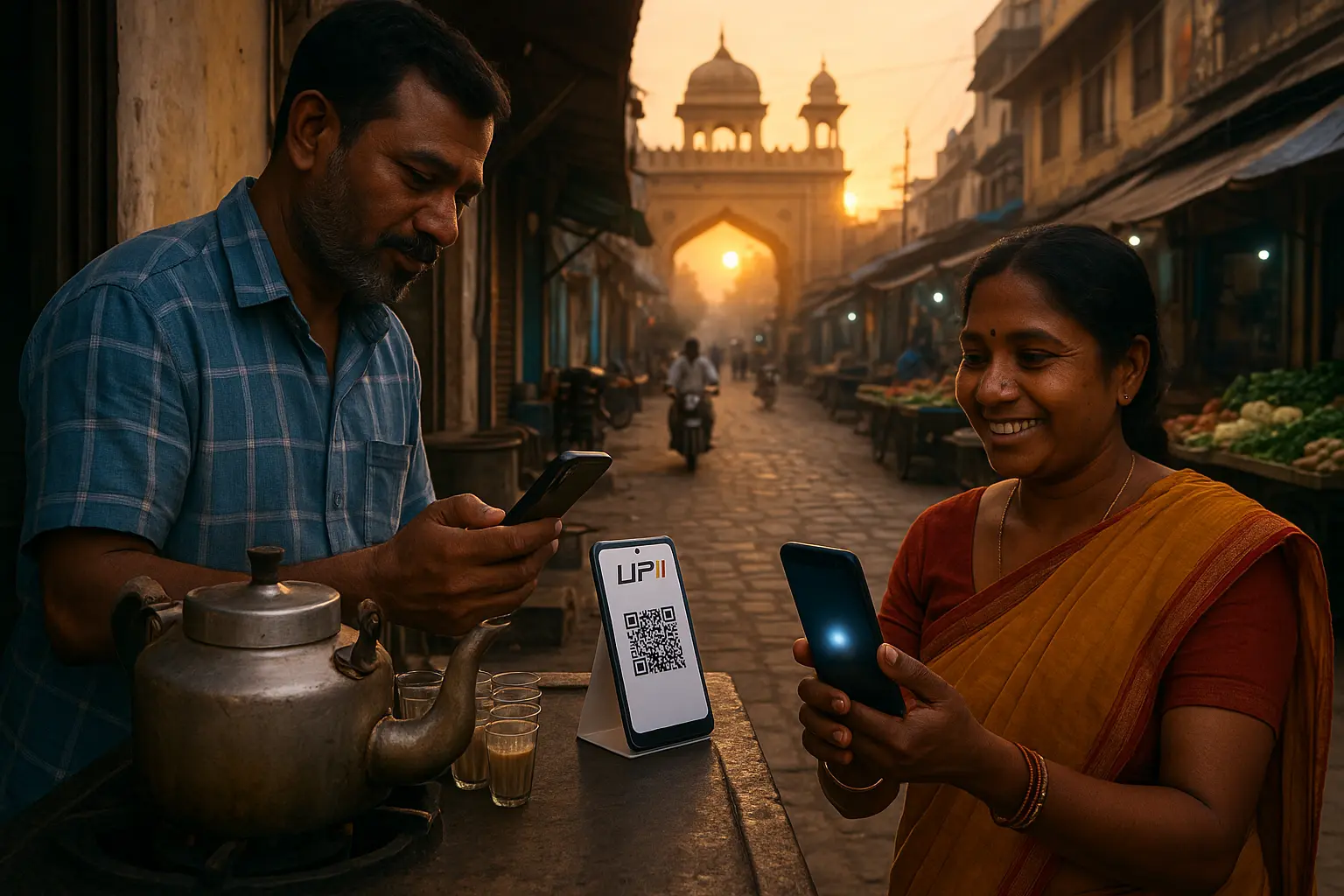
A chaiwala in Jaipur scans a QR code as dawn breaks. In Kolkata, a vegetable vendor smiles at her phone’s payment ping. Across India, from Mumbai’s bustling kirana shops to rural Bihar’s handicraft stalls, the Unified Payments Interface (UPI) hums like a bazaar’s heartbeat. In June 2025, it is estimated that UPI handles nearly 500 crore transactions daily, and is growing 40% each year, outpacing global giants like Visa. This isn’t just a payment system. It’s a revolution, a mirror of India’s ambitions, its ingenuity, and its challenges. What does UPI’s rise say about us? It’s not about numbers or tech. It’s about trust, dreams, and the gaps we must bridge. This is India’s story, told through the lens of a digital rupee that’s changing how we live.
Picture a street vendor in Delhi. Her QR code taped to a cart. A tap on her phone brings instant payment, no coins needed. In villages, women sell handwoven sarees to buyers miles away, their earnings landing in seconds. UPI is more than a convenience. It’s an empowerment. Over 80% of street vendors now use it, a 2024 study shows. Small shops outsmart e-commerce giants with quick transactions. Rural youth, once tied to cash, now trade digitally. This is India’s jugaad spirit: simple, clever, unstoppable. Globally, UPI shines. The US studies its low-cost model. Singapore and France adopt it for cross-border payments. Indian tourists pay at Dubai’s souks with a scan. UPI costs banks pennies per transaction, far less than card swipes. It’s like a digital Taj Mahal, built for the masses, not the elite.
But this revolution isn’t flawless. India’s digital dream has cracks. Only 70% of Indians own smartphones, leaving millions offline. A 2025 report notes 30% of villages lack reliable internet. Urban users scan QR codes with ease; rural users often can’t. This divide isn’t just about tech, it’s about access to opportunity. Cities like Bengaluru buzz with UPI payments, while remote hamlets cling to cash. The gap echoes India’s broader struggles, healthcare, education, equality. UPI promises inclusion, but millions are still outside its reach. Can a digital rupee truly unite a nation when connectivity remains uneven?
Then there is the shadow of risk. Cyber fraud is rising, costing India ₹1,000 crore yearly. Fake QR codes and phishing scams trap users, especially those new to tech. A grandmother in Gujarat loses savings to a fake link. A shopkeeper in Chennai falls for a phishing call. These aren’t just losses, they’re betrayals of trust. UPI thrives on confidence, but scams chip away at it. If servers crash, markets could stall. A single glitch could freeze India’s digital bazaar. Experts warn of over dependence. Cash still rules in remote areas. If UPI falters, will our economy stumble? This isn’t fearmongering. It’s a call to strengthen our digital backbone.
Yet, India adapts. We always have. On social media, users share tips to spot scams. Community leaders teach digital literacy in villages. Banks push for stronger cybersecurity. This resilience is our strength. UPI isn’t just tech—it’s trust. Indians embrace QR codes like they embrace old friends. A 2025 report shows 90% of retail transactions flow through UPI, dwarfing card payments. It’s a system built on faith, faith in technology, in each other, in India’s future. But faith needs care. Fintech giants like GPay, PayTM, PhonePe lead, but smaller players struggle. Is UPI becoming a monopoly in disguise? Banks lose revenue as free transactions squeeze margins. The balance is delicate, and we are walking a tightrope.
The youth, aged 18 to 35, fuel this revolution. They have grown up with smartphones, not cash. On social media, they celebrate UPI’s ease but demand better security. They want a digital India that’s inclusive, not elite. Their voices push for change: more rural connectivity, tougher cyber laws, better education. They dream of a cashless Bharat where a vendor in Ladakh can sell to buyers in Kochi. This generation’s energy makes UPI more than a tool. It’s a symbol of their ambition, their hustle, their hope.
What’s next for UPI? The National Payments Corporation of India aims for 1,000 crore daily transactions by 2026. Indian QR codes could soon pay for Eiffel Tower tickets in France. UPI could be India’s global gift, like yoga or masala chai. But the road isn’t easy. Rural internet must expand. Cybersecurity needs teeth. Education must curb fraud. If we bridge these gaps, UPI could unite India’s divides, urban and rural, rich and poor. It’s not just a payment system. It’s a promise of a connected, empowered India.
This digital pulse reflects who we are. UPI is our ingenuity, our resilience, our dreams. It’s also our divides, our risks, our work in progress. Like Holi’s colours, it paints India vibrant and bold. But like any festival, it needs care to shine. We must nurture this digital rupee, not worship it blindly. This is our nation—innovative, imperfect, unstoppable. As always!
