 Deshwale
Volcanic Cooling vs. Warming Feedback: A Climate Tug-of-War
In brief · AI summary Volcanic eruptions can cool the planet briefly, as aerosols from the 1991 Mount Pinatubo eruption lowered global temperatures by half a degree Celsius for about a year. However, the carbon dioxide volcanoes release traps heat for decades or centuries, so frequent eruptions can drive long-term warming. The article also warns that melting glaciers, especially in Antarctica, may trigger more eruptions, creating a feedback loop.
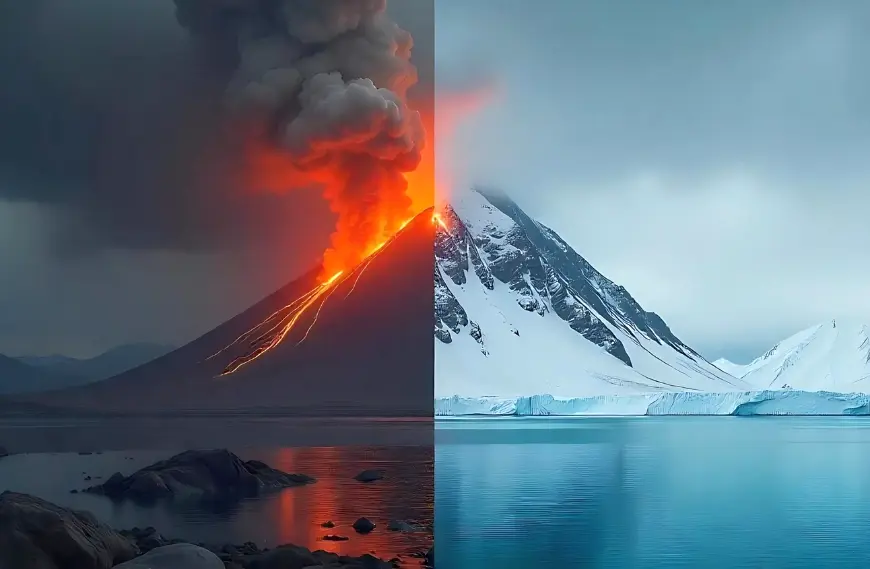
Imagine a volcano erupting, spewing ash and gases into the sky. It’s dramatic, right? But here is the kicker… volcanic cooling vs. warming feedback means these eruptions can both cool and heat our planet. It’s like nature’s playing a tug-of-war with our climate. Volcanoes don’t just reshape landscapes, they mess with our climate in ways that might surprise you. Let’s explore how eruptions can briefly cool the Earth but, over time, crank up the heat, creating a cycle that’s hard to break.
Volcanoes: Nature’s air conditioner?
Picture this… a massive volcano like Mount Pinatubo erupts. Back in 1991, it blasted ash and tiny particles, called aerosols, high into the atmosphere. These particles acted like a giant sunshade, reflecting sunlight away from Earth. For about a year, global temperatures dropped by half a degree Celsius. That’s right… volcanoes can cool the planet! It’s like nature flipping on a temporary air conditioner. The aerosols block sunlight, lowering temperatures, especially in places like the Northern Hemisphere. For a moment, it feels like a win against global warming. But don’t get too comfortable. This cooling effect is short-lived, lasting only a year or two before the aerosols settle back to Earth. Then, the story takes a twist.
The warming side of the coin
While volcanoes can cool things down, they also pump out gases like carbon dioxide. These greenhouse gases trap heat, much like a blanket around the planet. Over time, if eruptions happen frequently, all that extra carbon dioxide builds up. Unlike aerosols, which fade fast, these gases stick around for decades, even centuries. This means more heat gets trapped, pushing global temperatures higher. Scientists warn that multiple eruptions could stack up these gases, making long-term warming worse. It’s like volcanoes are giving us a quick chill but setting us up for a slow burn. And here’s where things get tricky: climate change itself might be waking up more volcanoes, especially in places like Antarctica.
Why are volcanoes waking up?
Let’s talk about glaciers. They are like giant ice blankets sitting on volcanoes in places like Iceland, Canada, and Antarctica. These glaciers are heavy, pressing down on the Earth’s crust and keeping magma trapped below. But climate change is melting these glaciers fast. As the ice vanishes, the pressure lifts, like letting go of a rubber duck in a bathtub… it pops up. In this case, the ‘pop’ is magma rising to the surface, triggering more eruptions. Antarctica, with its massive ice sheets, is a hotspot for this. Scientists say hundreds of dormant volcanoes there could roar to life as glaciers retreat. It’s not instant… it takes centuries… but it’s happening now, and it’s a big deal.
A feedback loop that bites back
Here’s where volcanic cooling vs. warming feedback gets wild. Melting glaciers spark more eruptions. Those eruptions release greenhouse gases, which trap more heat. That heat melts more glaciers, which leads to even more eruptions. See the pattern? It’s a feedback loop, and not the good kind. Each eruption adds more carbon dioxide, speeding up warming, which melts more ice, which triggers more eruptions. It’s like a snowball rolling downhill, getting bigger and messier. Scientists are worried because this cycle could amplify climate change in ways we’re only starting to understand. The short-term cooling from aerosols might feel nice, but the long-term warming is the real problem.
Antarctica: The sleeping giant
Antarctica is not just a frozen wilderness… It’s the world’s biggest hub for volcanoes hidden under ice. From the South Sandwich Islands to East Antarctica, these volcanoes stretch over 5,000 kilometres. For ages, thick ice has kept them quiet, like a lid on a pressure cooker. But as global warming melts that ice, the lid is coming off. Scientists are watching closely because an active Antarctica could mean more frequent, explosive eruptions. These would not just affect the icy continent… they’d send gases and ash into the global atmosphere, messing with climate patterns everywhere. It’s a wake-up call to pay attention to places we often ignore.
Lessons from the past
This is not the first time Earth has seen this dance. During the last ice age, about 26,000 to 18,000 years ago, thick ice suppressed volcanoes. As the ice melted, the pressure dropped, and volcanoes went wild, spewing magma from deep underground. Scientists studied rocks from places like Chile’s Mocho-Choshuenco volcano to confirm this. They found that eruptions got bigger and more explosive as glaciers retreated. Today’s warming is mimicking that pattern, but faster, thanks to human-driven climate change. History is shouting at us: when ice melts, volcanoes don’t stay quiet for long. We have got a chance to learn from the past, but we need to act fast.
Can we break the cycle?
So, what do we do? First, we need to slow down glacier melt. That means cutting greenhouse gas emissions… less carbon dioxide from us means less warming, which saves ice and keeps volcanoes calmer. It’s not easy, but it’s our best shot at breaking this feedback loop. Scientists also suggest monitoring volcanoes in icy regions like Antarctica and Iceland. Early warning systems could spot signs of activity before eruptions happen. Since this process unfolds over centuries, we have got time to prepare, but only if we start now. The cooling effect of eruptions might buy us a moment, but the warming that follows is a bigger beast.
Why this matters to you
You might be thinking, ‘Volcanoes in Antarctica? That’s far away!’ But this affects everyone. More eruptions mean more greenhouse gases, which means hotter summers, wilder storms, and rising seas. Even short-term cooling can mess with weather patterns, affecting crops and food prices. This is not just a science story… it’s about your future, your kids’ future, and the planet we all share. By understanding volcanic cooling vs. warming feedback, we see how connected everything is. Climate change is not just about melting ice… it’s about waking up forces we can’t control. Let’s talk about it, spread the word, and push for change before the volcanoes do the talking for us.
The big picture
Volcanoes are like Earth’s wildcard. They can cool us down for a bit, but they are also stoking the fires of long-term warming. As glaciers melt, especially in places like Antarctica, we’re poking a sleeping giant. The feedback loop… more eruptions, more warming, more melting… is a warning we can’t ignore. Scientists are piecing this puzzle together, and it’s up to us to listen. We can’t stop volcanoes, but we can slow the warming that’s waking them up. It’s a call to action, wrapped in a story of ice, fire, and a planet trying to balance itself. Let’s not wait for the next eruption to care.