



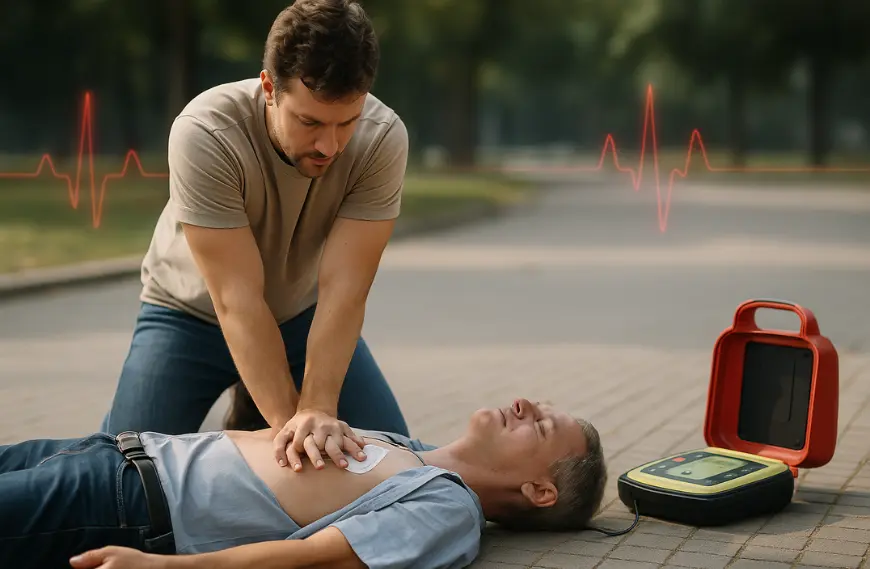
From A for “Arrhythmia” to Z for “Zone of infarction,” cardiac arrest is sudden cessation of cardiac output that demands immediate action. Over 60 percent of cardiovascular deaths follow out of hospital arrests. Yet many can be prevented. This A to Z guide decodes cardiac arrest and equips you to avert tragedy.
A – Arrhythmia
An electrical disturbance, often ventricular fibrillation, triggers most arrests. Early detection via ECG during routine checkups helps.
B – Bystander CPR
Layperson administered chest compressions boost survival by 2 to 3 times if started within minutes. Push hard 5 to 6 cm at 100 to 120 cpm.
C – Chain of Survival
A sequence of steps — early recognition, immediate CPR, rapid defibrillation, advanced life support, post arrest care — maximises outcomes.
D – Defibrillator AED
Automated external defibrillators deliver lifesaving shocks. Public access to AEDs raises survival to 70 percent if used within 3 minutes.
E – Ejection Fraction
A measure of pump function. EF less than 35 percent.
F – Family History
First degree relatives with sudden cardiac death double individual risk. Genetic screening and lifestyle modification are vital.
G – Gender
Men face 4 times higher risk than women at the same age; risk gap narrows post menopause.
H – Hypertension
Elevated blood pressure increases risk two to threefold. Control with diet, exercise and medication.
I – Ischaemic Heart Disease
Coronary artery blockages underlie about 50 percent of arrests. Prevent with statins, aspirin, and revascularisation when indicated.
J – Juvenile Arrest
In under 30 years, structural cardiomyopathies and arrhythmic syndromes prevail over CHD. Early Echo and genetic testing help.
K – Ketoacidosis
Diabetic ketoacidosis can provoke arrhythmias. Tight glycaemic control reduces risk.
L – Lipids
High LDL and low HDL worsen atherosclerosis, increasing arrest risk. Aim LDL less than 70 mg per dL in high risk patients.
M – Myocardial Infarction
A heart attack acutely triggers arrest. Rapid reperfusion with PCI or thrombolysis cuts SCD incidence.
N – Nutrition
A Mediterranean style diet rich in olive oil, fruits, vegetables, nuts, and fish lowers arrest risk by improving lipids and inflammation.
O – Obesity
Every 5 kg per m2 BMI increase raises arrest risk by 6 to 8 percent. Weight loss improves blood pressure, lipids, and insulin sensitivity.
P – Physical Activity
Regular moderate exercise 150 minutes per week cuts sudden death risk by 20 to 30 percent. Avoid vigorous activity without evaluation if high risk.
Q – QT Prolongation
Drugs or congenital syndromes that prolong QT interval can trigger torsades de pointes. Monitor ECG and avoid offending medications.
R – Resuscitation Training
Community training in CPR and AED use should be universal. School based programs achieve sustained bystander rates.
S – Smoking
Tobacco doubles arrest risk. Cessation yields risk reduction within 3 years.
T – Temperature Management
Post arrest targeted temperature control 32 to 36 degrees Celsius improves neurological outcomes in comatose survivors.
U – U shaped Alcohol Use
Moderate intake 1 drink per day may lower risk slightly; binge drinking sharply increases risk.
V – Ventricular Dysfunction
Left ventricular ejection fraction less than 35 percent indicates high risk. ICDs reduce SCD by 23 to 31 percent in these patients.
W – Weight Management
Central obesity correlates more strongly with arrest risk than BMI alone. Waist circumference reduction is protective.
X – Xanthine Oxidase
Enzyme generating oxidative stress in ischaemia reperfusion. Allopurinol shows promise in animal studies for reducing arrhythmias.
Y – Youth Screening
Pre participation ECG and echocardiography in athletes uncovers asymptomatic conditions that risk sudden death.
Z – Zone of Infarction
The area of dead myocardium post MI predisposes to scar related reentrant arrhythmias. Early reperfusion limits infarct size and arrhythmic substrate.
