



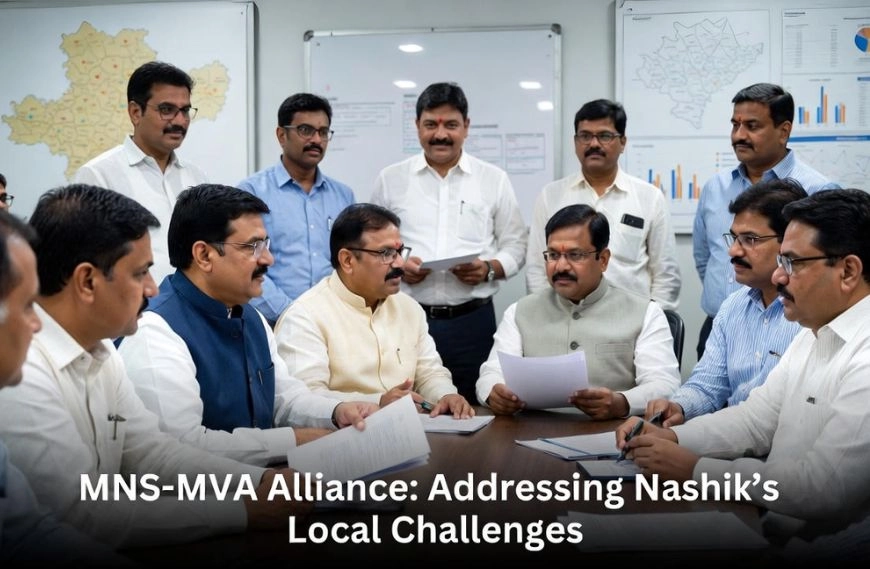
In a notable development ahead of the upcoming local body elections in Nashik, the Maharashtra Navnirman Sena (MNS) has announced that it intends to join the Maha Vikas Aghadi (MVA) alliance. While the MNS has signalled this tie-up, the state-level leadership of the Indian National Congress, a key partner in the MVA, has clarified that no formal decision has yet been taken. This makes the alliance announcement subject to final approval by the top party leaders.
Why the alliance is being considered
According to statements from MNS leaders, the decision to form an alliance is primarily driven by local issues affecting Nashik residents. These include alleged irregularities in the voters’ list and farmers’ distress caused by crop losses due to unseasonal rains. By joining forces, MNS and the MVA aim to address these concerns more effectively and present a united front to local voters.
Conflicting statements within the coalition
While the MNS has publicly announced its intention to ally with the MVA, the state Congress leadership has expressed caution and stated that no formal approval has been granted yet. Local Congress units in Nashik have reportedly been given some authority to discuss and explore alliances, reflecting the complex decision-making process in coalition politics. This indicates a difference between local-level initiatives and the state-level high command’s approval process.
What this could mean for Nashik’s elections
If the alliance is formally approved, it could influence the political dynamics of Nashik’s civic polls. By working together, MNS and the MVA could create a stronger alternative to the ruling coalition in the state. For voters, this alliance may offer a more cohesive option, especially in wards where the two parties decide to present joint candidates.
The details of seat-sharing and candidate selection have not been finalized. Until the top leaders of the parties give formal approval, the exact impact of this alliance on individual wards remains uncertain.
Though this alliance concerns local elections in Nashik, it highlights important trends in Maharashtra politics. Regional parties like the MNS are willing to collaborate with larger coalitions when local issues demand attention. The situation also underscores the importance of grassroots concerns, such as voter-list accuracy and farmers’ welfare, in shaping political strategies.
Additionally, it shows how coalition politics can involve multiple layers of decision-making, where local units and state leadership may not always be aligned. Observers will be watching closely to see how the alliance develops in the coming weeks, as it may provide insights into coalition negotiations elsewhere in Maharashtra.
The MNS-MVA announcement will be closely monitored by political observers, local voters, and other parties in the state. Key questions remain regarding formal approval, seat-sharing, and the alliance’s ability to address local issues effectively. While the tie-up is not yet final, the move signals a potential shift in strategy and could play a significant role in Nashik’s civic elections, making it one of the most closely watched local contests in the state this year.
Subscribe Deshwale on YouTube
