



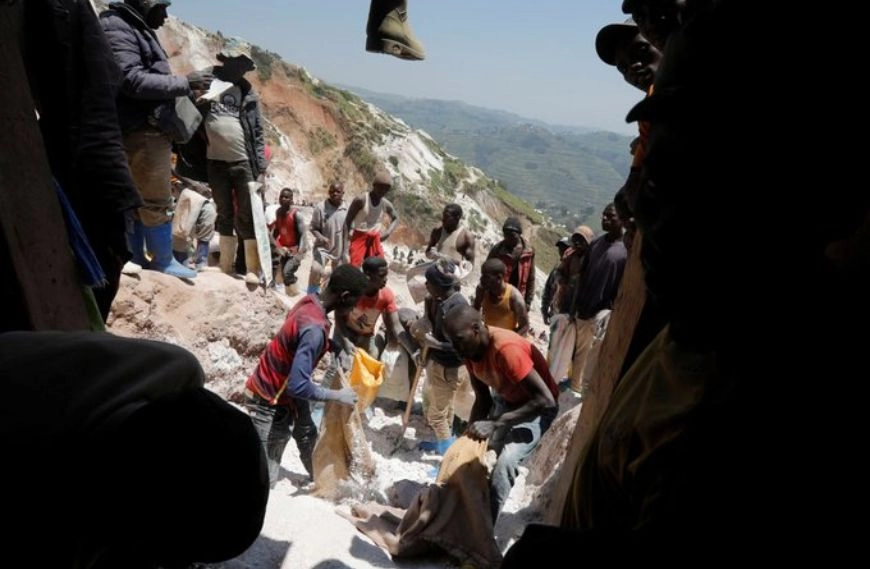
A major tragedy struck eastern Democratic Republic of Congo after a coltan mine collapsed in the Rubaya area, killing more than 200 people. The accident happened after heavy rainfall weakened the soil and caused large sections of the mine to cave in. Many of the victims were artisanal miners who were working inside the pit at the time of the collapse.
Local authorities said the mine was operating in a fragile area where safety standards are often poor. When the ground gave way, workers were buried under mud and debris. Rescue teams and local volunteers rushed to the site to search for survivors. However, the unstable conditions and deep layers of mud made rescue efforts slow and dangerous. Many bodies were recovered in the following hours, while some people are still believed to be trapped.
The tragedy also affected nearby communities. Reports said that some victims were traders and residents who were close to the mining site when the collapse happened. Families gathered near the area, waiting for news of missing relatives. Hospitals in the region treated injured survivors, many of whom suffered broken bones and serious wounds.
Rubaya is known for its rich coltan deposits. Coltan is an important mineral used in mobile phones, computers, and other electronic devices. Thousands of people in the region depend on small-scale mining for their daily income. However, these mines often operate without proper safety equipment, protective structures, or strict government supervision.
Officials have described the incident as one of the deadliest mining accidents in the region in recent years. They have called for stronger safety rules and better monitoring of mining activities. Experts say that frequent heavy rains, combined with unsafe digging methods, increase the risk of such disasters.
This tragedy has once again raised serious questions about working conditions in Congo’s mining sector. While the minerals extracted from these areas are used worldwide, the people who mine them often face dangerous environments and high risks. The Rubaya disaster is a painful reminder of the human cost behind global supply chains and the urgent need to improve safety and protection for miners and local communities.
Subscribe Deshwale on YouTube
