



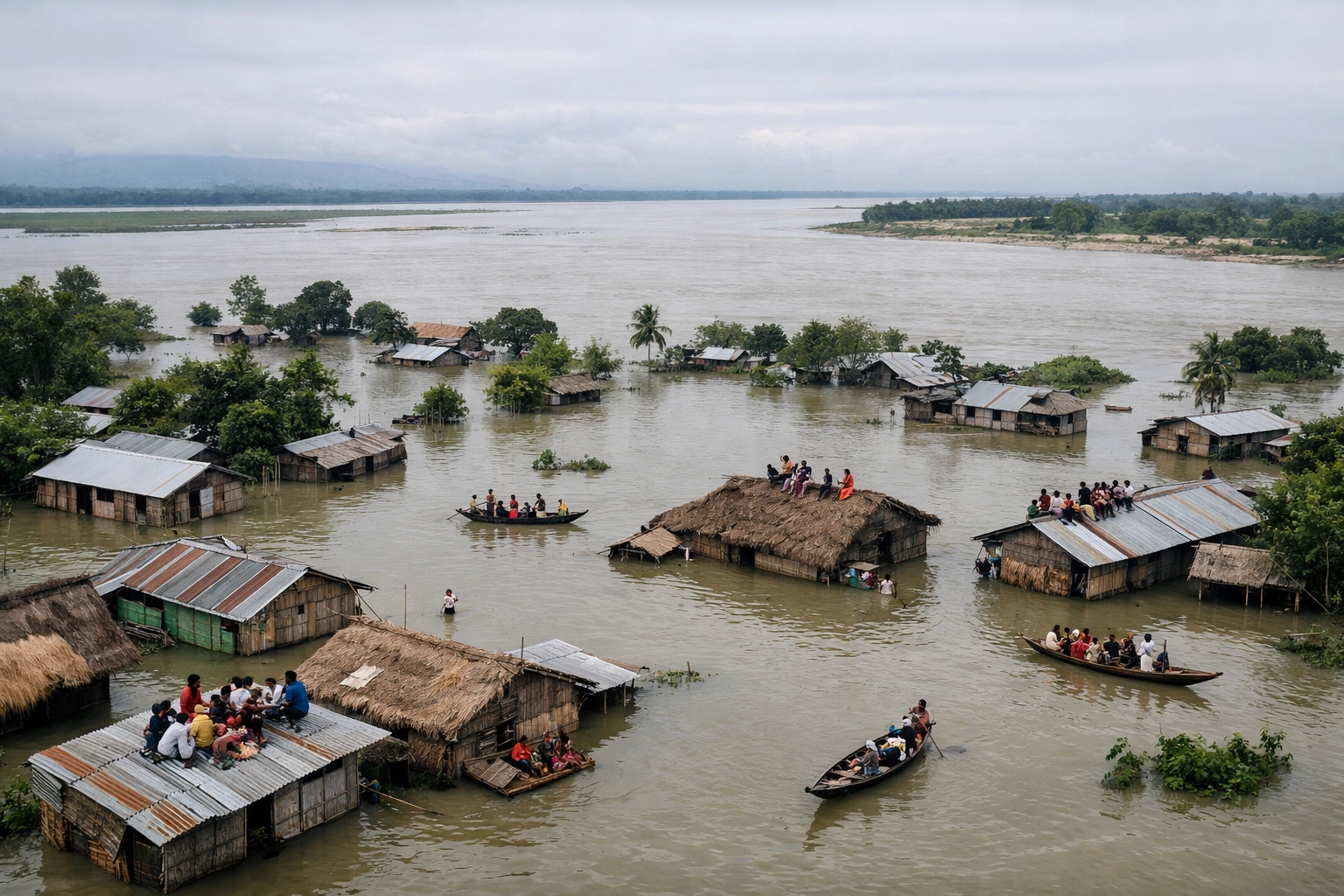
In my years reporting from flood-ravaged villages in Bihar to drought-stricken farms in Rajasthan, I’ve seen firsthand how climate change isn’t just an environmental issue, it’s a human one, uprooting lives within national boundaries. As we enter 2026, India grapples with a surge in internal displacements, where people flee not across borders but to safer corners of their own country due to floods, droughts, and extreme weather. Drawing from recent reports, including the Internal Displacement Monitoring Centre’s 2025 findings, this series explores the crisis in India, paralleled globally, highlighting the human stories, policy gaps, and paths forward.
India’s internal climate displacements hit a record 5.4 million in 2025, the highest since 2013, with floods accounting for two-thirds. Assam bore the brunt, with Brahmaputra floods displacing millions, submerging 2.5 million hectares of farmland. In Maharashtra, droughts devastated 8.4 million hectares of crops, forcing farmer migrations. These aren’t isolated; they’re part of a pattern where erratic monsoons wettest May since 1901 followed by 19% drought conditions whiplash communities.
Globally, disasters drove 45.8 million new displacements in 2024, nearly double the decade’s average, with 83.4 million living in internal displacement by year’s end. Sub-Saharan Africa hosts 38.8 million IDPs, while weather disasters caused 250 million displacements over the past decade. In India, 80% of Bihar’s flood-affected farmers migrate to Punjab or Delhi, fragmenting families. Similar patterns emerge in Pakistan’s floods or Brazil’s droughts.
The human cost is profound. In Assam, families lose homes, livelihoods, facing food insecurity. Women and children suffer most, with health crises like waterborne diseases spiking. Economically, 2025’s disasters claimed 4,419 lives, and damaged 17.4 million hectares of crops. Globally, displacement exacerbates poverty, with 117 million forcibly displaced by mid-2025.
Policy responses lag. India’s disaster management focuses on relief, not prevention. Globally, the UN warns of overshooting 1.5°C, urging adaptation. Yet, hope lies in community resilience, like Bihar’s early warning systems.
This overview sets the stage; next, we’ll delve into Assam’s flood-prone regions, drawing parallels with global riverine displacements.
Subscribe Deshwale on YouTube
