



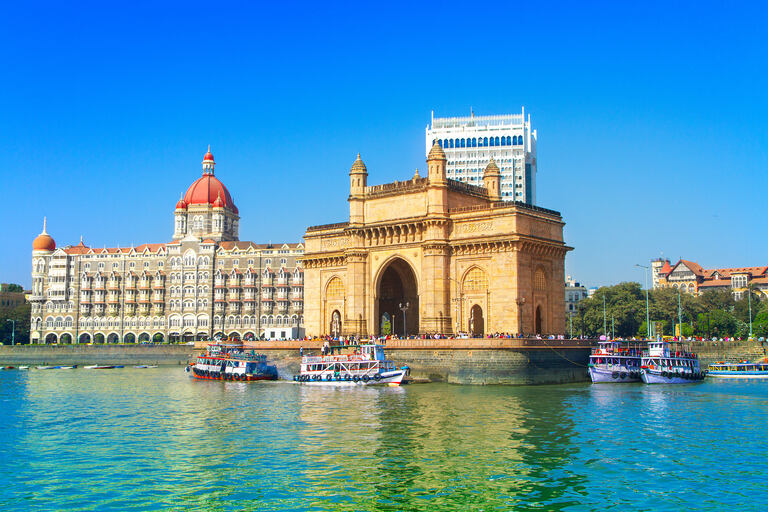
The Gateway of India is one of Mumbai’s most recognisable landmarks. Standing proudly on the edge of the Arabian Sea, it has welcomed millions of tourists over the years. But despite its name, it was never built to serve as an actual gateway into India.
The monument was constructed to commemorate the visit of King George V and Queen Mary, the first British monarchs to visit India, when they arrived in Bombay in 1911. Ironically, when the royal couple landed, the Gateway didn’t even exist. A temporary cardboard arch was erected to welcome them because the permanent structure had not yet been built.
The foundation stone for the monument was laid in 1913, and after more than a decade of construction, it was officially inaugurated in 1924. Designed by Scottish architect George Wittet, the 26-metre-high structure was built in the Indo-Saracenic style, blending Hindu, Islamic and European architectural elements.
So why is it called the Gateway of India?
The answer lies in its symbolic purpose. During British rule, important officials, governors and viceroys arriving by sea would make their ceremonial entry through Apollo Bunder, where the monument stands today. It was meant to represent the grand entrance to British India rather than function as a real border crossing or entry gate.
The monument also witnessed one of the most significant moments in Indian history. On February 28, 1948, the last British troops ceremonially marched through the Gateway before leaving India, turning what was once a symbol of colonial power into a reminder of India’s independence.
Today, the Gateway of India is no longer a ceremonial entrance. Instead, it stands as a symbol of Mumbai’s history, resilience and identity. Every day, thousands of people visit the iconic monument for its architecture, its waterfront views and the stories it continues to tell more than a century after it was built.
Subscribe Deshwale on YouTube
