



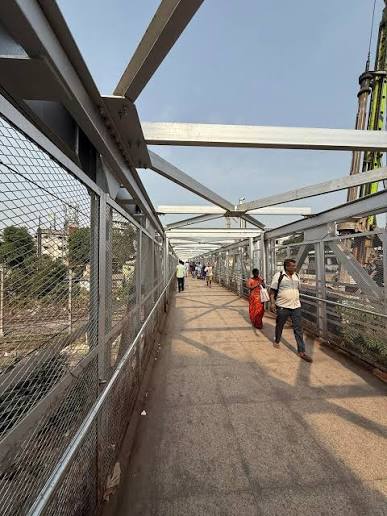
Mumbai is a city built on stories. While its skyscrapers, local trains and busy roads represent its modern identity, many old structures continue to silently narrate the history of the city. One such forgotten landmark is the Sion Causeway, considered one of the oldest surviving bridges of Mumbai.
Built during the British era in the early 19th century, the Sion Causeway played an important role in connecting different parts of the city. At a time when Mumbai was still made up of seven islands, travelling between these regions was difficult. The causeway helped create a smoother connection between the island of Bombay and areas beyond it.
The bridge was constructed between 1798 and 1805 under the guidance of the British East India Company. It was built to connect the island of Salsette with Bombay and improve transportation for people and goods. The project was supported by the efforts of philanthropist and administrator Sir James Mackintosh, who recognised the need for better connectivity as the city expanded.
Before the construction of such bridges and causeways, travelling between islands depended heavily on boats and tidal conditions. The Sion Causeway reduced this dependency and became an important route for traders, travellers and local residents.
The bridge also holds historical importance because it represents a time when Mumbai was undergoing major transformation. The city was slowly developing from a collection of islands into a major commercial centre. Infrastructure projects like the Sion Causeway helped shape Mumbai’s growth and connectivity.
Located near the historic Sion Fort, the causeway witnessed Mumbai’s changing landscape over centuries. The area around it transformed from quiet villages and open spaces into one of the city’s busiest suburban regions.
However, like many heritage structures in Mumbai, the Sion Causeway has slowly faded from public memory. Modern roads, flyovers and expanding urban infrastructure have reduced its prominence. Many people passing through the area today may not realise they are near a structure that played a major role in the city’s development.
Over the years, Mumbai has seen many iconic bridges come and go. Some have been replaced due to safety concerns, while others have become symbols of the city’s progress. But old structures like the Sion Causeway remind people of a different Mumbai — a city where every road and bridge had a story behind it.
Today, the bridge stands as a reminder of Mumbai’s early engineering achievements and colonial-era planning. While it may not attract the same attention as the city’s famous landmarks, its contribution to Mumbai’s history remains significant. The oldest bridges of Mumbai were not just made of stone and concrete. They carried people, connected communities and helped a group of islands become one of India’s greatest cities.
The next time you cross through Sion, remember that beneath the traffic and modern buildings lies a piece of Mumbai’s forgotten history, quietly standing for more than two centuries.
Subscribe Deshwale on YouTube
