





Mumbai, March 16, 2026 – Chandrabhan Sharma College (Autonomous), Powai, in collaboration with the University of Mumbai and The ICFAI Foundation for Higher Education, Hyderabad, successfully hosted its 11th Multidisciplinary International Conference on Indian Knowledge Systems (IKS). Themed “IKS: Bridging Tradition, Innovation & Sustainability – Glorious Past, Promising Present, Designed for a Bright Future,” the event was sponsored by the Western Regional Centre of the Indian Council of Social Science Research (WRC-ICSSR).
The one-day conference brought together scholars, researchers, faculty members, and students to explore how Indian Knowledge Systems can shape a sustainable and innovative future. Dr. Vaishali Rajput, I/C Principal and Conference Chairperson, inaugurated the event with a welcome address, highlighting the enduring value of Indian traditions in guiding modern life. Convenor Asst. Prof. Dr. Anita Pandey outlined the vision of the conference.
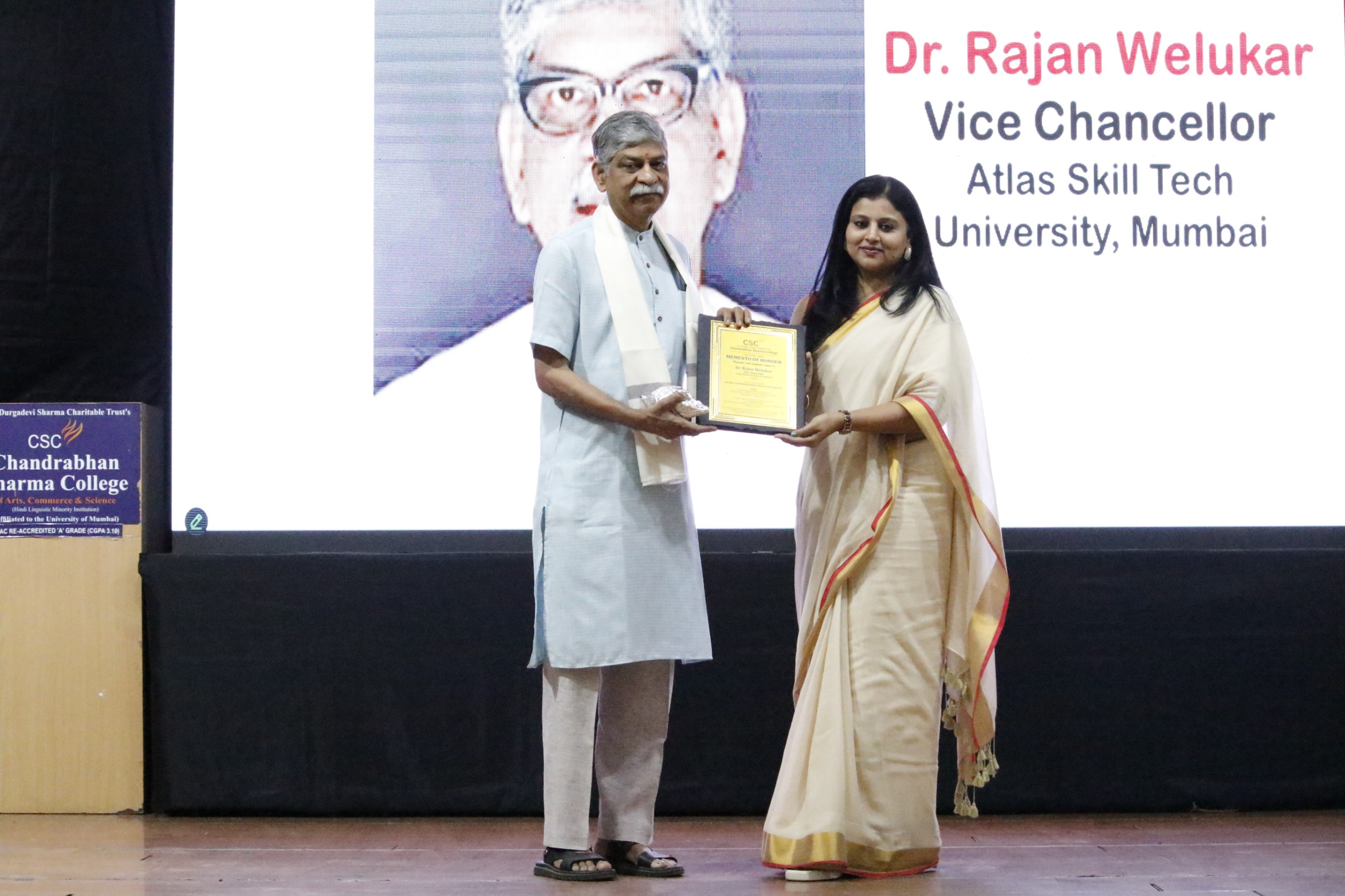
Chief Guest Dr. Rajan Welukar, Vice Chancellor of Atlas Skill Tech University, Mumbai, described the conference as “the need of the hour for the new generation,” emphasizing the importance of blending modern education with traditional wisdom. Dr. Varadraj Bapat, Professor at IIT Bombay, spoke on IKS’s role in sustainable development, while keynote speakers Dr. Suyash Pradhan and Mr. Kedar Dunakhe shared strategies for integrating innovation with heritage knowledge. International guest Mr. Aalok Gupta, CEO of LSF Global, Hong Kong, offered a global perspective on the relevance of Indian wisdom in contemporary practices.
The conference received a remarkable response, with 104 papers submitted and 85 selected for publication after thorough peer review. Parallel technical sessions, chaired by Dr. Flora Shukla and Dr. Mrunal Bhatt, showcased diverse research across disciplines. The 11th International Conference reinforced the academic and practical value of Indian Knowledge Systems in balancing tradition with modernity. Dr. Welukar stressed that students must be equipped not only with modern technology but also with knowledge of Ayurveda, Yoga, Vedic Mathematics, and sustainable practices. Dr. Rajput drew inspiration from ancient learning centres like Takshashila and Nalanda, urging researchers to connect scientific advancements with traditional wisdom.
Concluding with reflections by Dr. Prof. B. R. Kamble, Principal of Nalanda Educational Foundation’s Dr. Babasaheb Ambedkar College, the conference highlighted the critical role of IKS in research, sustainability, and holistic development. The event reaffirmed that Indian Knowledge Systems are not only a heritage to preserve but also a framework for creating a brighter and sustainable future.