



Traditions Influence Restaurant Concepts
By: Prathamesh Amrute
Dining is far more than the act of consuming food. Across cultures, it is a ritual that embodies values, traditions, and social connections. For the restaurant industry, understanding the cultural significance of dining rituals is not just about respecting heritage—it is about shaping concepts that resonate deeply with customers. In a globalized marketplace, restaurants that embrace cultural traditions in their design, service, and menus gain a competitive edge by offering experiences that go beyond taste.
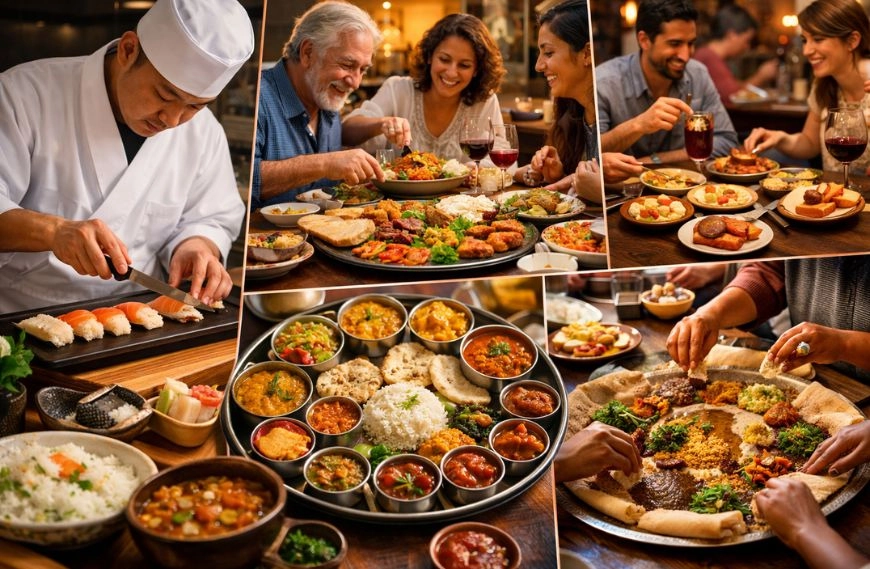
At its core, dining rituals reflect the way societies view food and community. In Japan, for example, the ritual of sushi preparation emphasizes precision, respect for ingredients, and aesthetic presentation. This cultural reverence for craftsmanship has inspired restaurants worldwide to adopt minimalist design and meticulous service. In contrast, Mediterranean cultures often highlight communal dining, where meals are shared among family and friends. Restaurants that embrace this tradition create concepts centered on large platters, open kitchens, and convivial atmospheres, encouraging guests to connect as much as they consume.
Religious and spiritual traditions also play a role in shaping restaurant concepts. In India, vegetarianism rooted in Hindu and Jain practices has influenced countless menus, while fasting rituals during Ramadan in Islamic cultures inspire special offerings and late-night dining experiences. Restaurants that acknowledge these traditions not only cater to specific dietary needs but also demonstrate cultural sensitivity, building trust and loyalty among diverse customer bases.
Dining rituals often extend beyond food to encompass service styles and ambience. In French fine dining, the ritual of multi-course meals served with formal etiquette has set global standards for luxury restaurants. Meanwhile, American diners reflect a culture of casual, fast-paced meals, influencing concepts that prioritize efficiency and accessibility. By aligning with these cultural expectations, restaurants create environments that feel authentic and familiar to their target audiences.
Globalization has amplified the importance of cultural dining rituals by exposing consumers to diverse traditions. Travelers seek authentic experiences, and culinary tourism has made dining rituals a key part of destination branding. Restaurants that highlight local customs—such as tea ceremonies in China or tapas culture in Spain—become attractions in themselves, offering immersive experiences that connect visitors to the essence of a place. For local markets, this means that embracing cultural rituals is not just about heritage preservation but also about economic opportunity.
The influence of dining rituals is also evident in the rise of themed and experiential restaurants. Concepts such as Korean barbecue, where guests cook their own food at the table, or Ethiopian dining, where meals are shared from a communal platter, bring cultural practices into modern settings. These experiences appeal to adventurous diners who value authenticity and engagement, while also educating them about traditions they may not encounter otherwise.
From a business perspective, integrating cultural dining rituals into restaurant concepts enhances differentiation. In a competitive industry, offering unique experiences rooted in tradition sets establishments apart. It also fosters emotional connections, as customers associate meals with meaningful cultural narratives. Restaurants that successfully blend tradition with innovation—such as modern Indian fine dining or contemporary interpretations of Middle Eastern mezze—demonstrate how rituals can evolve while retaining their essence.
Challenges do exist. Cultural appropriation and misrepresentation can undermine credibility, particularly when traditions are commercialized without respect or accuracy. Restaurants must approach cultural rituals with authenticity, often by collaborating with local communities or experts. Transparency in storytelling and genuine respect for heritage are essential to avoid alienating customers who value cultural integrity.
Dining rituals are powerful cultural expressions that shape restaurant concepts in profound ways. They influence menus, service styles, ambience, and customer expectations, turning meals into experiences that transcend food. For restaurants, embracing these traditions is not only a way to honor heritage but also a strategic approach to differentiation, loyalty, and global relevance. In a world where dining increasingly reflects identity and values, the cultural significance of rituals ensures that restaurants remain more than places to eat—they become spaces where tradition, community, and business intersect.
Author Bio: (Prathamesh Amrute has extensive experience in the hospitality management industry. He completed postgraduate studies in Hospitality Management at a prominent college in Toronto, Canada)
Subscribe Deshwale on YouTube
