



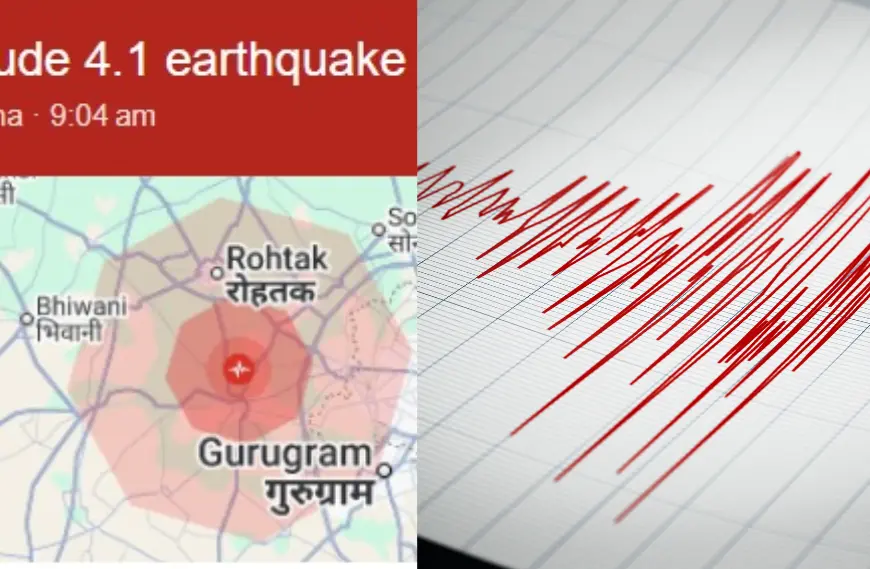
A mild earthquake struck Haryana on Wednesday morning, but the impact was widely felt across Delhi and neighbouring areas. For many, it was one of the longest tremors they could remember. While there were no reports of damage or injury, the incident left residents shaken… both physically and emotionally. The Delhi earthquake tremors have once again reminded people just how vulnerable the city is when the ground starts moving.
The quake hit at 9:04 a.m., catching people off guard. Measuring 4.4 on the Richter scale, the epicentre was located in Jhajjar district of Haryana, around 200 kilometres from cities like Meerut and Shamli, where tremors were also reported. According to the National Centre for Seismology, the earthquake occurred at a shallow depth of 10 kilometres, which likely made it feel stronger than the magnitude would suggest.
Within moments of the tremors, households across Delhi reported furniture shaking and ceiling fans swaying. Many residents, startled by the sudden motion, rushed out of their homes. In offices across Noida and Gurugram, employees stepped away from their desks as computer monitors rattled. Some evacuated buildings altogether, choosing safety over uncertainty.
Several people took to social media almost instantly, posting videos and describing how it felt. One recurring phrase stood out: ‘That was the longest I have ever felt.’ While it was not a high-magnitude earthquake, the sensation lasted long enough to cause widespread anxiety. For many, especially those working on upper floors or living in high-rise buildings, the experience was particularly alarming.
Amaan Khan, a 20-year-old from Delhi, shared his experience with Deshwale, saying, “Main so raha tha, aur mujhe aisa laga, jaise mere neeche se koi cheez guzar gayi ho.” His words captured the eerie feeling many had… of the earth moving beneath them when they least expected it.
Emergency services acted quickly. The National Disaster Response Force (NDRF) issued safety advisories within minutes. It reminded people to avoid panic, leave buildings through staircases instead of lifts, and head to open spaces if needed. It also advised drivers to stop their vehicles at safe, open spots during tremors.
Although no damage was reported, the incident reignited public concern about Delhi’s earthquake preparedness. Experts say the capital sits in Seismic Zone 4, which is considered a high-risk area. The city lies close to several active fault lines, including the Delhi-Haridwar Ridge and the Mahendragarh-Dehradun Fault. These fault lines make the region particularly prone to seismic activity.
According to the Delhi Disaster Management Authority (DDMA), North India’s vulnerability stems from tectonic activity where the Indian plate collides with the Eurasian plate. This slow, powerful movement causes pressure to build along the fault lines… like a spring being compressed. When that pressure is suddenly released, the earth shakes.
Delhi has experienced damaging earthquakes in the past. Since 1720, at least five quakes above magnitude 5.5 have struck the region. While modern building codes now require earthquake-resistant designs, many older structures may not meet these safety standards. That’s what worries experts the most… not just the tremors themselves, but the possibility of poor infrastructure making future quakes deadlier.
What makes this event particularly interesting is how deeply people felt it, despite the relatively modest magnitude. Shallow quakes like this one don’t lose much energy before reaching the surface, so even a 4.4 can feel intense if you are nearby. That’s exactly what happened across the NCR.
For those living in densely packed cities like Delhi, it’s a reminder that natural disasters don’t always wait for warnings. Though this quake passed without damage, the psychological impact was real. Children got scared, pets reacted, and families had to quickly decide whether to stay indoors or rush out.
So, what should you do when the ground shakes? Experts advise staying calm. If you are inside, take cover under a sturdy table or next to a wall. Stay away from windows and don’t use lifts. If you are outside, move away from buildings, trees, and electric poles. If driving, pull over and wait until the tremors stop.
Authorities are keeping an eye on aftershocks, but so far, none have been reported. Still, seismic experts stress the importance of regular drills and awareness campaigns. Knowing what to do in those few critical seconds can make all the difference.
The tremors have come and gone, but they have left behind a useful lesson… Delhi, and its surrounding regions, are not immune to earthquakes. The city may not shake every day, but when it does, even a short tremor can jolt people into remembering how fragile things really are.
