



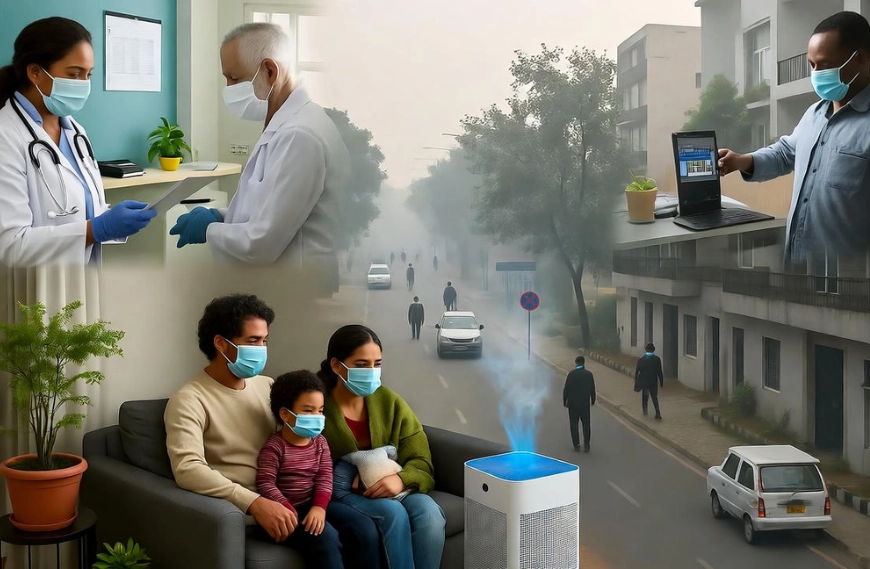
Delhi-NCR is again facing a tough time. The air is getting worse, and a new flu wave is making people sick in large numbers. According to a recent LocalCircles survey, three out of every four households in Delhi-NCR have at least one sick person at home. Doctors say this is not a coincidence. The combination of toxic air pollution and the H3N2 influenza virus has created a serious health crisis that is affecting almost every family in the region.
Toxic air fills the capital
Over the past week, the Air Quality Index (AQI) in Delhi and nearby areas has shot up to “severe” levels, crossing 450 in several locations such as Anand Vihar, Ghaziabad, and Gurugram. A thick layer of smog has covered the city, turning the sky grey and making breathing difficult.
Experts from the Central Pollution Control Board (CPCB) have warned that the pollution is mainly caused by stubble burning in neighbouring states, construction dust, and vehicle emissions. As winter approaches, these pollutants get trapped in the air because of low wind speed and cooler temperatures.
Doctors say that breathing this toxic air is like smoking 10–15 cigarettes a day. It causes irritation in the throat, eyes, and lungs, and lowers the body’s ability to fight infections. This makes it easier for viruses like H3N2 to spread.
H3N2 virus adds to the suffering
While Delhi’s air is already making life difficult, the H3N2 influenza virus has made things worse. The virus is spreading quickly and has become the main cause of cough, fever, sore throat, and prolonged fatigue.
Unlike a common cold, which usually goes away in a few days, patients infected with H3N2 are taking more than a week to recover. In some cases, especially among children and the elderly, recovery is taking up to two weeks.
Hospitals across Delhi, Gurugram, and Noida have seen a sharp rise in patients with breathing problems. Private clinics and pharmacies also report higher sales of cough syrups, inhalers, and anti-viral medicines.
Dr. Arvind Kumar, a lung specialist at Medanta Hospital, said, “Pollution is acting like petrol for the fire. It’s making viral infections worse and recovery slower.”
A sick home on every street
The LocalCircles survey found that nearly 75 percent of Delhi-NCR households have at least one sick member right now. Among them, 38 percent said that two or more people in the same family are unwell.
Common symptoms include persistent cough, breathlessness, headache, fever, and weakness. Many families say even children who recovered from viral infections are falling sick again because of the bad air.
The problem is not limited to one area. Both urban and semi-urban regions, from Noida’s housing societies to Gurugram’s offices, are facing the same issue. Residents say they are forced to keep windows closed all day, yet indoor air is also turning stale.
Middle-class families most affected
While air purifiers and N95 masks offer some protection, they are still unaffordable for many families. Middle- and lower-income groups, who travel daily for work or live in crowded neighbourhoods, are more exposed to the pollution.
Auto drivers, construction workers, and delivery staff say they often work outdoors without masks. “We cannot stop working, even if we feel sick,” said a driver in Lajpat Nagar. “By evening, my throat burns, and I feel dizzy, but what can we do?”
Experts point out that the poor and working class suffer the most during such pollution waves because they have the least access to clean air, healthcare, or protective gear.
Doctors’ advice: Stay indoors and stay alert
Medical experts across hospitals are advising people to stay indoors, especially during early mornings and late evenings when pollution peaks. Using masks, air purifiers, and steam inhalation are being recommended to reduce irritation.
Doctors also warn against taking antibiotics without proper diagnosis. Many viral cases are being wrongly treated as bacterial infections, which can lead to resistance.
Those who already have asthma, chronic bronchitis, or heart disease are at the highest risk. Hospitals have been advised to keep oxygen cylinders, nebulisers, and emergency care ready as outpatient visits rise.
Government response and public action
The Delhi government has begun enforcing the Graded Response Action Plan (GRAP) to control air pollution. Construction work has been restricted, and old diesel vehicles are being stopped from entering the city. Schools have been told to monitor outdoor activities.
Public health experts, however, say that these steps need to be stronger and faster. They are urging for better coordination between states to tackle crop burning and industrial emissions, which are the root causes of the crisis.
Citizens are also taking small steps, many are planting trees, carpooling, and avoiding crackers ahead of Diwali. Awareness campaigns on social media are spreading messages like “Breathe Safe” and “Mask Up Delhi.”
A lesson from the crisis
The situation in Delhi-NCR shows how environmental and health issues are deeply connected. When pollution rises, the immune system weakens. When a virus spreads, dirty air makes it worse. This cycle is harming millions of people and costing the country in lost productivity and healthcare expenses.
Experts believe that India needs a long-term clean air policy not just emergency steps during winter. Cleaner transport, waste management, and green energy are the only ways to ensure healthy living conditions for future generations.
Until then, families are advised to take care of their health at home, drink warm water, eat nutritious food, and use masks whenever stepping out.
Delhi’s current crisis is not just about smog it’s about the air every citizen breathes, every single day.
Subscribe Deshwale on YouTube
