



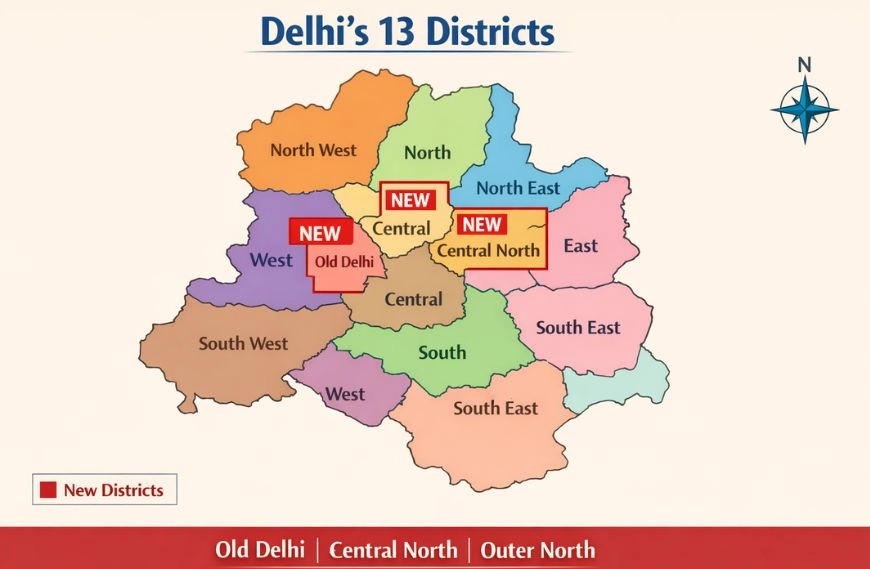
Delhi has taken a significant step towards making government services more accessible to its residents by reorganising its administrative structure. With the government notifying the creation of 13 districts, up from 11, the move aims to bring governance closer to citizens and improve efficiency across the capital.
One of the key benefits of this reorganisation is the focus on citizen convenience. The establishment of new mini secretariats and additional offices within each district means that residents no longer have to travel long distances or navigate crowded offices to access essential services. Tasks such as obtaining birth and death certificates, land and property registration, and filing complaints will become faster and more straightforward.
For instance, in districts with large populations, long queues and delayed service were common complaints. The new administrative divisions will help reduce these delays by distributing workloads more evenly and creating smaller, more manageable jurisdictions. Citizens can expect quicker processing times, reduced travel, and easier access to government officials responsible for handling local issues.
In addition to streamlining routine services, the reorganisation also strengthens the local grievance redressal system. Residents will now find it easier to report issues such as civic infrastructure problems, utility complaints, or public service gaps. With offices located closer to neighbourhoods, authorities can respond promptly, leading to more effective problem-solving and greater accountability.
This reorganisation aligns with Delhi’s broader vision of responsive and citizen-friendly governance. By decentralising administration, the government is ensuring that each district can focus on the specific needs of its residents. For example, areas with dense populations, high commercial activity, or unique local challenges can receive more attention, tailored services, and faster intervention when issues arise.
Non-governmental organisations and community groups also stand to benefit from this change. With more local offices and officials available for coordination, NGOs working in social welfare, education, and public health will find it easier to collaborate with government departments, implement programmes, and reach the communities they serve.
Ultimately, the reorganisation is more than just a bureaucratic adjustment. It reflects a commitment to placing citizens at the centre of governance. By bringing government services closer, reducing administrative hurdles, and enabling quicker responses to public needs, Delhi is taking a meaningful step toward a more accessible, efficient, and citizen-focused administration. Residents can now look forward to a smoother and more convenient experience when interacting with government services across the capital.
Subscribe Deshwale on YouTube
