



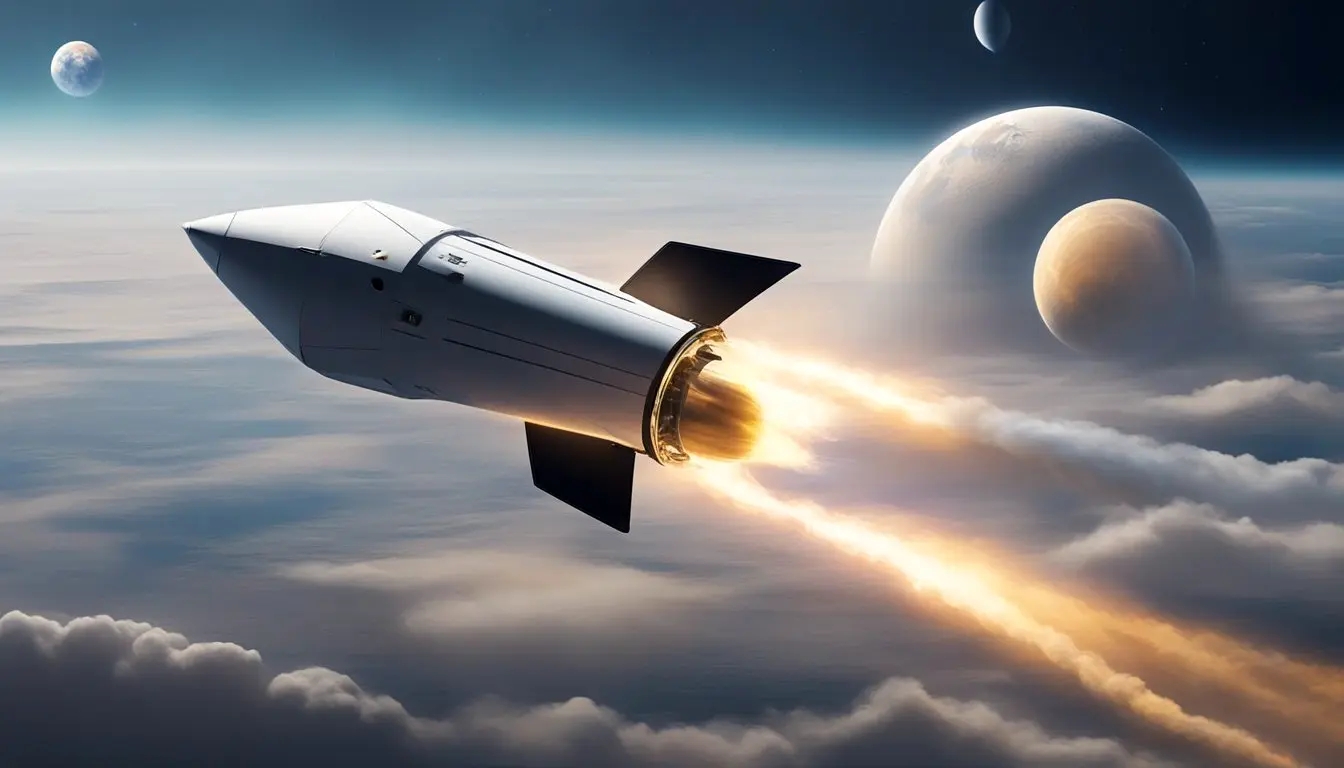
The Dawn of Intercontinental Rocket Travel
Elon Musk has never been one to think small. From revolutionizing the electric vehicle industry with Tesla to pioneering private space exploration with SpaceX, his vision has continually pushed the boundaries of what humanity considers possible. Now, Musk is setting his sights on something even more ambitious: using SpaceX’s rockets for Earth-to-Earth travel, enabling passengers to fly anywhere in the world in under an hour.
This concept, often referred to as point-to-point (P2P) rocket travel, could transform global transportation as we know it, reducing long-haul flight times from hours to minutes. Imagine traveling from New York to Tokyo in just 40 minutes or from London to Sydney in under an hour-a future that seems straight out of science fiction but is rapidly becoming a technological possibility.
In this article, we will explore:
- How SpaceX’s Starship could revolutionize Earth travel
- The technology behind rocket-powered flights
- The challenges and risks involved
- How this compares to current long-distance travel
- Potential real-world applications and future prospects
1. How SpaceX Plans to Use Rockets for Global Travel
The idea of Earth-to-Earth rocket travel was introduced by Elon Musk in 2017 during a SpaceX event, where he showcased a video demonstrating how the Starship rocket could be repurposed for rapid point-to-point travel on Earth.
The Concept: How Would It Work?
1. Boarding at a Floating Launch Pad:
Passengers would board the Starship at a floating offshore launch platform, similar to oil rigs modified for space travel.
2. Suborbital Rocket Launch:
The Starship would launch vertically, just like it does for space missions.
It would quickly reach the edge of space (suborbital altitude), reducing air resistance and allowing it to move at hypersonic speeds.
3. Gliding Through the Upper Atmosphere:
The rocket would cruise at speeds of 25,000 km/h (15,500 mph), significantly faster than commercial jets.
4. Reentry and Vertical Landing:
As it approaches the destination, the rocket would reenter the atmosphere and slow down.
It would land vertically, just like Falcon 9’s boosters, at another offshore platform near the destination city.
Potential Flight Times Between Major Cities
Compared to today’s commercial aviation, here’s how Starship could cut down travel times:
Here’s your table in proper format:
| Route | Commercial Flight Time | Starship Time |
|---|---|---|
| New York to London | ~7 hours | ~30 minutes |
| Los Angeles to Shanghai | ~13 hours | ~40 minutes |
| Sydney to Dubai | ~14 hours | ~50 minutes |
| Tokyo to Paris | ~12 hours | ~35 minutes |
The Starship System
SpaceX’s Starship is the most advanced reusable rocket system ever designed. Here’s why it’s key to making Earth-to-Earth travel work:
- 100% Reusable: Unlike traditional rockets, Starship is fully reusable, significantly lowering costs.
- Rapid Turnaround: The rocket is designed for quick re-launch, meaning it could serve multiple flights daily.
- Heavy Payload Capacity: Starship can carry 100+ passengers, making it viable for commercial travel.
- Methane-Fueled Raptor Engines: Starship’s engines are powered by liquid methane and oxygen, providing efficient thrust and rapid acceleration.
Flight Dynamics: How It Will Work Differently from Space Missions
Unlike a space mission, Earth-to-Earth flights won’t require reaching orbit. Instead, the rocket would fly in a high arc, just outside most of Earth’s atmosphere, before descending towards its destination.
Key aspects of flight physics:
- No need for full orbital velocity (~28,000 km/h); suborbital speed (~25,000 km/h) is sufficient.
- Lower gravitational forces on passengers compared to full space travel.
- Reentry heating challenges are reduced due to shorter flight paths.
3. Challenges and Risks of Rocket-Powered Earth Travel
Despite its promise, the idea of using rockets for commercial air travel comes with several challenges:
1. Cost and Affordability
- Currently, a single Starship launch costs around $2 million.
- For this to be viable, ticket prices must be competitive with first-class airline travel (~$10,000 per passenger).
- SpaceX aims to reduce costs by increasing flight frequency and making operations more efficient.
2. Safety Concerns
- Rockets still have higher failure rates than commercial airplanes (~1-2% vs. <0.001%).
- Ensuring passenger safety during launch, reentry, and landing is critical.
- Emergency escape systems, similar to those on Dragon Crew Capsules, may be required.
3. Noise and Environmental Impact
- Rocket launches are extremely loud—causing sonic booms over cities would be problematic.
- Despite using methane-based fuel, rockets still emit CO₂, raising concerns over sustainability.
4. Infrastructure and Logistics
- Traditional airports cannot handle vertical rocket launches—new launch sites must be built.
- Floating ocean platforms will need high-speed ferries or tunnels to major cities for passenger access.
- Air traffic management will require new regulations for suborbital flights.
4. How Does This Compare to Current Travel Methods?
Here’s your table in proper format:
| Mode of Transport | Speed | Cost | Emissions | Comfort |
|---|---|---|---|---|
| Commercial Airlines | 900 km/h | $$ | Medium | High |
| Supersonic Jets (Concorde-style) | 2,200 km/h | $$$ | High | Medium |
| Rocket Travel (SpaceX) | 25,000 km/h | $$$$ | Medium | Unknown |
Key Takeaways:
- Much faster than any current mode of transport.
- Could be cost-effective if reusable rockets lower ticket prices.
- Environmental impact is uncertain—more sustainable fuels may be needed.
5. Potential Real-World Applications
- Beyond passenger flights, Earth-to-Earth rocket travel could have huge strategic uses:
- Military and emergency response: Deploy troops or humanitarian aid anywhere in the world within an hour.
- High-priority cargo transport: Deliver medical supplies or high-value shipments at record speeds.
- Luxury space tourism: Could serve as the next step in space tourism, bridging commercial aviation and space travel.
6. Future Prospects: When Will This Become Reality?
Elon Musk has set optimistic timelines, but real-world implementation will likely take decades.
Expected Timeline:
– 2024-2025: Continued testing of Starship for cargo transport.
– 2026-2030: First experimental flights with passengers.
– 2030s: Commercial Earth-to-Earth rocket travel becomes feasible for the ultra-wealthy.
– 2040s: Potential affordability for regular high-end business travelers.
Is Rocket Travel the Future?
Elon Musk’s vision of Earth-to-Earth rocket travel represents a paradigm shift in global transportation. If successful, it could:
– Revolutionize long-distance travel
– Make the world more interconnected than ever
– Challenge airlines, hyperloop, and high-speed rail
However, major technical, economic, and regulatory challenges must be solved before this dream becomes a reality. While it may not replace commercial aviation anytime soon, SpaceX is taking the first steps toward a new era of global mobility.
Would you take a rocket flight from New York to London in 30 minutes? The future might arrive sooner than we think!
