










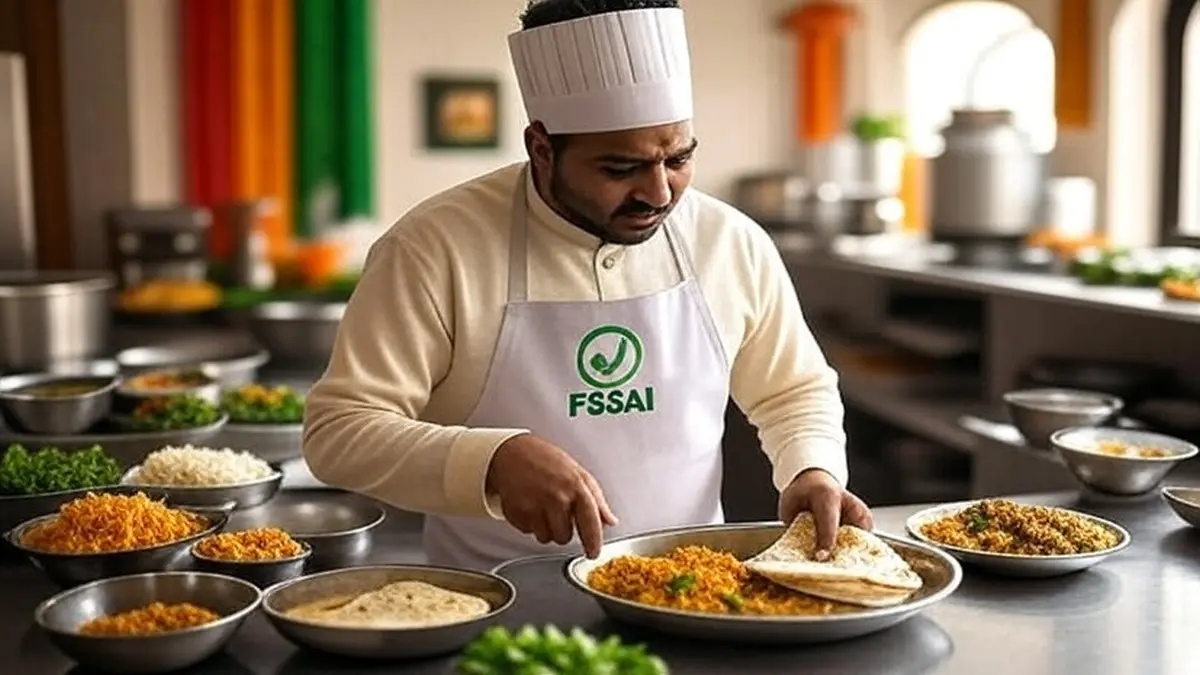
In India, food is a language of love, woven into festivals, families, and everyday life. From the tangy golgappas of Kolkata to the creamy kheer of Varanasi, every dish carries a piece of our soul. But what if the food we cherish is unsafe? The Food Safety and Standards Authority of India (FSSAI), born in 2008, vows to protect this sacred bond. It stands as a guardian, ensuring the dal in our thali or the sweets at our weddings is safe to eat. Yet, in a nation of 1.4 billion, where street vendors and global brands coexist, is FSSAI truly up to the task? This is not just about regulations or fines. It is about trust, health, and India’s audacious dream to nurture its people. Can FSSAI transform our plates into promises of well-being, or is it a dream still out of reach?
FSSAI operates under the Food Safety and Standards Act of 2006, a bold law merging seven outdated food regulations. Its goal is clear: deliver safe, nutritious food to every Indian. It sets science-based standards for food production, packaging, and distribution. It licenses millions of food businesses, from roadside chai stalls to packaged snack giants. It inspects factories, tests samples, and imposes fines up to ₹10 lakh for harmful adulteration. Based in New Delhi with six regional offices, FSSAI oversees 207 accredited labs, including 22 referral labs and 72 state labs. Over 5,000 Food Safety Officers enforce rules across India’s diverse landscape. Beyond enforcement, FSSAI runs campaigns like Eat Right India, nudging citizens toward healthier diets. Its mission touches every bite, from farm to fork.
Food safety is no small matter in India, where foodborne illnesses are a silent epidemic. The World Health Organization estimates unsafe food causes 600 million illnesses globally each year, with 40% affecting children under five in regions like South-East Asia. In India, contaminated water, pesticides in vegetables, or adulterated milk threaten lives. A 2012 study found milk mixed with water, urea, and detergent, a betrayal of trust. Between 2020 and 2023, FSSAI tested 430,000 samples, revealing 25% non-compliant and 16% unsafe or substandard. These numbers sting in a country where food is reverence. FSSAI’s battle is not just technical; it is emotional, safeguarding the joy of a child’s first laddoo or a family’s Diwali feast.
FSSAI has notched up victories that inspire. It banned trans-fats in edible oils by 2022, slashing heart disease risks. In 2015, it recalled Maggi noodles for excessive lead, proving its muscle. Its Eat Right Station Certification ensures hygienic food at railway stations, tying into Swachh Bharat’s vision. In 2023, FSSAI launched a nationwide milk surveillance, testing for adulterants like melamine. It collaborates with the Advertising Standards Council of India to stop misleading ads, like those touting sugary drinks as healthy. Recent checks on infant food confirmed compliance with global standards, easing parents’ fears. The 2025 Food Safety Connect app empowers consumers to report false claims, making every Indian a watchdog. These steps paint FSSAI as a warrior for health, fighting for a safer India.
But the road is bumpy, and FSSAI stumbles. A 2018 parliamentary report flagged its failure to regulate genetically engineered foods or accredit enough labs. Only 377 products have standards, far fewer than the 10,000 in developed nations. With just 5,000 officers for millions of food businesses, enforcement is patchy. A 2021 CAG audit found 50% of licenses issued with incomplete documents, raising doubts. State labs often lack modern equipment, slowing tests. In 2024, Singapore and Hong Kong banned Indian spices for ethylene oxide, exposing gaps. A 2023 survey of 24,000 Indians showed 73% doubt FSSAI’s effectiveness. These challenges are not just bureaucratic; they erode the faith of a nation that sees food as sacred.
India’s food culture adds urgency to FSSAI’s mission. In villages, where 70% of Indians live, safe food is scarce. Small vendors, forming 60% of food businesses, find FSSAI’s licensing complex and costly. The unorganised sector, from halwais to fruit carts, often slips through cracks. Yet, FSSAI trains street vendors through Eat Right India, teaching hygiene to thousands. At Maha Kumbh 2025, it deployed mobile labs to test prasad, blending faith with safety. These efforts show FSSAI’s heart, but its reach is limited. It must simplify rules for small businesses, ensuring safety without choking livelihoods. In a land where food is prasad, every bite must be pure.
FSSAI’s story is about more than rules; it is about India’s soul. Foodborne illnesses claim 420,000 lives globally each year, many in India. FSSAI’s budget, ₹500 crore annually, is dwarfed by the ₹40 lakh crore food industry. State coordination is weak; some states lack food safety departments. A 2024 report gave Lakshadweep a zero on the State Food Safety Index, showing uneven progress. Yet, FSSAI innovates. Its rice fortification program fights malnutrition, reaching millions. Its 2025 plan to regulate e-commerce for shelf-life violations tackles new frontiers. These steps echo India’s knack for doing more with less, but they need scale to match our appetite.
The Indian context makes FSSAI’s role poignant. Food is memory: a mother’s aloo paratha, a festival’s jalebi. Unsafe food breaks this bond. In 2024, FSSAI seized 575 kg of illegally ripened mangoes in Coimbatore, a small but vital win. Its Heart Attack Rewind campaign, targeting trans-fats, aims to save lives. But awareness lags. Many Indians don’t know FSSAI exists, unlike the gods they thank before meals. Campaigns must grow louder, making FSSAI a trusted name. It must build more labs, hire more officers, and align with global standards to restore faith in Indian food exports. Above all, it must hear consumers, whose voices demand accountability.
FSSAI’s journey mirrors India’s own: ambitious, imperfect, hopeful. It is not failing, but it is not flawless. Like a family cooking together, it needs harmony between states, businesses, and citizens. Its vision of a Swasth Bharat is a beacon, but it demands resources and resolve. Every safe meal at a railway station, every child eating untainted khichdi, is a step forward. FSSAI is India’s heartbeat, pulsing to keep health first. The question is not just whether it works great, but whether we will help it soar. In a nation where food is love, FSSAI’s fight is for our very soul.


