










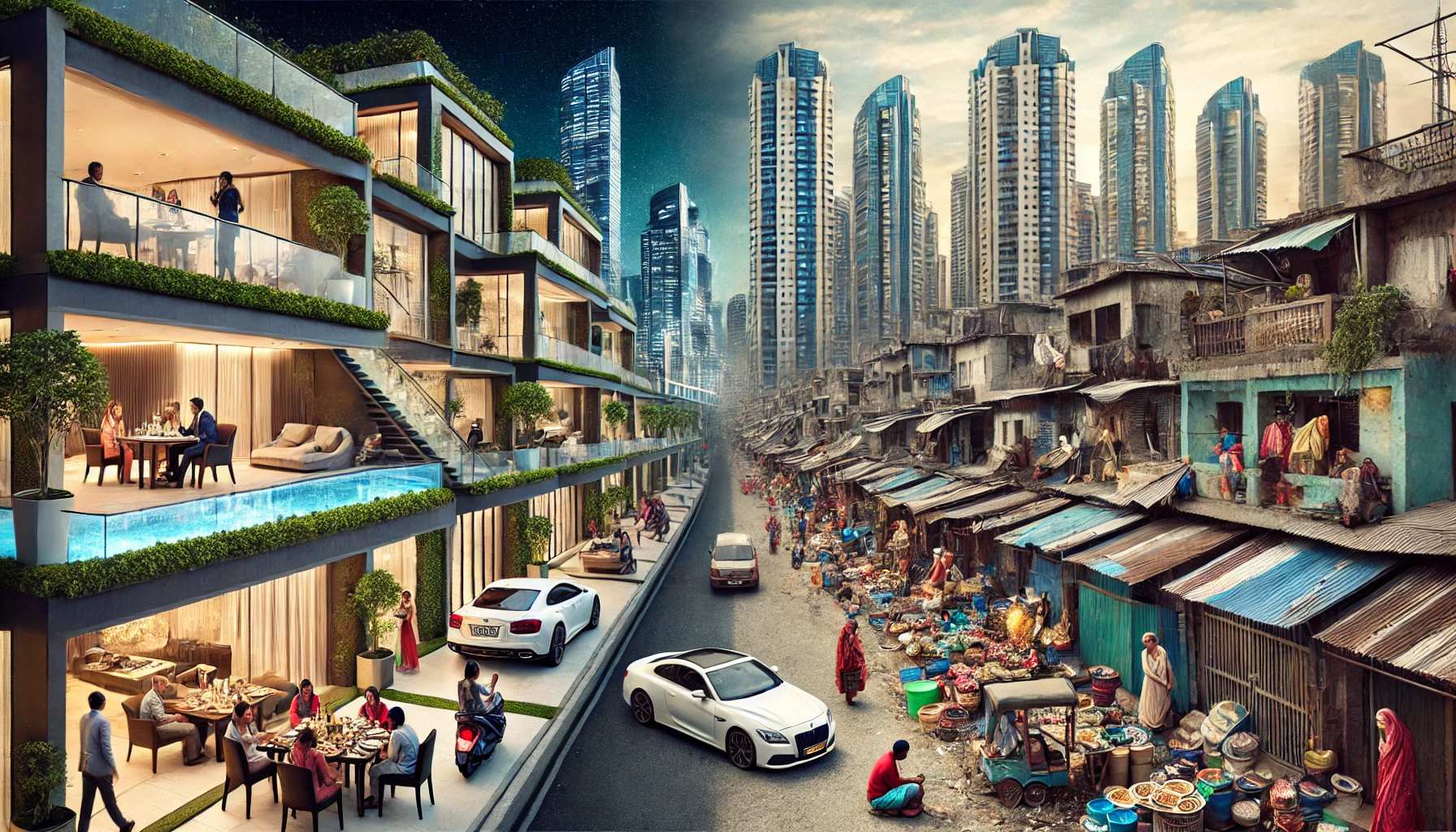
India, often celebrated as the world’s fastest growing major economy, hides an uncomfortable truth beneath its booming GDP numbers, a massive wealth gap that threatens to derail its economic ambitions. The latest Indus Valley Annual Report 2025 by Blume Ventures paints a stark picture of how 90% of India’s population lacks discretionary spending power, with only a small elite driving the bulk of consumer demand. This revelation challenges the dominant narrative of India’s growth story and lays bare the country’s fractured economic landscape.
The Three Indias: A nation divided by wealth
The report segments the Indian population into three distinct economic classes:
- India 1 (The consuming class): The top 10% of the population, approximately 140 million people, with annual incomes above $14,000 (₹11.6 lakh). This affluent group drives two thirds of India’s discretionary consumption and forms the primary target market for brands, luxury products, and premium services.
- India 2 (The aspirant class): The next 23% of the population, around 300 million people, earning between $3,000 and $14,000 annually. This group is slowly rising but remains price sensitive, spending more on essentials and less on luxuries.
- India 3 (The struggling majority): The remaining 67% of the population, approximately 1 billion people, living on less than $3,000 (₹2.5 lakh) per year. This massive segment barely covers basic needs and has virtually no discretionary spending power.
The study compares India’s consumption pyramid to that of Indonesia, Mexico, and China, but with a far thinner middle class and a significantly larger struggling base.
The mirage of rising consumption
At first glance, India’s consumption market appears vibrant. The country’s private consumption expenditure accounts for 60% of its GDP, among the highest globally. However, this aggregate figure masks the uncomfortable truth that most of this spending is driven by a narrow, affluent slice of the population.
The report reveals that India’s per capita consumption is one fifth that of China and half that of Indonesia. While India1 is splurging on premium cars, luxury housing, and foreign holidays, the vast majority is still struggling to afford two-wheelers, air conditioners, or even regular dining out.
Deepening inequality: The India1 effect
What makes the situation even more alarming is that the wealth divide isn’t just widening — it’s deepening.
In 1990, the top 10% of India’s population accounted for 34% of national income. By 2022, this share had skyrocketed to 57.7%, according to the World Inequality Lab.
This concentration of wealth has created what the report calls the “India1 Effect” — where businesses, brands, and policymakers increasingly cater to the top 10% while ignoring the broader population.
Examples of this phenomenon are everywhere:
- Premium car sales have outpaced two wheeler sales.
- High end housing projects dominate new real estate developments.
- Digital payment platforms like UPI are used primarily by urban elites, while cash still reigns supreme in rural areas.
- Travel remittances under the Liberalised Remittance Scheme (LRS) surged to $17 billion in FY24, highlighting India’s growing “experience economy” — but only for the top tier.
The emerging market paradox
India’s economic model is increasingly resembling that of Latin American economies like Brazil and Mexico, where a small, affluent class drives consumption while the majority remains excluded. This paradox poses a serious threat to India’s long term growth.
Unlike China, which lifted millions out of poverty through massive investments in manufacturing and human capital, India’s service-led growth has left large swathes of the population behind. The report points out that India’s savings rate has been declining steadily, with rising personal loans and unsecured debt further squeezing household finances.
The future of India’s consumer market
If the current trajectory continues, India’s consuming class is likely to deepen rather than widen. The affluent India1 will spend more on luxury goods, premium services, and global brands — but the middle and lower income segments will struggle to catch up.
Key future trends include:
- A booming experience economy focused on travel, dining, and entertainment.
- Rising demand for financial products like SIPs and equities among the affluent.
- Growth in homegrown luxury brands catering to India’s elite.
- A widening gap between urban gated communities and the rest of the country.
Bridging the divide: What needs to change?
To create a more inclusive consumption economy, India needs to:
- Invest heavily in human capital development, especially primary and secondary education.
- Boost formal job creation in manufacturing and services.
- Expand social welfare programmes to uplift India3.
- Promote financial inclusion to encourage savings and credit access among lower-income groups.
- Incentivise businesses to cater to aspirational consumers in India2.
A Wake-up call for India
The Indus Valley Annual Report 2025 is a sobering reminder that India’s economic growth is leaving too many behind. While the India1 class enjoys rising prosperity, the majority remains trapped in a cycle of low incomes and limited opportunities.
If India wants to achieve its dream of becoming a $5 trillion economy, it cannot afford to build its future on the backs of just 10% of its people. Bridging the consumption divide will require bold reforms, inclusive policies, and a fundamental rethink of how the Indian economy distributes its wealth.
Source: Indus Valley Annual Report 2025 by Blume Ventures.


