



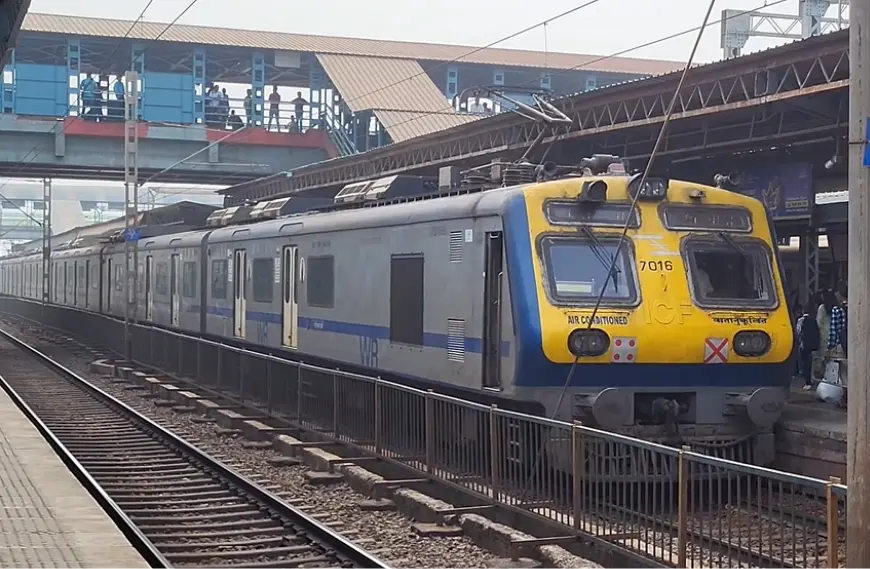
Mumbai’s suburban rail is not just transport. It’s the heartbeat of the city. Every morning and evening, millions squeeze into locals that have barely changed in decades. Now, change is finally coming. Mumbai’s 238 metro-style AC locals are on the way, and the big question is simple: how will they transform daily life?
How comfort will feel different
Think of the usual scene—wooden or steel benches, sweaty crowds, open doors, and the constant noise of the wind rushing in. That’s been the reality of Mumbai’s travel culture for years.
The new AC locals flip this picture. Cushioned seats, closed doors, and air-conditioning will make the ride feel more like the metro than the traditional local. The design itself will be different—one wide connected space instead of six narrow divisions, so passengers can move more freely.
This is not just cosmetic. For lakhs who spend hours every day on trains, it means fewer aches, less exhaustion, and a little more dignity in the daily grind.
How speed will reshape journeys
Here’s where it gets interesting. Mumbai is a city obsessed with speed. Every commuter counts the minutes saved between Churchgate and Borivali or between CST and Kalyan.
Right now, trains hit about 100–110 kmph. The new AC rakes are designed to touch 130. They will accelerate and decelerate faster too, balancing out the extra seconds lost at each stop because of automatic doors.
So while the doors close for safety, the faster engines make up for it. On the fast corridors, where long-distance commuters spend hours every week, that higher speed can cut down journeys in a way that adds up over time.
How ₹19,000 crore is being spent
Upgrading Mumbai’s rail is no small job. The bill is ₹19,293 crore. That money goes into 2,856 new coaches, new depots at Bhivpuri and Vangaon, and the technology to make all this work.
This is not just a case of swapping old trains for shiny new ones. It’s a re-engineering of the city’s backbone. Public and private sectors are working together, with private firms managing the new car sheds. That’s how the scale of this project is even possible.
But money always raises another question: fares. Will the AC comfort come with AC pricing? The Chief Minister has already urged the Railway Ministry not to hike tickets. If that request holds, the upgrade won’t just be for the well-off, it will stay accessible for the workers and students who actually run this city.
How safety and comfort finally come together
Anyone who’s ever seen the morning rush knows the risks—people hanging from doors, slipping from footboards, and sometimes losing their lives. For too long, Mumbai has normalised this.
The closed-door system changes that. No more leaning out, no more door-hanging. With better acceleration and smoother braking, the ride itself will be safer. Add cushioned seating, and the combination of safety plus comfort feels like a real cultural shift.
For the first time, Mumbai’s locals won’t force passengers to choose between efficiency and dignity. They will offer both.
How soon will this become real?
Here’s the catch. These changes won’t happen tomorrow. Once tenders are awarded, it could take two years to build a prototype. Only after that will full production roll out.
That means Mumbai will keep running on its old locals for a while longer. But the direction is clear. The era of open-door, sweaty commutes is closing, and the city is slowly stepping into a world-class future.
Mumbai’s 238 metro-style AC locals are more than new trains. They are a promise of safer rides, faster journeys, and a more dignified daily life for millions. The ‘how’ is in the engineering, the massive funding, and the political push to keep fares fair.
The real test will be in the rollout. Will the project stay on schedule? Will it remain affordable? And will commuters embrace the end of the old local culture?
