










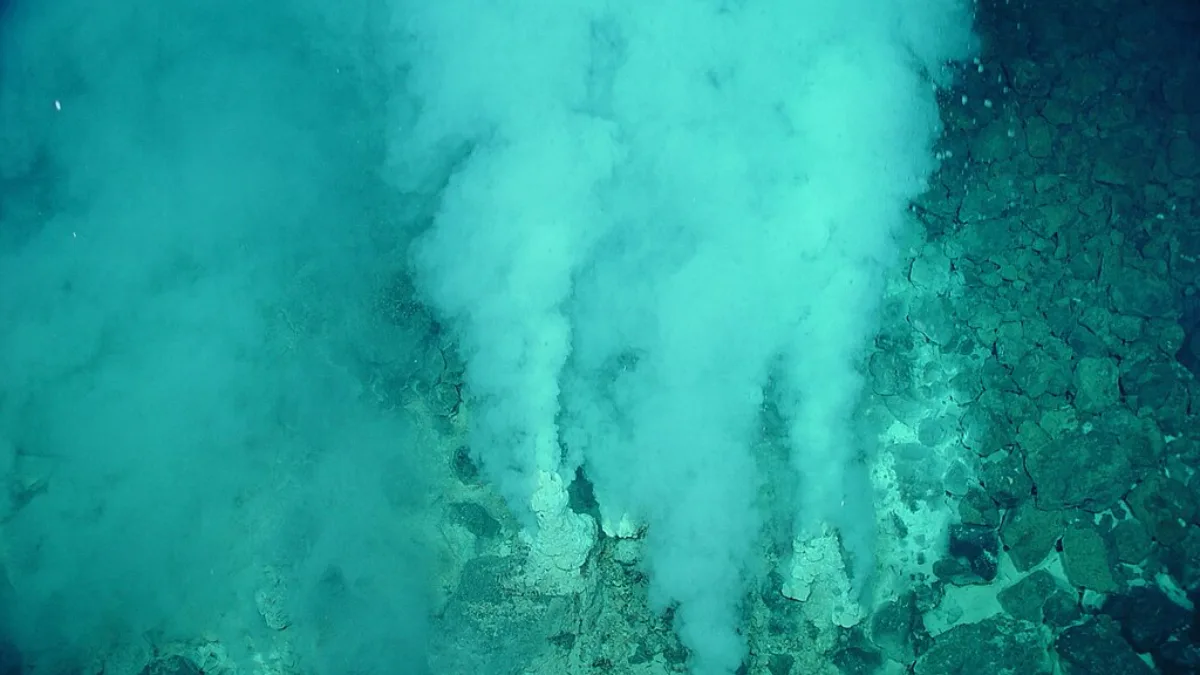
Scalding water. Black plumes. Clouds rich in minerals. On the ocean floor, along tectonic crests, hydrothermal vents shape alien landscapes. In these shadowy realms, life flourishes without sunlight. Organisms instead draw energy from the Earth’s inner heat. These are the extraordinary hydrothermal havens.
The Birth of a Vent
Far beneath the waves, tectonic plates slowly diverge or collide. Magma rises from deep below. As seawater seeps into fractures in the Earth’s crust, it heats upon contact with molten rock. During this process, the water becomes enriched with minerals such as iron, sulphur, and manganese. It then surges back out into the ocean, often at temperatures exceeding 400°C. When this hot fluid meets near-freezing seawater, rapid cooling forms towering black smokers. These are chimneys made of metal sulphides.
Chemosynthesis: Sunless Energy
While most surface life relies on photosynthesis, vent ecosystems run on a different fuel. Here, chemosynthesis takes over. Bacteria and archaea oxidise hydrogen sulphide, converting it into chemical energy. This energy allows them to fix carbon into organic compounds. In turn, this forms the foundation of a unique food web. No sunlight is required, only chemicals and heat.
Tubeworm Cities
One of the most iconic residents of these vents is the giant tubeworm, Riftia pachyptila. These creatures resemble alien bamboo and can grow over two metres tall. They have no mouths or digestive tracts. Instead, they survive through a remarkable partnership. Inside a specialised organ called the trophosome, they host symbiotic bacteria. These bacteria transform vent chemicals into food that nourishes the worm. The worms’ red plumes transport sulphide and oxygen from seawater into their bodies, creating an efficient internal pipeline.
Mussels and Clams at the Base
Vent mussels and clams anchor themselves to hard surfaces near vent chimneys. Their gills also host chemosynthetic bacteria. By filtering seawater, they absorb both nutrients and chemical compounds. Over time, they form dense colonies that carpet the base of the chimneys. These bivalve beds trap mineral particles and create reef-like structures, offering shelter to shrimp, crabs, and fish.
Shrimp and Crabs on Patrol
Swarming over vent fields are alvinocaridid shrimp. Using feathery appendages, they gather bacterial mats and feed on free-floating microbes. Crabs, meanwhile, patrol the chimney slopes. Some scavenge detritus, while others actively hunt smaller creatures. Both species are often covered in thick bacterial growths, which might provide extra nutrition directly from their exoskeletons.
Fish and Octopuses in the Shadows
A small number of fish species, including scorpionfish, linger near the edges of vent systems. These ambush predators wait patiently for prey swept in by currents. Meanwhile, octopuses with limited vision explore crevices for snails and crustaceans. They sense chemical cues in the water and navigate using smell, touch, and faint traces of light.
Natural Change and Succession
Hydrothermal vents are not permanent features. Chimneys eventually collapse, and the flow of superheated water stops. When this happens, the entire ecosystem must relocate. Larvae drift through the ocean, using chemical and thermal signals to find new vent sites. Some species colonise new vents quickly, while others take decades. Ecologists study this ecological succession to better understand resilience and survival in extreme habitats.
A Dynamic Geological-Biological Link
The chemical composition of vent fluids varies by geological setting. Mid-ocean ridges, volcanic arcs, and back-arc basins each produce different vent profiles. These chemical differences directly influence which species thrive. Vents rich in sulphide may support towering tubeworm forests. In contrast, others with low sulphide favour mussel colonies. Iron-rich vents may be covered in colourful microbial mats. Each vent site acts as a living laboratory in chemical ecology.
Science at the Source
Hydrothermal vents continue to deliver scientific breakthroughs. Thermophilic bacteria from these environments produce enzymes that can withstand extreme heat and pressure. These enzymes are valuable in industrial applications. For instance, DNA polymerases used in the polymerase chain reaction (PCR) technique were inspired by heat-loving microbes. Some vent bacteria even produce promising new antibiotics. Their resilience also offers insights into the origins of life on Earth, and the possibility of life on other worlds.
Emerging Threats and Conservation Calls
Despite their remoteness, vent ecosystems face serious threats. Deep-sea mining operations are targeting polymetallic sulphide deposits found around vents. These contain copper, gold, and rare earth elements. However, extracting these minerals could severely damage these unique and poorly understood habitats. Scientific communities worldwide are urging caution. The International Seabed Authority is currently debating protective measures. Many researchers are calling for a moratorium on mining until better environmental policies are in place.
Technology and the Path Ahead
New technologies are opening fresh pathways for exploration. Robotic submersibles and remote-operated vehicles are now mapping unexplored vent fields and collecting samples of organisms, fluids, and rocks. Autonomous underwater gliders monitor these systems over time. Meanwhile, advanced DNA sequencing techniques are uncovering hidden biodiversity. Stable isotope analysis is helping scientists trace food web dynamics. Each mission adds to our knowledge and reveals new species and adaptations.
Windows into Earth’s Depths
Hydrothermal vents remind us of life’s incredible adaptability. They demonstrate that living organisms can survive and even thrive by harnessing energy from chemical reactions alone. This discovery has significant implications for astrobiology. It suggests that similar ecosystems could exist on Jupiter’s moon Europa or Saturn’s Enceladus, both of which have subsurface oceans in contact with rocky cores.
As one gazes out from a ship into the deep blue, it is humbling to imagine what lies beneath. Volcanoes breathe silently. Chimneys vent unseen. Tubeworms sway like alien sentinels. Shrimp scuttle through the darkness. And in that obscurity, life endures. Hydrothermal havens offer more than biological curiosity. They are vivid reminders of Earth’s hidden power and life’s surprising resilience.


