










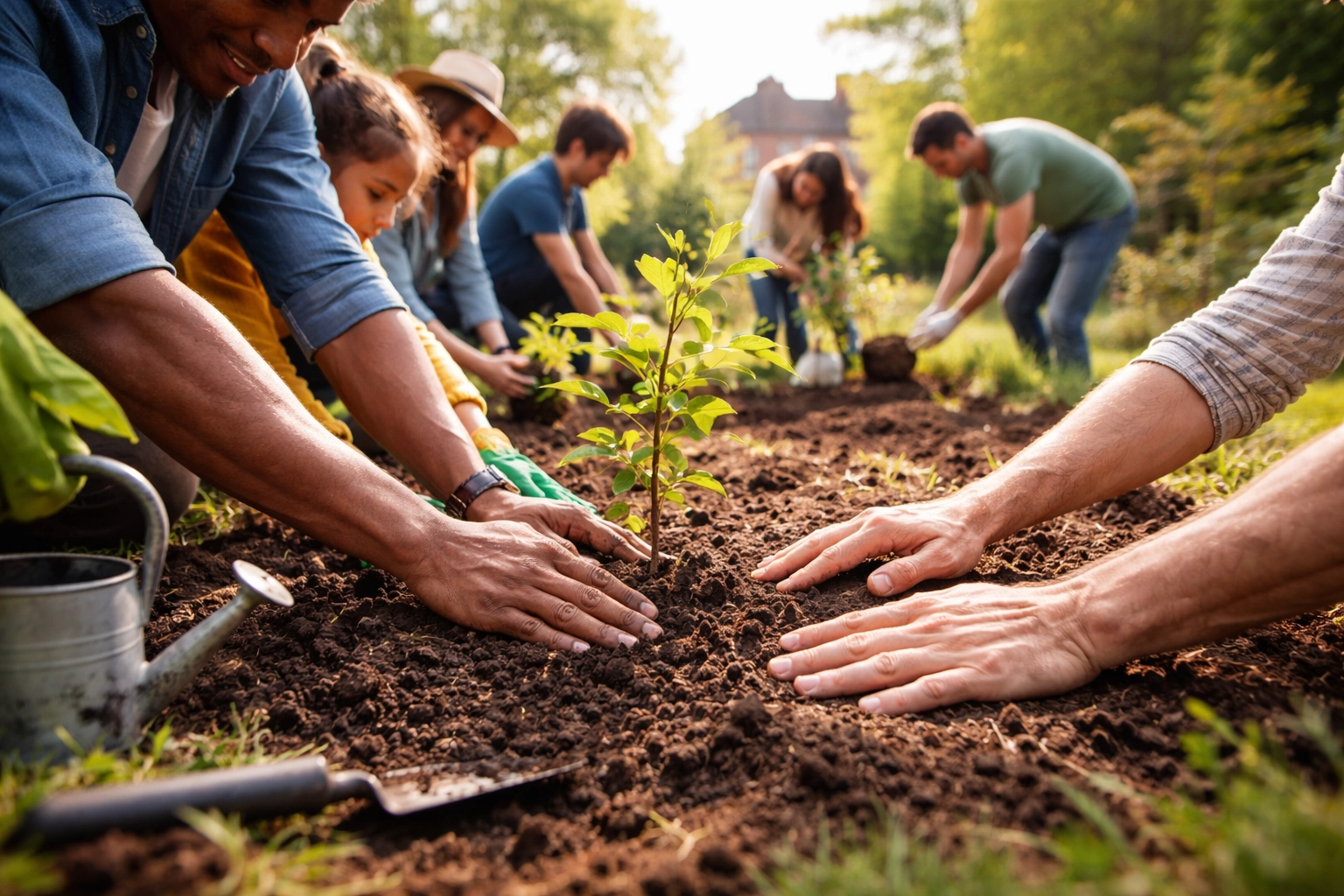
Environmental restoration in India rarely begins with a grand announcement. It starts with a meeting under a tree, a conversation in a village temple courtyard, or a discussion between residents of an urban housing colony who are tired of living beside a dumping ground or a dying lake.
Across the country, such small beginnings are leading to measurable ecological change.
In one town, a neglected patch of government land had long served as an informal waste site. During the monsoon, plastic would clog drains and the surrounding area would flood. A group of residents decided the cycle had to stop. They began by clearing waste in phases, then sought guidance from local botanists about native tree species suited to the soil. Instead of ornamental plants, they chose hardy, indigenous varieties that would support birds and insects.
Within two years, the once-barren ground had transformed into a dense green pocket. Temperatures in the immediate vicinity dropped slightly during peak summer. Birdsong returned. Children began using the shaded area as a play space. The change was ecological, but also social: people who had never spoken to each other before now shared responsibility for watering, composting and upkeep.
Similar transformations are visible in rural India, where communities are reviving degraded commons. In drought-prone regions, villagers are fencing off small tracts of land to allow natural vegetation to regenerate. Controlled grazing, combined with soil and moisture conservation measures, is slowly restoring grasslands that support livestock. What was once scrubby and eroded begins to hold moisture again, encouraging biodiversity to return.
Farmers, too, are experimenting with greener practices. Some are reducing chemical inputs and reintroducing mixed cropping, border trees and organic soil enhancers. Their motivation is often practical rather than ideological: healthier soil retains water better, reduces input costs and improves long-term productivity. Over time, these choices also benefit pollinators, birds and local ecosystems.
Urban lake revival has become another quiet movement. Citizen groups, sometimes in partnership with municipal bodies, are desilting lakes, stopping sewage inflow, planting native vegetation along the banks and creating walking paths that encourage public ownership of the space. A revived water body becomes more than scenery; it recharges groundwater, reduces flooding risk and provides habitat for fish and birds.
These efforts rarely make national headlines. They are incremental, labour-intensive and often dependent on volunteers. Yet taken together, they represent a powerful trend: environmental repair driven not only by policy but by people.
India’s ecological challenges remain vast deforestation, pollution, and climate stress. But alongside these, a quieter story is unfolding: citizens refusing to accept environmental decline as inevitable. They are learning that restoring nature does not always require advanced technology; sometimes it requires persistence, local knowledge and collective stewardship.
In these modest green victories lies a hopeful lesson that the relationship between people and land can still be repaired, one patch at a time.
Subscribe Deshwale on YouTube


