



The Cheese Country That Does Not Know Its Own Cheese
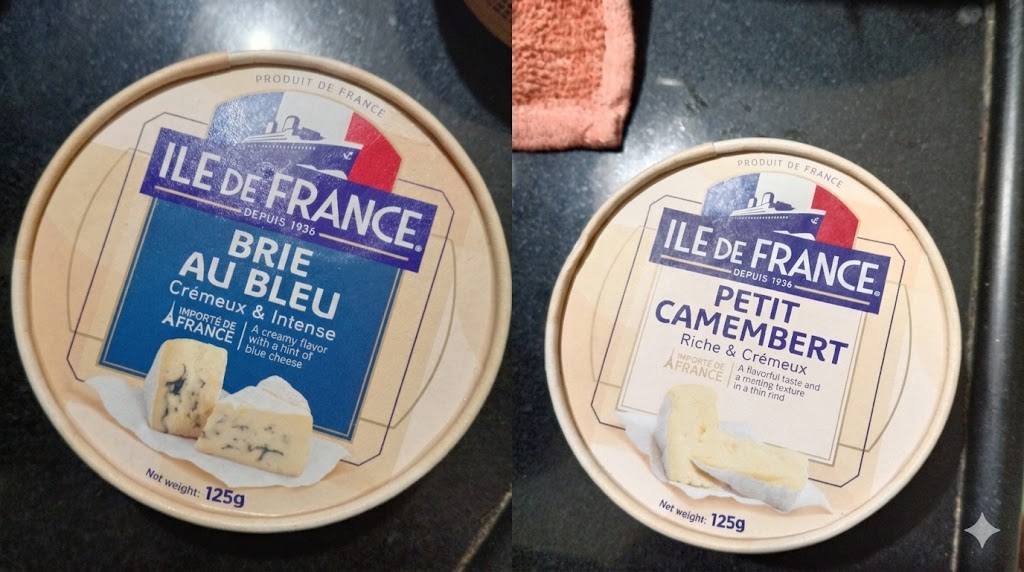
Walk into the gourmet section of any upmarket supermarket in Mumbai, Delhi or Bengaluru, and the picture is remarkably consistent. Rows of neatly packaged European and American cheeses fill the refrigerated shelves: French Brie, Swiss Gruyère, Italian Parmigiano-Reggiano, Danish Camembert, Spanish Manchego. The branding is confident. The provenance is impeccably documented. And the prices are, to put it plainly, quite something. On the 15th of March 2026, this writer found Gruyère priced at Rs. 1,538 per 100 grams at Go Fresh at Sky City Mall. At the same store, Parmigiano-Reggiano and Appenzeller were being sold at prices ranging between Rs. 900 and Rs. 940 per 100 grams. These are not casual purchases. They are deliberate ones, and that distinction matters.
Somewhere far from that refrigerated theatre, in a mountain market in Jammu, a Gujjar shepherd’s wife is pressing fresh cow’s milk curd into a dense, flat disc of Kalari cheese. Nobody is paying Rs. 900 for that. Most people in Mumbai do not even know it exists.
This is the story of Indian cheese in 2026: extraordinarily rich in indigenous variety, shockingly poor in visibility, and increasingly squeezed by the aspirational pull of imported European alternatives that arrive with powerful institutional backing and a marketing apparatus that India’s own dairy traditions simply cannot match.
Six Cheeses That Could Hold Their Own Anywhere
India has at least six remarkable artisanal cheese traditions that most of its own population has never tasted, and more pertinently, never had the chance to taste.
Kalari, from the Jammu region of Jammu and Kashmir, is perhaps the most compellingly complex. Made from cow, buffalo or goat’s milk by the nomadic Gujjar community, it is a stretched-curd cheese with a mozzarella-like elasticity when fresh and a sharp, pungent depth when aged. Pan-fried until golden, it forms a crisp crust over a molten, milky interior. Food historians trace its lineage to the heat-stretched cheeses of Central Asia, and there is a reason some call it the mozzarella of Kashmir, though that comparison does not quite do justice to what ageing does to Kalari. It becomes something else entirely.
Chhurpi, from Sikkim and the broader Eastern Himalayan belt, is made from the milk of the chauri, a cross between a male yak and a female cow. It exists in two distinct forms: a soft, creamy variety used in momos and chutneys, and a rock-hard, dried version that is among the firmest cheeses anywhere in the world, chewed for hours like a slow, smoky meditation. Chhurpi has even found a commercial audience in the United States, where it is marketed as a high-protein Himalayan dog chew. That particular breakthrough, one must note, was probably not what the Sikkimese dairy tradition had in mind, but it speaks to the cheese’s remarkable durability and nutritional density.
Bandel, from the former Portuguese territory in Bengal, is a smoked, acid-set cheese with a dry, crumbly texture and a salinity that earns it regular comparison with feta. Kalimpong cheese, a Gouda-style creation with a mildly tangy character, was first developed by a parish priest in Sikkim named Brother Abraham and has been partly absorbed into Amul’s mainstream range, though serious wheels are still made by small dairies in the Kalimpong hills. Topli Na Paneer is a Parsi cheese with a wobbling, custard-like texture, made to order in Mumbai and served almost exclusively at community weddings. And Qudam, from Kashmir’s Gujjar households, is a crumbly, sharp goat’s milk cheese with a long shelf life that rarely travels beyond the village it is produced in.
These are not obscure historical footnotes. They are real, living dairy traditions. And they are, in most of India, effectively invisible.
The Availability Problem
Now here is where things get awkward. It is genuinely easier to buy a Danish Camembert at a Mumbai supermarket than to source Kalari from just a few hundred kilometres away in Kashmir. That observation has been made before by food writers, and it has not dated. If anything, it has grown more accurate.
Kalari can be ordered online through Himalayan Cheese, a Pahalgam-based artisanal producer that has worked with local Gujjar communities to bring the cheese to a national audience. Kalimpong cheese is available in limited quantities at J Johnson’s in Kolkata. Chhurpi can be found in organic markets in Gangtok. Bandel has one reliable retail address in all of India. Qudam has none. Topli Na Paneer is available to order if you happen to know the right caterer and you live in Mumbai.
The distribution problem for Indian artisanal cheese is not simply a matter of demand. It is a structural one. Namrata Sundaresan, co-founder of Chennai-based Käse Cheese, India’s first certified Training Partner for the Academy of Cheese and a producer whose work earned a Silver at the World Cheese Awards in Trondheim in 2023, has spoken with clarity about this in an interview with India Food Network. When an Indian cheese is given a different or unfamiliar name, she observed, it becomes very difficult for the consumer to relate to it, particularly because Indian consumers are deeply familiar with European PDO cheese names and tend to seek those out first. Cold chain compounds the problem at the production end. Käse’s own operational records note that any cheese sent outside Chennai must be packed with frozen gel in insulated packaging and can remain within safe temperature for a maximum of forty-eight hours, which gives a precise and sobering measure of how difficult reliable national distribution actually is for a small Indian artisanal producer.
Beyond logistics, most of India’s indigenous cheeses have no protected geographical indication or GI certification to anchor their commercial identity. Kalari received a GI tag for Udhampur district in 2023, which is a beginning. Bandel is still in the process of seeking one. The rest have no protected designation at all, leaving them without the legal and commercial scaffolding that a Gruyère or a Parmigiano-Reggiano takes entirely for granted.
Contrast this with the imported cheese aisle. Major supermarket chains stock a steadily expanding range of European and American cheeses. BigBasket maintains an international cheese section. Gourmet food platforms carry hundreds of varieties from France, Switzerland, Italy and Denmark. The logistics infrastructure behind imported cheese in India is, by any measure, considerably more developed than what exists for Indian artisanal cheese.
This is not coincidence. It is the consequence of sustained, well-funded promotion. European food bodies, particularly French and Italian trade agencies, have run organised campaigns in India for years: chef residencies, tasting events, culinary school partnerships and retail activations that quietly normalise the idea of European cheese as a default ingredient in aspirational Indian cooking. The Indian artisanal cheese producer, working without export boards, without a GI marketing cell and without a lobbying arm, is simply not competing in the same promotional universe. The playing field is not merely uneven. It barely qualifies as the same field.
Aspiration and the Gourmet Aisle
Eating foreign cheese in urban India in 2026 carries social meaning that has little to do with taste alone. Consider a composite but entirely recognisable figure: a thirty-four-year-old product manager in Bengaluru, educated abroad, back in India for two years, who keeps a small slate board and three European cheeses in the refrigerator specifically for when people come over. She knows which wine goes with Manchego. She has an opinion about rind-washed cheeses. She has never heard of Kalari. This is not a character flaw. It is the entirely predictable outcome of two decades of European soft power working quietly through food media, lifestyle magazines and restaurant menus.
What makes this dynamic sharper than it first appears is that the aspirational coding of European cheese in India operates independently of price sensitivity. The Rs. 1,538 Gruyère is not bought casually. Nor, for that matter, are the Parmigiano-Reggiano and Appenzeller sitting at Rs. 900 to Rs. 940 per 100 grams on the same shelf. These are bought deliberately, as considered gestures, the way one might select a particular bottle of wine or a specific brand of olive oil. The expense is, to a degree, part of the point. It signals that the buyer knows what it is, knows what it costs, and chose it anyway. Kalari, even if it were priced and packaged to compete on the same shelf, would need to overcome not just unfamiliarity but the entire aspirational grammar that European cheese has spent years constructing in the urban Indian imagination.
The irony is pointed. India is the world’s largest producer of milk. Its cheese traditions are older, more diverse and in several cases more nutritionally complex than their European counterparts. But in the gourmet aisle of a Bengaluru supermarket on a Saturday afternoon, none of that history is legible. What is legible is the label, the flag, the country of origin printed in small type below the price.
The India-EU FTA and the Dairy Firewall
In January 2026, India and the European Union signed what was widely described as the “mother of all deals,” a landmark free trade agreement covering nearly 97 per cent of EU exports to India. European wine, cars, machinery and textiles all benefit from meaningful tariff reductions. Dairy products, however, including cheese, were explicitly excluded by India, which cited domestic sensitivities. This was a deliberate and, for Indian dairy producers, a genuinely significant protective measure.
For now, European cheeses entering the Indian market do so under existing tariff structures that keep prices high and volumes limited. The agreement, once it clears parliamentary ratification on both sides, does not change that position. India held the line on dairy. But whether a future renegotiation or supplementary agreement might eventually open that door is not a settled question. European food lobbies have long identified the Indian dairy market as a strategic target. The dairy exclusion from the current agreement was a temporary reprieve, not a permanent settlement.
What Is Actually Being Lost
It is worth slowing down here. What is at stake in this conversation is not just market share or supermarket shelf space. It is memory, identity and ecological knowledge encoded in milk.
Kalari carries within it the migratory culture of the Gujjar community. Chhurpi holds the nutritional logic of high-altitude pastoral life, centuries of accumulated knowledge about preserving animal protein through dry-ageing. Bandel is a trace of Portuguese-Bengali culinary exchange, a colonial history pressed into a smoked ball of cheese. Topli Na Paneer is Parsi domestic tradition made edible and festive. Qudam is Kashmir’s most obscure dairy secret, surviving in kitchens that have no commercial incentive to keep it alive.
These cheeses differ from their European counterparts in fundamental ways. European traditions, particularly in France, Switzerland and Italy, developed around controlled bacterial cultures, formalised production standards, regulated ageing conditions and, critically, protected geographical indications that give a Gruyère or a Parmigiano-Reggiano legal and commercial identity. Indian indigenous cheeses are mostly fresh or lightly dried, shaped by altitude, animal breed, seasonal milk, and the accumulated techniques of specific communities. They are not inferior to aged European cheese. They are simply different, expressing a different relationship between landscape, animal and human knowledge.
India is the world’s largest producer of milk. It has the dairy base to support a serious artisanal cheese culture, and small producers from Kashmir to Kolkata to Coorg are quietly proving that. What India lacks is a national conversation about its own cheese and the institutional will to protect and promote what already exists. Until that conversation gains traction, the gourmet aisle will keep expanding its European offerings. And Kalari will remain Kashmir’s finest secret, pressed by hand each winter morning by someone whose name no supermarket shelf will ever carry.
