








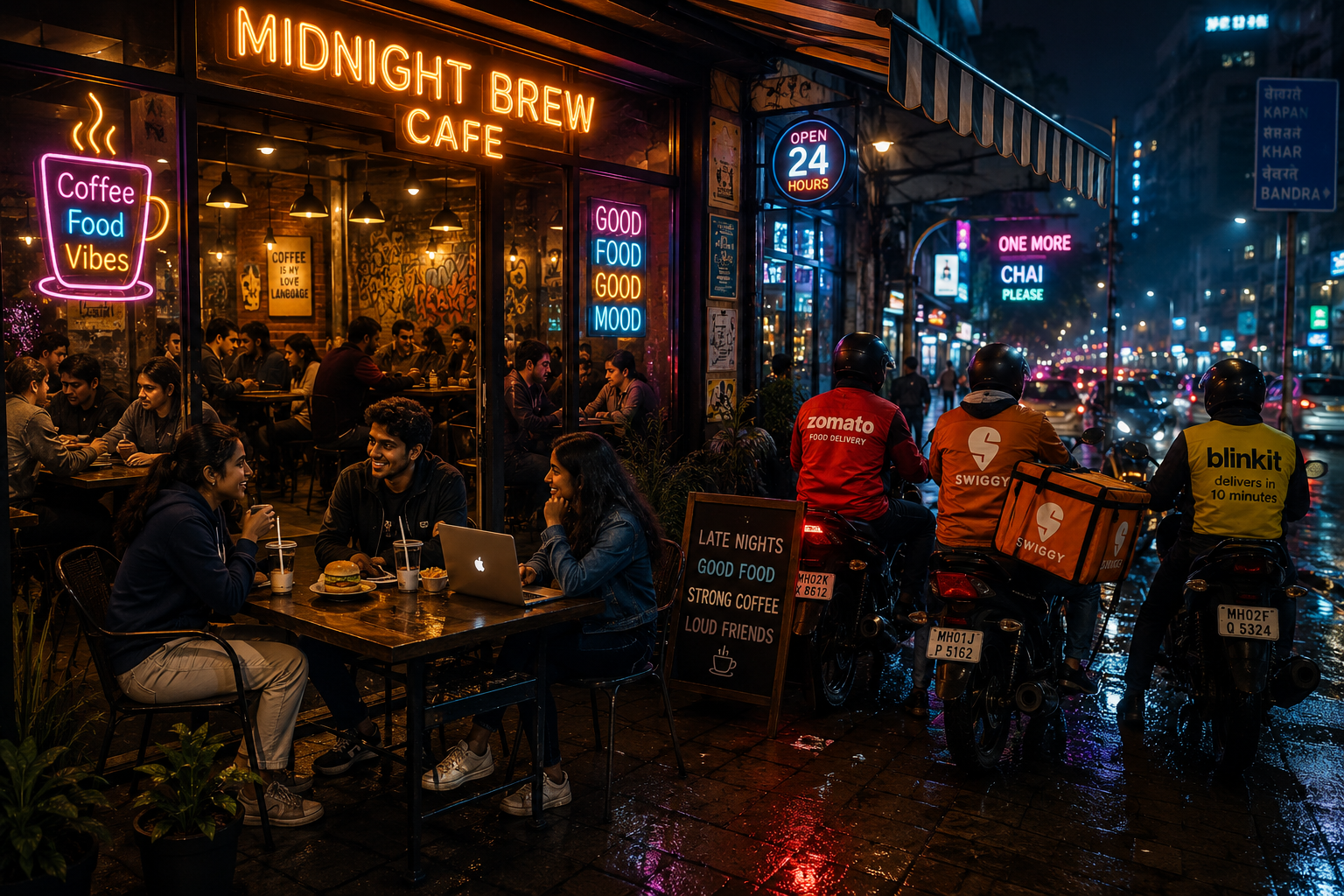
There was a time when Indian cities would slowly fall silent after 10 pm. Streets would empty, shutters would come down, and finding food late at night often meant settling for instant noodles at home. Today, that picture has completely changed. Across India, a vibrant midnight food culture is quietly taking over urban life.
From crowded tea stalls in Mumbai to late night biryani kitchens in Hyderabad and 24 hour cafés in Bengaluru, India’s cities are no longer sleeping early. Food has become the centre of a growing nightlife economy, driven largely by young people, changing work schedules, and food delivery apps.
For many Indians, midnight hunger is now a lifestyle rather than an occasional craving.
In cities like Mumbai, Delhi, Bengaluru, Pune and Hyderabad, it is common to see cafés packed even after midnight. College students sit with laptops, office workers unwind after long shifts, and groups of friends gather over chai, burgers, momos or biryani. Some places are so popular that they are busier at 1 am than they are during the evening.
One of the biggest reasons behind this shift is India’s changing work culture. The rise of IT jobs, multinational companies, night shifts and freelancing has altered daily routines. Many young professionals now work flexible hours. Their day often starts late and stretches well into the night. Naturally, eating habits have changed too.
Food delivery apps have played a massive role in building this culture. Platforms like Zomato and Swiggy made late night food more accessible than ever before. A few years ago, ordering biryani at 3 am sounded unusual. Today, it is normal in many Indian cities. Midnight discounts, quick delivery promises and dedicated late night menus have created a market that barely existed before.
Restaurants quickly understood the opportunity. Many cloud kitchens now operate almost entirely during night hours. Some brands specifically target students, gamers, night shift employees and young professionals who stay awake late. Certain cafés even market themselves as “work friendly after midnight” spaces.
The food itself also reflects changing urban tastes. While chai and omelettes still remain midnight favourites, younger consumers are experimenting more. Korean noodles, loaded fries, waffles, shawarma, bubble tea and gourmet burgers are now part of India’s late night menu. Social media has further fuelled this trend. Viral food videos and influencer recommendations regularly turn small night stalls into famous city hotspots.
Mumbai perhaps represents this culture better than anywhere else. The city has always been known for staying awake longer than most places in India. Marine Drive tea stalls, roadside sandwich vendors and late night eateries around Bandra and Andheri attract huge crowds daily. Even at 2 am, food delivery riders can be seen rushing through empty streets carrying orders.
Hyderabad’s love affair with midnight biryani is equally famous. Several restaurants continue serving till early morning hours, especially during weekends. Bengaluru’s café culture has also evolved rapidly, with many young tech workers treating cafés as social spaces long after office hours.
Interestingly, the midnight food scene is no longer limited to metro cities. Tier 2 cities like Indore, Jaipur, Chandigarh and Lucknow are also witnessing a rise in late night food spots. Areas near colleges and coaching centres are becoming hubs for affordable street food that stays open till early morning.
However, this growing culture also raises important questions.
Health experts often warn that eating very late at night can affect digestion and sleep quality. Frequent consumption of fast food and sugary drinks may also lead to long term health problems. Nutritionists suggest that while occasional late night meals are fine, making it a daily habit can disturb the body’s natural routine.
There are also concerns around worker safety and labour conditions. Food delivery riders and restaurant workers often work deep into the night under pressure to meet delivery targets. Many riders face difficult weather conditions, traffic risks and long working hours. As India’s night economy grows, conversations around fair pay and worker protection are becoming increasingly important.
Despite these concerns, the cultural impact of midnight food spaces cannot be ignored. For many young Indians, these places offer more than just food. They provide a sense of freedom and community.
In crowded cities where personal space is limited, late night cafés and food joints have become modern social hubs. Friends celebrate birthdays after midnight, musicians perform acoustic sessions at cafés, and strangers bond over tea during long conversations. For students living away from home, these spaces often feel comforting and familiar.
The rise of India’s midnight food culture also reflects a deeper social transformation. Younger Indians are embracing more flexible lifestyles. Traditional routines are changing. Cities are becoming more active round the clock, and food businesses are adapting quickly to these new patterns.
What was once considered unusual is now becoming part of everyday urban life.
As Indian cities continue to grow, the midnight food economy is expected to expand even further. More restaurants may move towards 24 hour operations, delivery apps will likely strengthen late night services, and new food trends will continue shaping how young India eats after dark.
For now, whether it is a steaming cup of chai at a roadside stall or a hot plate of biryani arriving at 3 am, one thing is clear. India’s nights are no longer silent. They are hungry.
Subscribe Deshwale on YouTube


