










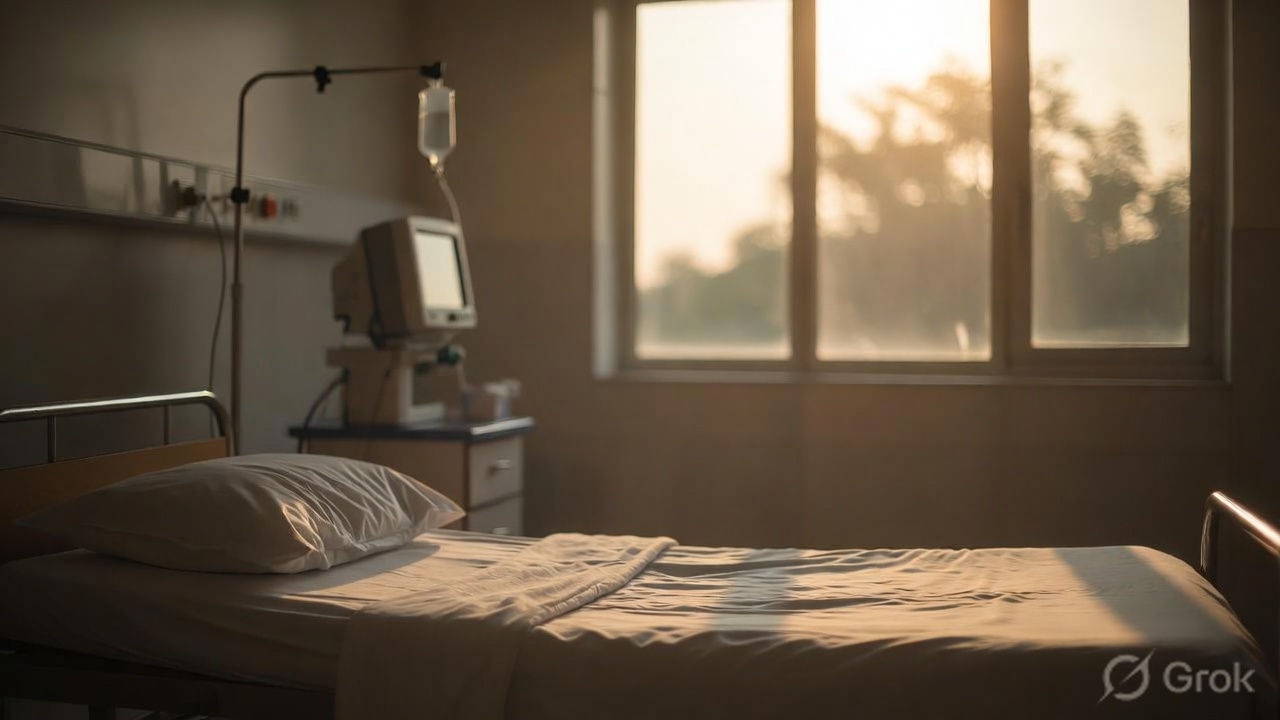
After more than a decade of legal silence, India’s highest court has finally crossed a threshold the country had approached with extreme caution for years. In a ruling that has unsettled medical, legal and ethical circles alike, the Supreme Court of India has permitted passive euthanasia for a specific individual, approving the withdrawal of life support from Harish Rana, a man from Uttar Pradesh who has spent more than twelve years in a persistent vegetative state after a severe head injury.
Rana’s condition dates back to 2013, when he fell from a building and suffered catastrophic brain trauma. Since then, he has remained completely dependent on medical care, with no meaningful awareness of the world around him.
The bench of Justices J. B. Pardiwala and K. V. Viswanathan, responding to a petition filed by Rana’s father, ruled that the withdrawal of clinically administered nutrition could proceed. Medical boards that examined Rana agreed that there had been no improvement in his neurological condition over many years and that he showed no meaningful interaction with his surroundings.
For the court, the duration of his condition mattered. A life had been suspended in time for more than a decade.
Now, with judicial approval, that life will finally be allowed to reach its natural end.
A Law That Existed but Was Never Used
India had technically recognised passive euthanasia long before this ruling. Yet, until now, it had remained largely theoretical.
The turning point in the country’s legal thinking was the haunting case of Aruna Shanbaug, a nurse who was assaulted in Mumbai in 1973 and left in a vegetative state for decades. She remained in that condition for forty-two years before dying naturally from pneumonia in 2015.
Her case forced courts to confront a question that is both legal and deeply human: What does it mean to keep someone alive when the possibility of living has disappeared?
In 2018, the Supreme Court of India formally recognised passive euthanasia and also introduced the concept of a living will. A living will allows individuals to record, in advance, whether they wish to receive life-sustaining treatment if they lose the ability to make medical decisions.
But laws written in courtrooms do not always become part of everyday medical practice. For years, no court had approved a request like this one.
The Rana case is significant precisely because he never left behind a living will. Without such a document, the court had to step into the difficult role of deciding what might have been in his best interests.
Courts in other democracies have often faced similar decisions. India, however, has approached them with exceptional caution.
This ruling marks the moment when that caution finally gave way to action.
What Doctors Know About Such Cases
Behind every legal decision of this kind lies a medical reality that rarely enters public discussion.
Neurologists who work with long-term brain injury patients say that the chances of recovery decline sharply after prolonged neurological inactivity. When a persistent vegetative state continues for many years, meaningful recovery becomes extremely rare.
Patients in such conditions may continue to breathe and maintain basic bodily functions. Yet consciousness, awareness, and the ability to interact with the world do not return.
For families, this creates a uniquely painful situation. The person they love remains physically present, but the personality and awareness that once defined them may be gone.
Medical professionals often describe these cases as some of the most emotionally difficult experiences relatives must face. Families find themselves caring for someone they cherish while confronting the quiet reality that the life they once knew has already slipped away.
The Global Picture: Where Dying With Dignity Is Legal
While India has approached euthanasia cautiously, other countries have been grappling with the issue for decades.
The Netherlands became the first country in the world to legalise euthanasia in 2001. Under Dutch law, both active and passive forms are permitted if a patient is experiencing unbearable suffering with no reasonable prospect of improvement.
A year later, Belgium adopted a similar legal framework. In 2014, it expanded the law to allow euthanasia for terminally ill minors with parental consent.
Then, Canada followed in 2015 after its Supreme Court struck down a long-standing ban on assisted dying. The country introduced a system known as Medical Assistance in Dying, which allows adults with serious and irreversible medical conditions to seek help ending their lives under strict safeguards.
In Colombia, voluntary euthanasia was permitted as early as 1997 through a constitutional court ruling.
More recently, Spain legalised euthanasia and medically assisted suicide in 2021. New Zealand and several states of Australia have introduced similar legislation.
In October 2025, Uruguay became the newest country to recognise the right of mentally competent adults with incurable illnesses to request euthanasia.
Even countries that have long resisted such laws are reconsidering the issue. Lawmakers in the United Kingdom recently approved a bill that would allow assisted dying for terminally ill adults expected to die within six months. A similar proposal is currently under debate in France.
What once seemed like a radical legal idea is gradually becoming part of mainstream medical policy in many parts of the world.
The Line India Has Not Yet Crossed
Despite this global shift, India still maintains a clear boundary.
Active euthanasia remains illegal. Doctors cannot administer substances intended to cause death.
What the court allowed in the Rana case is something different. It is the withdrawal of treatment rather than the administration of a lethal intervention.
That distinction is crucial in law.
Even Switzerland, often described as one of the most permissive jurisdictions in the world, allows assisted dying only when patients administer the medication themselves. Physicians may prescribe the drug, but they do not administer it.
India’s legal framework remains even more restrictive.
Why Living Wills Now Matter More Than Ever
The Rana case carries another lesson that may ultimately affect far more people.
If he had left behind a living will, his family would not have spent years navigating legal uncertainty.
Such a document would have provided clear instructions about his wishes and given doctors a legally recognised basis for decision-making.
Yet awareness of living wills in India remains extremely low. Most people do not know that the law allows them to record their medical preferences in advance.
Hospitals rarely discuss the option with patients. Medical institutions seldom encourage families to think about it.
The result is that decisions about life-sustaining treatment often fall on relatives during moments of emotional crisis, without clear guidance from the person whose life is at stake.
The legal framework exists, but public awareness of it is still in its infancy.
The Ethical Weight That Remains
None of this resolves the deeper moral debate surrounding euthanasia.
Many religious and philosophical traditions believe that life must be preserved at all costs. They worry that allowing assisted death could weaken society’s respect for life itself.
Others argue that dignity is inseparable from personal autonomy. They believe that individuals should have the right to refuse prolonged medical intervention when recovery is no longer possible.
Palliative care specialists add another important perspective. They emphasise that suffering should not automatically lead societies toward assisted dying. Instead, countries must invest far more seriously in pain relief, hospice care, and emotional support for patients and families at the end of life.
In countries where palliative care systems are strong, the demand for euthanasia often decreases.
India faces a more complicated reality. Access to comprehensive end-of-life care remains uneven, and many families shoulder the emotional and financial burden of long-term illness largely on their own.
The debate about the right to die therefore intersects with another question that India has yet to answer fully. The right to die with dignity means little if the right to live without unbearable suffering is not equally protected.
A Decision That Will Echo Quietly
What the Supreme Court of India has done in the Rana case is not a sweeping reform.
It is something quieter and, perhaps, more profound.
The court has acknowledged a reality that families across India have been confronting privately for years. Many households care for relatives who exist in suspended medical states, sometimes for decades.
Most of those stories never reach a courtroom.
They unfold quietly beside hospital beds, in small apartments turned into care wards, and in families slowly worn down by love, hope, and helplessness.
This judgement does not resolve every such case.
But it signals that the law is finally willing to look directly at them.
And sometimes, when the possibility of life has already slipped away, compassion may mean allowing death to arrive with dignity rather than forcing it to wait indefinitely.
For many families across the country, that recognition alone may feel like the beginning of an answer.
Subscribe Deshwale on YouTube


