



By Vinaychandra S.
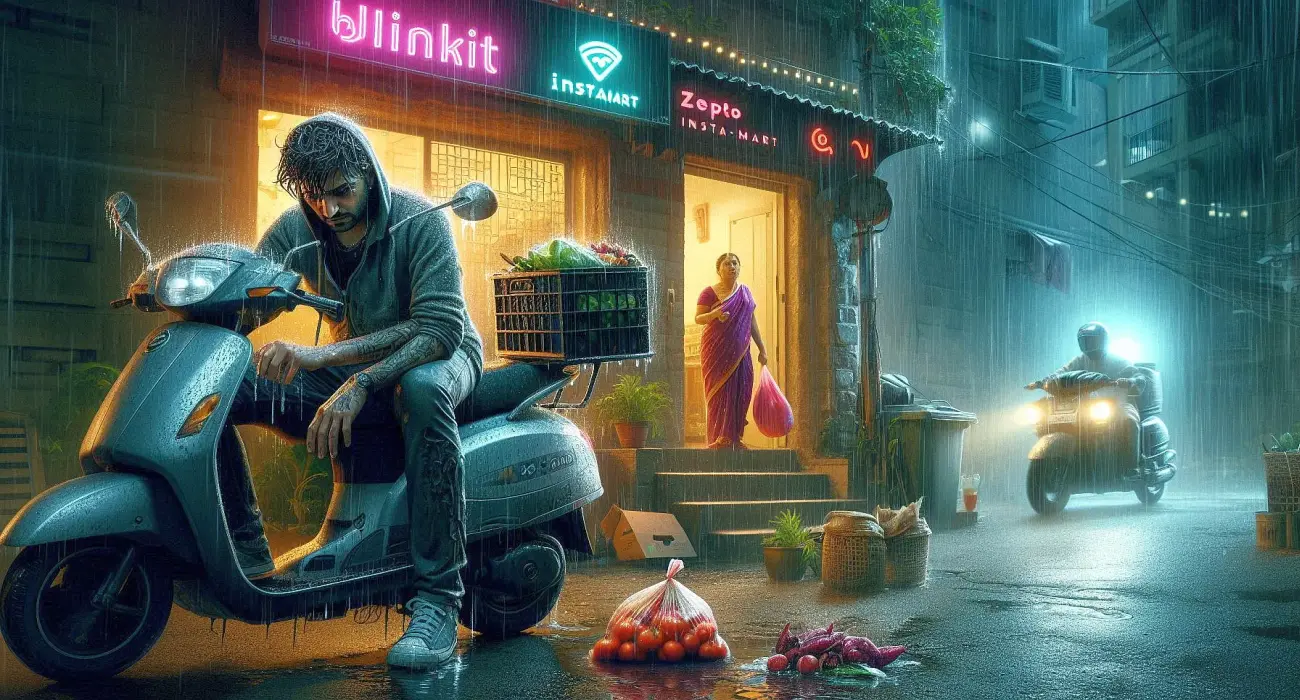
Once, Vandana, a resident of Kandivali West, ordered vegetables from India’s top e-commerce marketplace. Of the items delivered, nearly 40% were either stale or well below acceptable quality. Since that experience, Vandana vowed never to order vegetables online again.
But for every Vandana that walks away from e-grocery platforms, three to five new Vandanas get tempted to try online shopping. The trend, especially with the explosive growth of quick commerce in India, shows that this digital buying craze is scaling new heights. At what cost, though?
India: Quick Commerce Capital?
India is certainly among the front-runners in the quick commerce (Q-commerce) race today. Urban centres have quickly adopted the concept, driven by platforms like Zepto, Blinkit, Swiggy Instamart, and BigBasket. The pace at which these platforms have embedded themselves into daily life is staggering.
Of course, India is not alone. Other countries have witnessed remarkable growth in the sector — some even earlier than India. But let’s first understand the Indian model.
With Zepto, Blinkit, and Swiggy Instamart leading the way, India’s Q-commerce scene has turned a distant dream into a hyperlocal reality. These platforms promise to deliver everything — from atta to iPhones — in as little as 10 minutes. Most of the time, they actually manage to do so. It’s like having a superfast dabbawala at your service. But this convenience comes with hidden costs — from the quality of goods, to the well-being of the delivery executives, and even the health of the retail ecosystem.
The Q-Commerce Tamasha
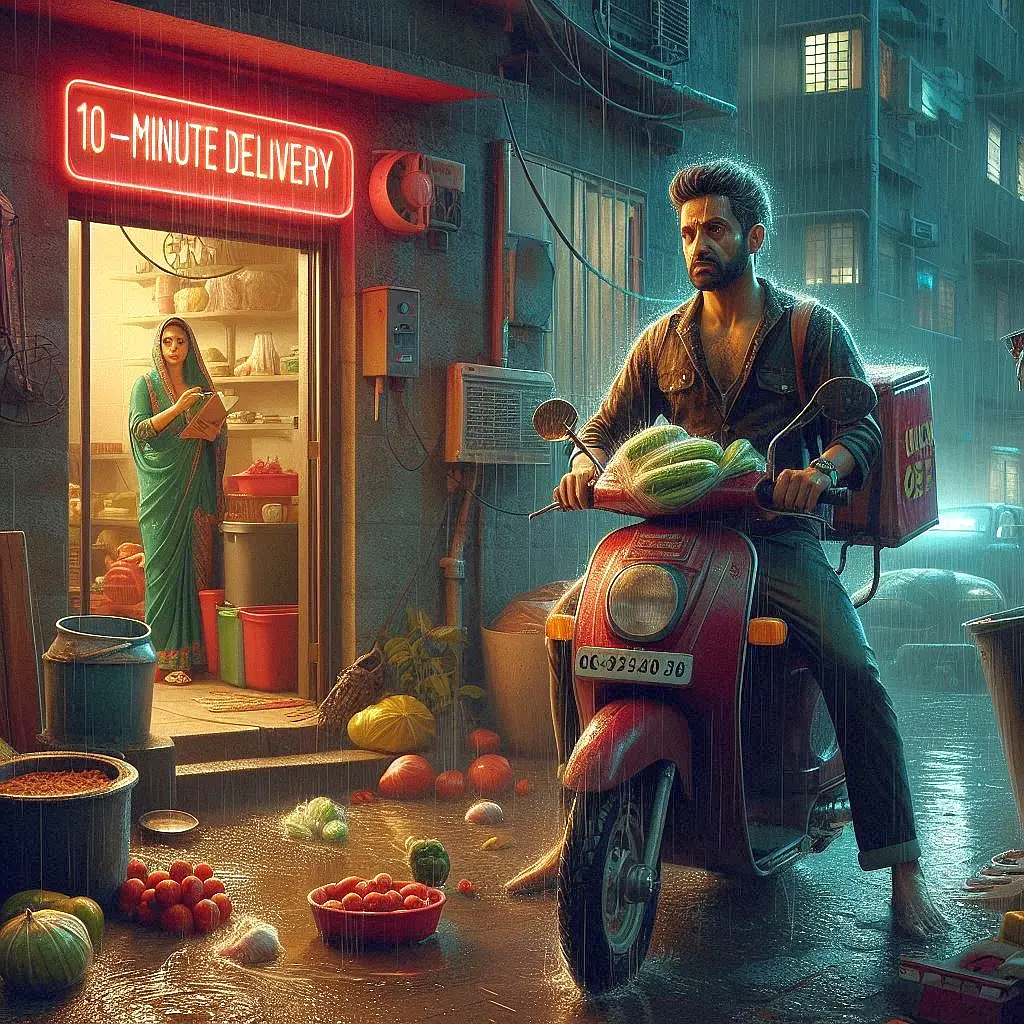
Quick commerce has become a full-blown revolution in India’s urban jungles. Powered by dark stores — those discreet mini warehouses tucked away in localities — companies like Blinkit, Zepto, and Swiggy Instamart now deliver items faster than you can say, “jaldi karo.”
As of early 2025, Blinkit leads with roughly 16–17 lakh daily orders. Zepto is close behind with 14–15 lakh, and Swiggy Instamart clocks in around 10–11 lakh orders per day. Together, they control nearly 88% of a market pegged at $6 billion in 2024, with projections eyeing $9 billion by 2025.
These platforms operate like a well-oiled tandoor, using real-time inventory systems, AI-powered demand forecasting, and a zippy fleet of riders dodging traffic like they are in a Dhoom movie. Companies are bullish about growth. Zepto plans to double its dark stores to 700 by March 2025, while Blinkit is aiming for 2,000 by 2026.
But the obsession with speed is beginning to burn holes in more than just wallets. It’s affecting consumers, gig workers, and even traditional kiranas.
When Speed Spoils the Sabzi
Ever ordered a kilo of tomatoes, only to receive mushy ones that smell like last week’s sambhar? That’s the dark underbelly of Q-commerce. Recent inspections at several dark stores have unearthed questionable practices behind the scenes.
In Mumbai’s Dharavi, the Maharashtra FDA cancelled Zepto’s food licence after finding food stored on damp, dirty floors near stagnant water. Some items even showed fungal growth. In Delhi’s Mayur Vihar, a Zepto warehouse was found operating with an unhygienic washroom that could make a bhelpuri stall seem clean.
No surprise then that social media is full of complaints. One user on X ranted, “Ordered kela and papita from Zepto, got rotten fruit that stank worse than a monsoon drain!” Another wrote, “Two packs of expired eggs from Zepto Saver. Arre, this is playing with our sehat!”
And these are not isolated cases. The rush to deliver in 10 minutes often sidelines quality checks. Whether your paneer is fresh, or the dahi is still edible, is no longer guaranteed.
Delivery Bhaiyas Under the Radar
The race to deliver in record time is driven by an army of delivery workers. Most earn ₹30–100 per delivery, often under intense pressure to meet unrealistic timelines.
In January 2025, Zepto delivery partners in Hyderabad went on strike, demanding fairer incentives and protesting unexplained salary cuts. In Mayur Vihar, workers reportedly faced sudden deactivation of their accounts following complaints, with little or no investigation. These ‘instant decisions’ are demotivating for thousands who rely on gig work as their primary income source.
The constant stress, low margins, and lack of job security are taking a toll on these unsung heroes of India’s tech-driven retail revolution.
The Numbers Don’t Lie — But They Do Hurt
While Q-commerce companies may boast about order volumes and growth, the financial picture tells another story.
In FY24, Blinkit recorded revenues of ₹2,301 crore but incurred losses of ₹1,190 crore. Zepto’s revenue for FY23 stood at ₹2,024 crore, but its losses widened to ₹1,272 crore. Swiggy Instamart’s losses in FY22 were a staggering ₹4,179 crore.
Clearly, the model is still bleeding cash. For now, it’s a high-burn game played on investor faith, scale, and the hope that one day it will all pay off.
Final Thoughts
Quick commerce has brought undeniable convenience to urban India. For working couples, elderly citizens, or those in time crunches, the ability to get essentials in minutes is a blessing. But it’s important not to ignore the cracks forming behind the shiny surface.
Quality, hygiene, labour rights, and financial sustainability — all demand attention. The industry must evolve not just in speed, but in responsibility. Until then, the 10-minute dream may remain just that, a dream with a dark underside.
