









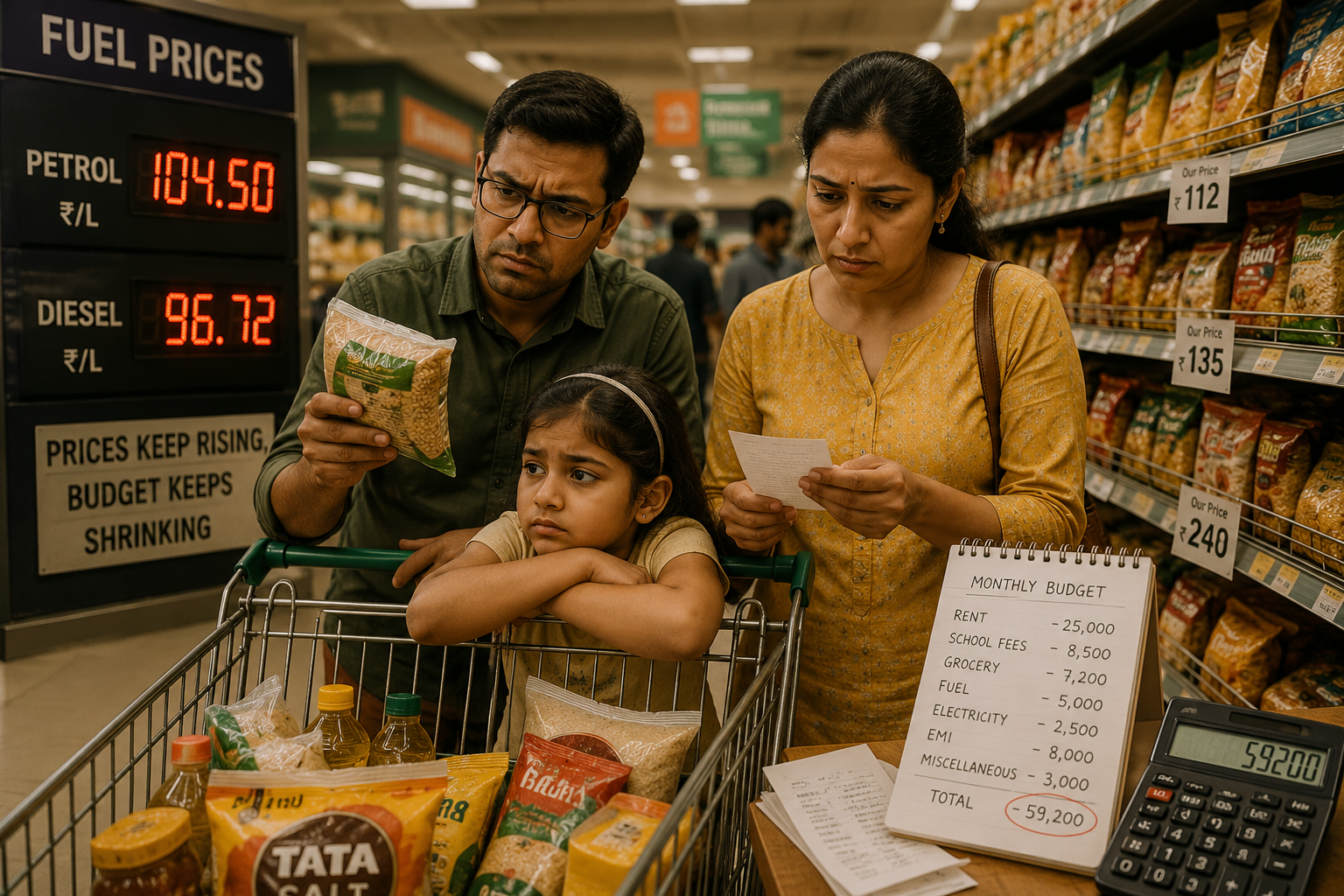
For years, India’s middle class represented aspiration, stability and growing consumer confidence. Weekend dinners, online shopping, yearly holidays and easy EMIs became a normal part of urban life. However, in 2026, many families across the country are beginning to rethink even ordinary spending decisions as the cost of living continues to rise.
From fuel prices and grocery bills to school fees and electricity costs, daily expenses are putting increasing pressure on household budgets. While India remains one of the world’s fastest growing major economies, millions of middle-class families are quietly adjusting their lifestyles to cope with inflation and financial uncertainty.
The impact is now visible in almost every aspect of urban life.
The Fuel Price Effect Reaches Every Household
One of the biggest concerns for consumers this year has been the steady pressure from fuel prices. Even small increases in petrol and diesel rates create a ripple effect across the economy. Transport becomes more expensive, delivery costs rise and businesses eventually pass these costs on to consumers.
For families that rely on personal vehicles for office commutes, school drops and daily travel, monthly fuel expenses have increased noticeably compared to previous years. Cab fares and app-based delivery charges have also become more expensive in several cities.
However, the effect goes far beyond transportation. Vegetables, milk, packaged food and essential household items all become costlier when logistics expenses rise. Economists have repeatedly pointed out that fuel inflation indirectly impacts nearly every sector of the economy.
This is one reason why many households feel that their salaries are no longer stretching as far as they once did.
The New Middle-Class Lifestyle
India’s middle class is not necessarily giving up comfort entirely, but it is becoming far more cautious about spending. Families are increasingly comparing prices across grocery apps, waiting for discounts before making purchases and cutting back on non-essential expenses.
Several urban households are also becoming more careful about lifestyle spending. Restaurant visits, expensive travel plans and premium purchases are being reconsidered more frequently than before. Many consumers now prefer discounts, cashback offers and budget-friendly shopping options while making everyday purchases.
The shift is especially visible among younger working professionals living in metro cities such as Mumbai, Bengaluru and Delhi, where rents, transportation costs and lifestyle expenses have increased sharply over the last few years.
For many households, budgeting is no longer occasional planning. It has become a monthly necessity.
Education and Healthcare Add to Financial Pressure
Beyond groceries and transport, education expenses are becoming another major source of stress for middle-class parents. School fees, coaching classes, digital learning subscriptions and transport charges continue to rise in many cities.
Competitive exams and private tuition culture have further increased financial pressure on families who want to provide better opportunities for their children. Even middle-income households are now spending a significant portion of their earnings on education-related costs.
Healthcare is another growing concern. Medical inflation in India has remained high for several years, and even routine medical treatments can create financial strain for families without adequate insurance coverage.
As a result, many people are becoming more careful about savings and emergency funds. Financial planning, once considered important mainly for older adults, is now a priority even among younger salaried workers.
Why Inflation Feels More Visible in 2026
The current cost-of-living pressure is being influenced by multiple factors at the same time. Global crude oil fluctuations continue to affect fuel prices, while climate-related disruptions have also impacted food supply chains in several regions.
Extreme heatwaves in different parts of India have increased electricity demand and placed pressure on power consumption. Rising temperatures can also affect agricultural output, which eventually impacts food prices.
At the same time, international economic uncertainty and supply chain disruptions continue to influence manufacturing and transportation costs worldwide.
The Reserve Bank of India has repeatedly highlighted inflation concerns and supply-side pressures in recent policy discussions. Although inflation levels are lower than the extreme spikes seen in some countries after the pandemic years, everyday expenses still feel significantly higher for ordinary consumers.
This difference between economic growth figures and personal financial stress is becoming one of the defining realities of urban India in 2026.
The Emotional Cost of Expensive Living
Perhaps the biggest change is psychological rather than financial.
Many salaried professionals now feel constant pressure to maintain a certain lifestyle while also managing rising expenses. Social media continues to showcase luxury travel, premium gadgets and aspirational lifestyles, even as real-world budgets become tighter.
As a result, financial anxiety has quietly become a part of daily life for many urban Indians. People are thinking more carefully about savings, job security and long-term stability. Unexpected medical emergencies, rent increases or sudden expenses now feel more stressful than before.
Despite this, India’s middle class continues to adapt.
More people are using public transport, focusing on savings and making practical spending decisions in daily life. Consumers are increasingly prioritising value and long-term financial stability over unnecessary spending.
India’s middle class has always shown resilience during economic change. But in 2026, the challenge is not simply about earning more money. It is about learning how to live wisely in a time when even ordinary life feels increasingly expensive.
Subscribe Deshwale on YouTube


