



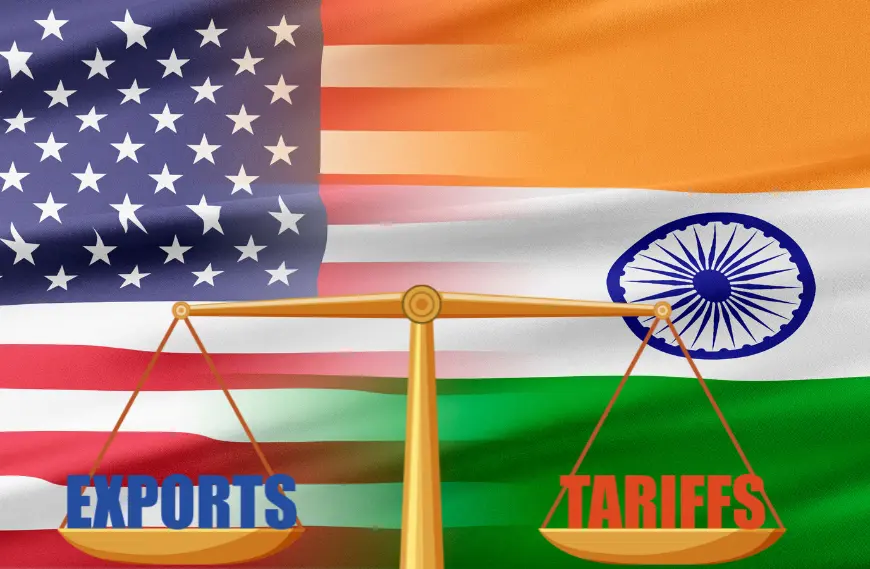
India and Russia have pledged to strengthen their trade ties, shrugging off US tariff threats over India’s oil imports from Moscow. The two nations, meeting in Moscow on Thursday, outlined plans to boost bilateral trade and address Russia’s labour shortages with Indian workers. This move signals defiance against US pressure, which has escalated with tariffs of up to 50% on Indian goods.
A steadfast partnership
At a joint press conference in Moscow, Indian Foreign Minister Subrahmanyam Jaishankar described India-Russia relations as one of the “steadiest” globally since World War II. He emphasised plans to increase India’s exports of pharmaceuticals, agriculture, and textiles to Russia to reduce a $59 billion trade deficit. Bilateral trade hit a record $68.7 billion in the year ending March 2025, largely driven by India’s oil imports.
Russian Foreign Minister Sergei Lavrov echoed this commitment, highlighting cooperation in hydrocarbons and joint energy projects in Russia’s Far East and Arctic shelf. “This strategic partnership contributes to regional security and stability,” Lavrov said, noting the challenging global environment.
US tariff threats escalate
The US, under President Donald Trump, has imposed 25% tariffs on Indian goods, with an additional 25% set to take effect on August 27, 2025, due to India’s oil trade with Russia. White House trade adviser Peter Navarro called India a “laundromat for the Kremlin,” alleging its oil purchases fuel Russia’s war in Ukraine. Navarro claimed India’s oil imports surged from near-zero to 30-35% of its total since 2022, a charge India disputes.
India imported 1.6 million barrels per day (bpd) of Russian oil in the first half of 2025, up from about 100,000 bpd in 2020, making it the second-largest buyer after China, according to the US Energy Information Administration. New Delhi defends its purchases, arguing they stabilise global oil markets, a stance initially encouraged by the US to counter price spikes after Western sanctions on Russia.
India’s defiant stance
Jaishankar, in Moscow, expressed frustration at the US tariffs, noting that China, the largest buyer of Russian oil, faces no similar penalties. “We are not the biggest purchasers of Russian oil; that is China,” he said. He also pointed out that the European Union imports significant Russian LNG, yet India faces disproportionate scrutiny.
India’s Ministry of External Affairs called the US tariffs “unjustified and unreasonable,” highlighting that the US itself traded $3.5 billion with Russia in 2024. New Delhi insists its oil imports are driven by market needs, not political alignment, and vows to protect its economic security.
Economic and strategic moves
The US tariffs could slash India’s exports to the US by 40-50%, according to the Global Trade Research Initiative. Despite this, India shows no sign of halting Russian oil imports. Russian embassy official Roman Babushkin confirmed oil shipments will continue, predicting stable import levels.
To counter US pressure, India and Russia are exploring new trade avenues. Plans include sending Indian workers skilled in IT, construction, and engineering to Russia to address labour shortages. This move could deepen economic ties and offset tariff impacts.
Analyst Daniel Balazs from the S. Rajaratnam School of International Studies suggested the US tariffs might push India closer to Russia and China. “The tariff threats could act as a catalyst,” Balazs said, noting Moscow’s push for a trilateral meeting with India and China.
Geopolitical chessboard
Trump’s tariff strategy appears less about curbing Russia’s oil revenue and more about leveraging trade partners for broader goals, including a Ukraine ceasefire. Last week, Trump hosted Russian President Vladimir Putin in Alaska, their first meeting in nearly a decade. No ceasefire agreement emerged, with Russia rejecting short-term deals.
India, maintaining its non-alignment policy, continues to advocate dialogue and diplomacy. Jaishankar reiterated this stance in Moscow, briefing officials on the Trump-Putin talks. Meanwhile, India is diversifying its oil imports, with a 50% increase from the US and 80% from Brazil in 2025, according to S&P Global Commodity Insights.
India faces a delicate balance: maintaining its long-standing partnership with Russia while navigating US trade pressures. Prime Minister Narendra Modi, set to meet Putin in New Delhi before year-end, has stressed protecting India’s economic interests, particularly its farmers, against US demands for market access.
As global oil prices remain volatile, India’s reliance on discounted Russian crude-capped at $60 per barrel-has bolstered its economy and refining industry. Ceasing these imports could raise India’s fuel bill by $9-12 billion annually, per a State Bank of India report.
With Russia as India’s top oil supplier, providing 35-40% of its imports, and no immediate alternative to match its competitive pricing, New Delhi’s defiance is rooted in necessity. The US tariffs, while a significant hurdle, seem unlikely to unravel this enduring partnership.
