









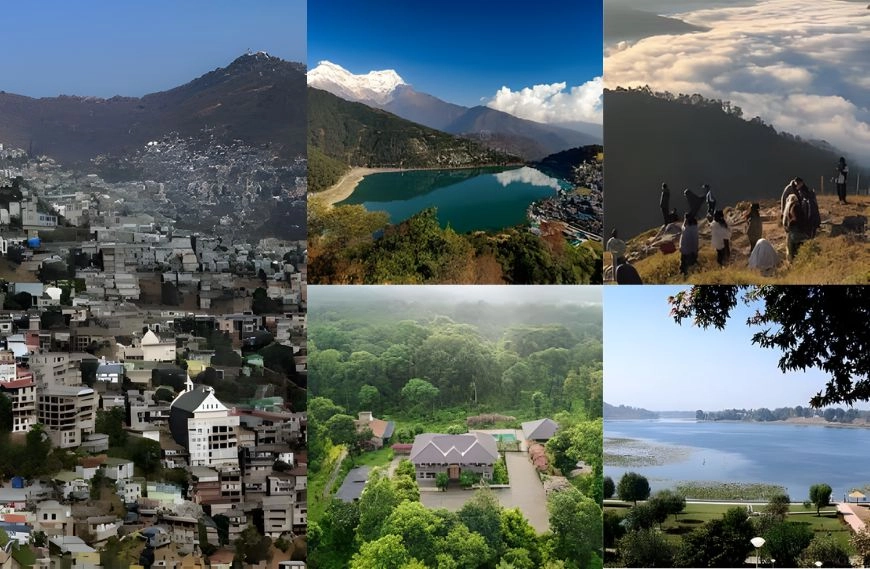
Amid rising urban pollution across India, a few regions still offer a rare luxury: remarkably clean air. While many major cities struggle with persistent smog and hazardous particulate levels, some parts of the country continue to maintain fresh and breathable atmospheres.
These locations record significantly lower levels of particulate matter compared with India’s heavily polluted metros. As air quality worsens in many urban centres, such places highlight how geography, conservation, and responsible development can protect environmental health.
Recent data from early 2026 shows that PM2.5 concentrations in certain regions remain comfortably below national standards. Based on assessments conducted in 2025, the following five destinations stand out for their exceptional air quality.
Air pollution remains a major concern across India. Millions face health risks every year due to poor air quality. According to the 2025 report by the Centre for Research on Energy and Clean Air (CREA), as many as 103 Indian cities exceeded the national PM2.5 limits. Clean air therefore carries immense value, both for public health and tourism. For residents seeking “shudh hawa”, these locations offer welcome relief from polluted skylines.
Measuring Air Purity: The Science Behind the Rankings
Air quality is largely determined by PM2.5 particles, extremely fine pollutants capable of entering the lungs and bloodstream. These particles pose serious risks to respiratory and cardiovascular health.
India’s national annual PM2.5 standard stands at 40 micrograms per cubic metre. The World Health Organisation recommends a far stricter limit of 5 micrograms per cubic metre.
Data agencies such as IQAir and the Centre for Research on Energy and Clean Air compile air quality statistics using monitoring stations and satellite observations.
A snapshot from early 2025 monitoring highlighted several cities with particularly low pollution levels. As of February 2026, no major shifts have altered those patterns. Ongoing monitoring continues to confirm relatively stable air quality in parts of the Northeast and selected southern hill regions.
Geography plays a decisive role. Mountain terrain, dense forests, and low industrial activity allow cleaner air to circulate freely. Hill towns and sparsely populated regions therefore tend to record the best air quality levels.
1. Aizawl: Mizoram’s Pristine Hill Capital
Aizawl ranks among the cleanest cities in India, recording an average PM2.5 level of roughly 9 micrograms per cubic metre in January 2025.
Situated along steep hillsides, the city benefits from dense surrounding forests that absorb pollutants and release fresh oxygen. Vehicular traffic remains relatively limited, while industrial activity is minimal.
In 2024, the city recorded an annual average of around 13.8 micrograms per cubic metre, which remains close to global health guidelines. Environmental protection policies also help maintain the region’s ecological balance, with more than 80 percent of the state covered by forests.
Residents frequently enjoy clear skies and sweeping views across bamboo covered hills. Aizawl demonstrates how elevation and forest cover can naturally support cleaner air.
2. Gangtok: Sikkim’s Serene Gateway
Gangtok follows closely with annual PM2.5 levels of around 13.8 micrograms per cubic metre in 2024.
Located in the eastern Himalayas, the city benefits from strong mountain winds that disperse airborne pollutants. Environmental policies across Sikkim further strengthen air quality protection.
The state promotes organic agriculture and sustainable tourism, reducing chemical emissions and industrial pollutants. Hydropower supplies nearly 90 percent of the region’s electricity, limiting dependence on fossil fuels.
Visitors to Gangtok often notice the clarity of the air while exploring monasteries and mountain viewpoints. The city’s commitment to sustainability offers an effective model for environmentally responsible development.
3. Shillong: Meghalaya’s Cloudy Haven
Shillong maintains relatively low pollution levels, with PM2.5 concentrations averaging about 17 micrograms per cubic metre in late 2025.
Heavy rainfall throughout the year plays an important role in washing pollutants from the atmosphere. The surrounding pine forests also act as natural filters that absorb airborne particles.
Despite growing tourism activity, air quality has remained largely stable. Local authorities have implemented environmental rules, including restrictions on plastic usage.
Residents and visitors alike experience the city’s characteristic misty mornings and cool climate. Shillong illustrates how rainfall and vegetation can significantly improve air purity.
4. Madikeri: Karnataka’s Coffee-Clad Retreat
Nestled within the Western Ghats, Madikeri records relatively low pollution levels, with estimated PM2.5 concentrations around 15 micrograms per cubic metre.
The region’s extensive coffee plantations and forest cover act as natural buffers against pollution. Low population density also reduces vehicular emissions and industrial activity.
Data from 2025 monitoring suggests several locations across the Western Ghats maintain similarly low particulate levels.
Visitors often notice the crisp air and distinct aroma of coffee estates that surround the hill town. Madikeri highlights how agroforestry landscapes can contribute to cleaner environmental conditions.
5. Srinagar: Kashmir’s Lakeside Oasis
The scenic city of Srinagar records PM2.5 levels of roughly 20 micrograms per cubic metre, with occasional seasonal improvements during winter.
Mountain ranges surrounding the valley influence air circulation, while the waters of Dal Lake help moderate local environmental conditions.
Tourism regulations in the region also aim to limit pollution sources. Hydropower generation and widespread orchard cultivation further reduce industrial emissions.
Houseboats drifting on Dal Lake remain one of the city’s most iconic sights. Srinagar shows that even densely inhabited valleys can preserve relatively clean air with careful environmental management.
Why These Places Lead the Way
Several common factors explain why these destinations maintain better air quality. Elevation and vegetation play a major role in filtering pollutants and promoting atmospheric circulation.
States in Northeast India, such as Mizoram and Sikkim, benefit from lower population density and large forest reserves.
Environmental policies also contribute significantly. Sikkim’s commitment to organic agriculture has reduced chemical pollutants. Meanwhile, conservation programmes in regions like the Western Ghats support long term ecological stability.
Climate change could still pose future challenges. Altered rainfall patterns and shifting temperatures may affect these ecosystems. However, compared with densely populated plains, such regions remain relatively resilient.
National Implications and the Path Forward
Clean air does more than protect health. It also strengthens tourism and local economies. According to estimates from the Centre for Research on Energy and Clean Air, pollution related health costs amount to billions each year across India.
By contrast, heavily polluted cities such as Delhi record PM2.5 levels near 96 micrograms per cubic metre, contributing to reduced life expectancy.
India’s National Clean Air Programme aims to reduce particulate pollution by up to 40 percent by 2026. The success of cleaner regions offers valuable lessons for achieving that goal.
The question remains: can India’s largest cities adopt similar strategies to restore breathable air? With stronger environmental commitment and smarter planning, meaningful progress remains possible.
Subscribe Deshwale on YouTube


