



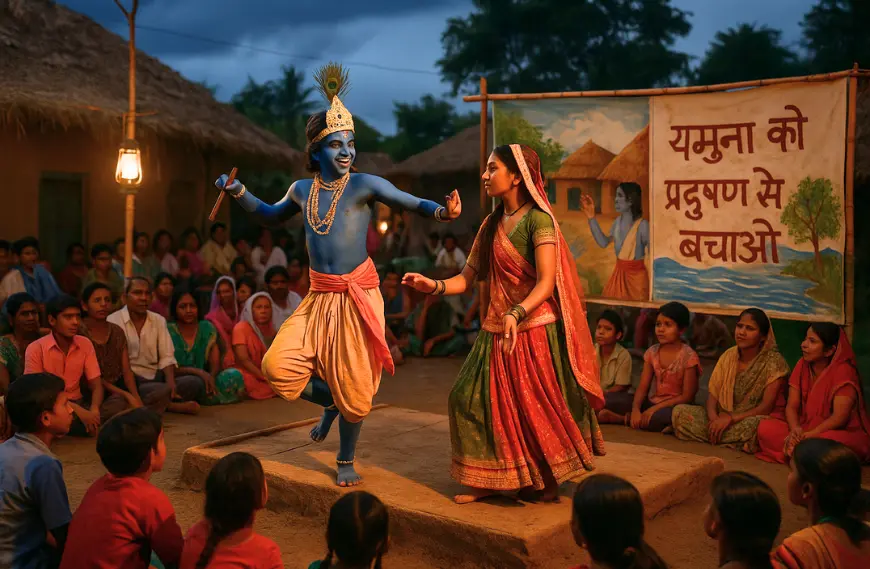
Moonlight bathes a Mathura village. Drums pulse. A young Krishna, painted blue, dances on stage. It’s July 2025, and Janmashtami looms. In rural India, Bhakti theatre, vivid plays of Lord Krishna’s life, thrives again. Villagers blend ancient tales with modern woes, like climate change. Youth join, drawn by song and spirit. This is Krishna’s cosmic dance, reborn in fields and hearts.
A Living Tradition
Bhakti theatre is ancient. Born in medieval India, it tells Krishna’s stories, flute player, lover, warrior. In Uttar Pradesh and Odisha, villages stage plays in July, prepping for Janmashtami. “Krishna’s dance teaches us joy and duty, our plays keep that alive,” says Radha Devi, a Mathura theatre director. Her troupe draws 2,000 nightly.
Modern twists shine. Plays tackle climate, Krishna saves the Yamuna from pollution. Youth add rap, social media streams. In 2025, Odisha’s plays hit 1 million views online. “It’s our heritage, remixed,” says actor Arjun, 19. The stage, lit by lanterns, bridges past and present.
Cultural Revival
Rural India struggles. Urban migration drains villages, 60% of youth left by 2024, per census data. Bhakti theatre fights back. In Mathura, 50 troupes formed since 2023. Odisha’s festivals employ 1,000. “Theatre is our identity,” Radha says. It preserves Brajbhasha, a fading dialect. Songs echo Krishna’s Gita, binding communities.
Youth drive the boom. In Vrindavan, teens like Priya, 17, play Radha. “It’s spiritual, cool,” she says. Social media posts of her dance go viral, drawing urban fans. But challenges loom. Funding is scarce, stages cost £500 nightly. Urbanization lures actors away. “We fight to keep them,” Radha sighs.
Krishna’s Green Message
Krishna’s myths resonate. He lifted Govardhan Hill, saved rivers. Today’s plays weave in ecology. In Odisha, a play shows Krishna fighting plastic waste. “The Yamuna cries,” says actor Anil. July’s rains, 20% heavier in 2025, amplify the message. Floods hit villages, yet theatres stage on.
Audiences connect. A 2025 survey shows 70% of rural youth see Krishna as an eco-hero. Plays inspire clean-ups, Mathura’s riverbank cleared 10 tonnes of trash. Online, #KrishnaGreen trends, with clips of eco-plays. “Krishna’s for today,” Priya says. Her generation blends faith with activism.
Human Stories
Meet Anil, a 25-year-old farmer-turned-actor. His Krishna role changed his life. “I found purpose,” he says. In Odisha, Priya’s Radha dance inspires girls. “I feel divine,” she says. Radha, the director, mentors them. “They’re our future,” she says. Her troupe tours 20 villages, spreading Krishna’s joy.
Challenges persist. Electricity is spotty, generators fail mid-show. Women actors face stigma, Priya’s family opposed her role. But progress comes. Solar-powered stages emerge. Women-led troupes grow, 10 in Mathura by 2025. “Krishna empowers us,” Priya says. Her videos challenge norms.
The Future of Bhakti
What’s next? Technology helps, live streams bring plays to millions. Government grants, like India’s £1 million culture fund, support troupes. But rural life needs saving, schools, jobs, water. “Theatre alone isn’t enough,” Radha admits. Janmashtami 2025 will amplify the movement, with 100 plays planned.
Krishna’s dance endures. In July’s fields, villagers sing, act, pray. Anil, Priya, Radha carry his spirit. Their stages, simple but profound, defy time. Bhakti theatre, old as the Gita, young as social media, lives on.
