



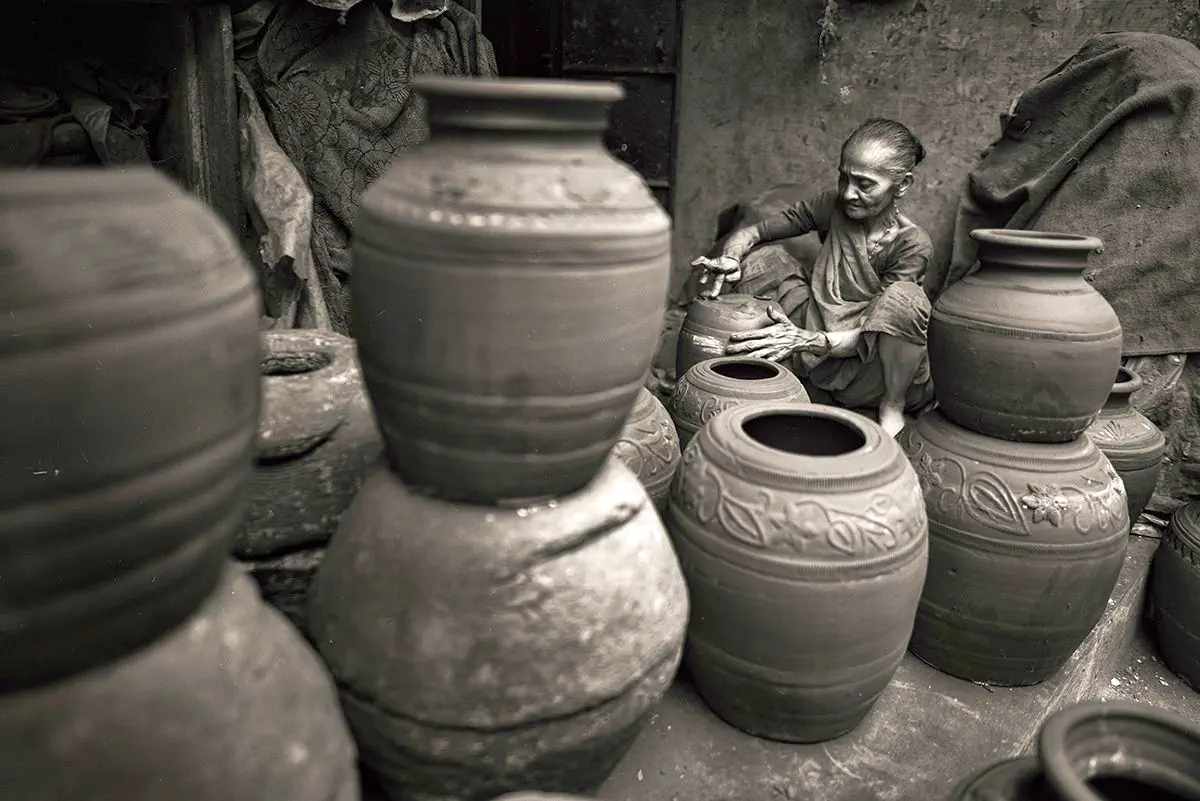
Kumbharwada, nestled within the sprawling expanse of Dharavi, Mumbai, is a vibrant enclave known for its rich tradition of pottery and its unique socio-economic fabric. Spanning approximately 12 acres at the intersection of two prominent roads in Dharavi, this community is home to artisans, primarily of Gujarati descent from the Kutch region, who have been crafting earthenware for over two centuries.
As one of Asia’s largest slum clusters, Dharavi is a hub of diverse economic activities, and Kumbharwada stands out as a testament to the resilience and creativity of its residents. However, the ongoing Dharavi Redevelopment Project (DRP), led by the Adani Group in collaboration with the Maharashtra government, has sparked significant concerns among the Kumbharwada community about displacement, loss of livelihoods, and the future of their traditional craft. This article explores the history, culture, challenges, and current developments surrounding Kumbharwada, with a focus on its role in Dharavi and the impact of the redevelopment project.
Historical Background
Kumbharwada, meaning “potters’ colony” in Marathi, was established by Gujarati potters from the Kutch region who migrated to Mumbai over 200 years ago. These artisans brought with them their traditional pottery techniques, which rely on specific spatial arrangements that integrate living spaces with kilns for firing earthenware.
The community’s unique lifestyle revolves around crafting pots, diyas, and other clay products, which are sold across Mumbai and beyond. Historically, Kumbharwada’s open fields provided easy access to clay, but urban expansion transformed the surrounding areas into a concrete jungle, forcing potters to source clay from distant regions like Rajkot and Bhavnagar, increasing transportation costs.
The community’s location in Dharavi, once a swampy, undesirable area on Mumbai’s outskirts, has become strategically significant due to its proximity to the Bandra Kurla Complex (BKC), one of Mumbai’s most expensive real estate hubs. This shift has made Kumbharwada’s 12 acres of land a focal point for urban redevelopment plans, intensifying tensions between preserving traditional livelihoods and modern urban aspirations.
Socio-Economic and Cultural Significance
Kumbharwada is more than just a residential area; it is a thriving economic ecosystem. The artisans, primarily from the Kumbhar community, engage in pottery as both a livelihood and a cultural practice. Women play a crucial role, managing households, kilns, and pottery activities alongside child-rearing, making relocation to high-rise apartments impractical due to spatial constraints. The community’s huts, often larger than the standard 225-350 square feet offered in redevelopment schemes, accommodate extended families and kilns, which are essential for their craft.
Dharavi, including Kumbharwada, is a hub of small-scale industries, generating an estimated $1 billion annually through activities like pottery, leather goods, garments, and waste recycling. Kumbharwada’s pottery is particularly significant, contributing to Mumbai’s markets with export-quality earthenware. Despite rising costs and urban pressures, the artisans remain committed to their craft, embodying the spirit of “Make in India” as they produce handmade goods that sustain their families and contribute to the local economy.
The community’s multi-ethnic composition, with migrants from Gujarat, Tamil Nadu, Uttar Pradesh, and other states, fosters a unique cultural diversity. This diversity, combined with low unemployment due to informal economic activities, makes Kumbharwada a vital part of Dharavi’s socio-economic fabric. However, the lack of formal infrastructure—such as proper roads, drainage, and water connections—has long plagued the area, exacerbating the challenges faced by residents.
The Dharavi Redevelopment Project and Kumbharwada
The Dharavi Redevelopment Project (DRP), a Rs 95,790 crore initiative led by Navbharat Mega Developers Private Limited (NMDPL)—a joint venture between the Maharashtra government’s Slum Rehabilitation Authority (SRA) and the Adani Group’s Dharavi Redevelopment Project Private Limited (DRPPL)—aims to transform Dharavi into a modern urban center by 2032.
The project includes plans for 72,000 new tenements, improved infrastructure, and a Multi Modal Transport Hub (MMTH) to enhance connectivity with areas like Mahim, Sion, and Metro Lines 8 and 11. The master plan, approved in May 2025, envisions walkable neighborhoods, schools, healthcare facilities, and a redeveloped waterfront promenade.
For Kumbharwada, the DRP promises rehabilitation for eligible residents, with ground-floor commercial tenements established before January 1, 2000, entitled to in-situ rehabilitation within the Dharavi Notified Area (DNA). Eligible residents are offered 350-square-foot homes, 17% larger than other SRA projects in Mumbai. However, the project has faced significant resistance from Kumbharwada residents, who fear displacement and the loss of their livelihoods.
Community Concerns and Protests
The Kumbharwada community has voiced several concerns about the DRP, particularly regarding the lack of transparency and public consultation. The ongoing door-to-door survey, which began in March 2024, has been a point of contention. Residents allege that surveys are conducted by private employees without government officials, raising doubts about their legitimacy and accuracy. For instance, Abdul Khan, a local resident, expressed concerns about the lack of clarity on what data is being recorded and whether it is accurate.
The Dharavi Bachao Andolan, a protest movement, has organized public meetings and rallies to oppose the project. On February 17, 2025, around 100 residents gathered on Dharavi’s main road in Mahim East, demanding the public disclosure of the DRP’s master plan, 500-square-foot homes, shop-for-shop exchanges, and land for commercial establishments. They also insisted that Kumbharwada be rehabilitated within Dharavi, rejecting proposals to relocate them to areas like Kurla Mother Dairy. Ulvesh Gajakosh, a coordinator of the movement, emphasized that Dharavi’s small-scale industries, including pottery, are integral to the city’s economy and should not be erased by a private developer.
Recent posts on X highlight ongoing tensions, with residents alleging coercion and unauthorized surveys in Kumbharwada. Some claim that homes were marked without consent, fueling fears of forced evictions. These sentiments reflect a broader distrust of the project, with accusations of favoritism toward the Adani Group and concerns about the allocation of prime land for commercial purposes, such as an extension of the BKC.
Progress and Participation
Despite initial resistance, recent reports indicate a shift in Kumbharwada’s stance. By July 2025, as the survey phase neared completion, residents began volunteering to have their tenements numbered, driven by fears of missing out on housing benefits.
The DRP’s toll-free helpline received over 700 calls in the past month, with 41% related to survey participation, indicating growing awareness and engagement. A unique awareness campaign involving symbolic plastic keys with the helpline number further encouraged residents to participate.
As of April 2025, nearly 99,000 tenements in Dharavi had been surveyed, with over 93,000 numbered and 67,847 household surveys completed. However, approximately 15,150 tenements, including some in Kumbharwada, initially opted out due to political ideologies or distrust.
After April 15, 2025, no further extensions were granted for residents who missed the survey, and the project moved into the document review phase to determine eligibility. Those who did not participate are listed as “documents not received” in the Draft Annexure-II and may face exclusion unless special measures allow later submission.
Challenges and Future Prospects
The redevelopment of Kumbharwada poses several challenges:
- Preserving Livelihoods: The pottery industry requires specific spatial arrangements, including kilns, which are incompatible with high-rise apartments. Relocation to smaller units could disrupt the artisans’ craft and economic stability.
- In-Situ Rehabilitation: Residents demand to stay within Dharavi to maintain their social and economic networks. Proposals to relocate them to areas like Kurla or Mulund have met with resistance.
- Transparency and Trust: The lack of public consultation and government oversight in the survey process has fueled distrust. Residents seek direct communication with authorities to clarify their future.
- Cultural Preservation: Kumbharwada’s 200-year-old pottery tradition is a cultural asset that risks being lost in the push for modernization.
Looking ahead, the DRP aims to balance modernization with inclusivity. The project’s master plan includes provisions for commercial spaces and small industries, which could benefit Kumbharwada’s artisans if implemented thoughtfully. However, addressing the community’s demands for larger homes, in-situ rehabilitation, and land for commercial activities will be critical to gaining their support.
Kumbharwada is a microcosm of Dharavi’s resilience, diversity, and economic vitality. Its artisans, rooted in a centuries-old tradition, face an uncertain future as the Dharavi Redevelopment Project reshapes their home. While the project promises improved housing and infrastructure, the lack of transparency and the threat to livelihoods have sparked significant resistance.
The recent surge in resident participation suggests a willingness to engage, but only if their concerns are addressed. For Kumbharwada to thrive, the DRP must prioritize in-situ rehabilitation, preserve the community’s cultural and economic fabric, and ensure transparent communication. As Mumbai moves toward a slum-free future, Kumbharwada’s story underscores the need to balance urban development with the preservation of its vibrant communities.
Explore Kumbharwada, Dharavi’s historic pottery hub, its culture, and challenges amid the Adani-led redevelopment project in Mumbai.
