










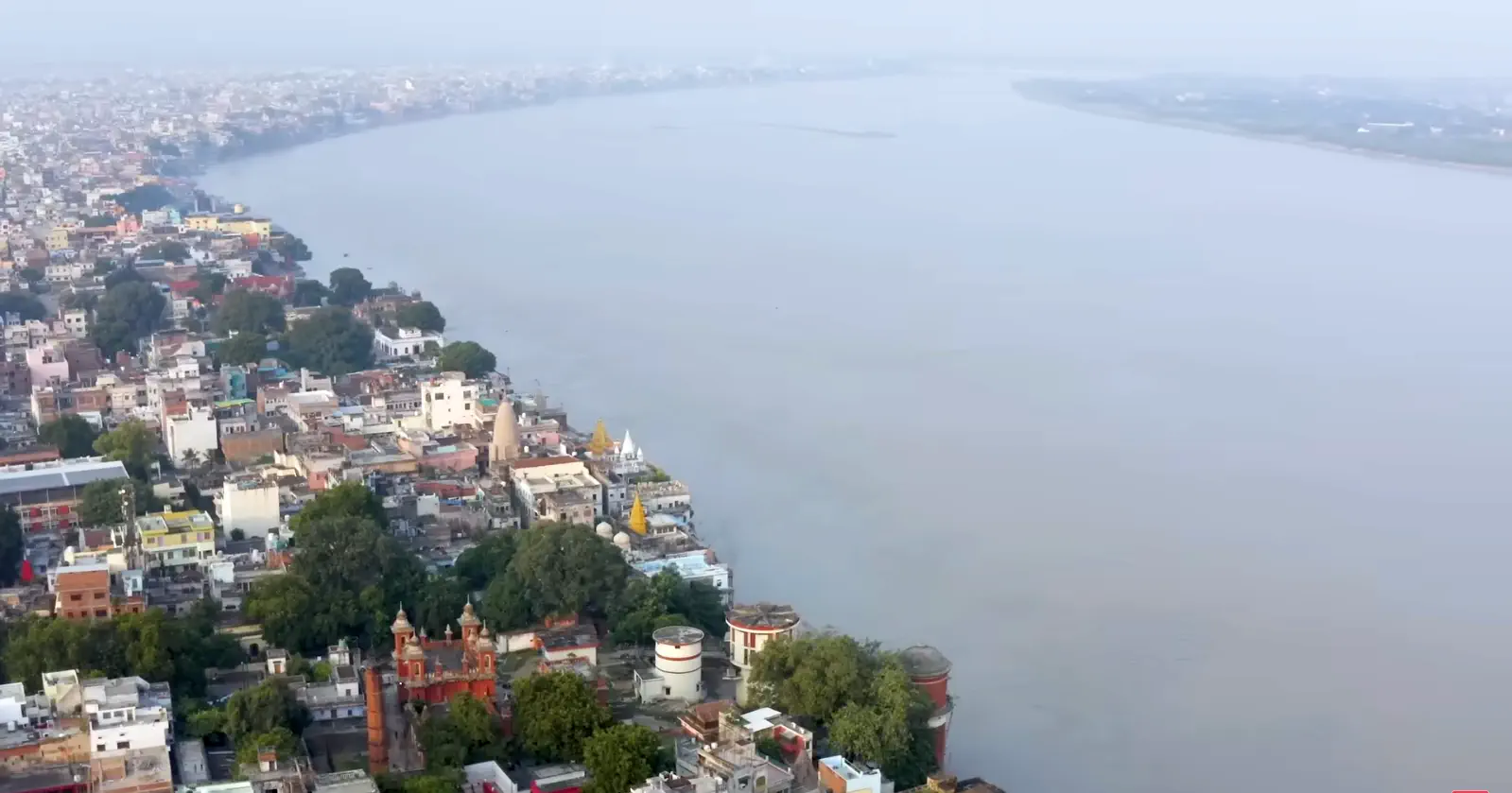
The Indian government launched the Namami Gange Programme in 2014-15 to rejuvenate the Ganga River. Initially, ₹20,000 crore was allocated for five years. The programme has been extended to March 2026 with an additional ₹22,500 crore.
Ganga: India’s Lifeline
The Ganga River basin is India’s largest, covering 27% of the land and supporting 47% of the population. Despite receiving 35.5% of total precipitation, it remains the second most water-stressed basin after Sabarmati.
Vision and Strategy
The programme aims for “Aviral Dhara” (continuous flow) and “Nirmal Dhara” (unpolluted flow). A Ganga River Basin Management Plan, developed by seven IITs, emphasizes Integrated River Basin Management.
Key Interventions
- Pollution Abatement (Nirmal Ganga): Reducing pollution sources.
- Improving Ecology and Flow (Aviral Ganga): Enhancing ecological health and flow.
- Strengthening People-River Connect (Jan Ganga): Engaging communities.
- Facilitating Research and Policy (Gyan Ganga): Promoting research and policy development
Progress Overview (As of 31 January 2025)
- Total Projects: 492 initiated, worth ₹40,121.48 crore.
- Completed Projects: 307 operational.
- Sewage Infrastructure: 206 projects with ₹33,003.63 crore sanctioned; 127 completed.
- Biodiversity & Afforestation: 56 projects with ₹905.62 crore; 39 completed.
Recent Initiatives
The 60th Executive Committee Meeting of the National Mission for Clean Ganga approved key projects:
- Varanasi, Uttar Pradesh: ₹274.31 crore for intercepting and diverting the Durga Drain and constructing a 60 MLD sewage treatment plant.
- Kolkata, West Bengal: ₹123.02 crore for constructing a 35 MLD sewage treatment plant in Garden Reach.


