









For years, India watched global boy bands dominate playlists, social media trends and fan culture. From One Direction to BTS, young Indian listeners passionately followed international pop groups, memorised lyrics, attended concerts and built online fan communities. But somewhere along the way, many Gen Z listeners quietly wondered why India did not have a homegrown boy band that truly reflected their own stories, humour, emotions and identity.
That gap now seems to be filling rapidly with the rise of Outstation.
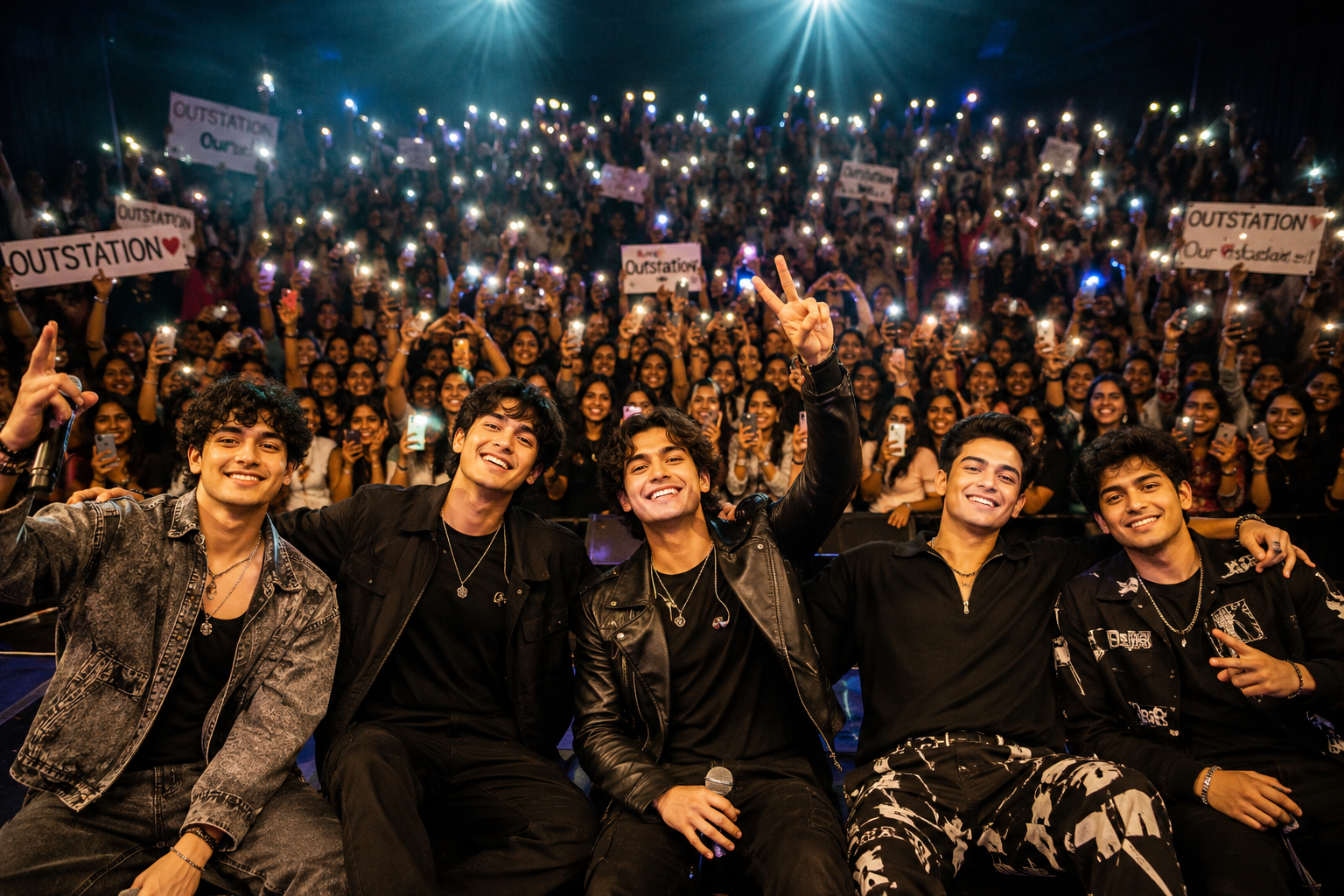
In just a short period, the five-member band has managed to create a growing fan culture among Indian Gen Z audiences. From viral reels and emotional fan edits to packed live performances and dedicated fan pages, Outstation is slowly becoming more than just another music group. For many young listeners, the band represents a fresh chapter in Indian pop culture.
One of the biggest reasons behind Outstation’s popularity is relatability. Unlike heavily manufactured pop groups that often appear distant from audiences, Outstation feels familiar to young Indians. Even the band’s name has struck a chord with fans. In India, “outstation” is a word almost everyone has heard during school days, often written in leave applications or casually used while travelling. That small cultural familiarity instantly gave the group a desi identity.
The members themselves also come across as grounded and approachable. Their social media presence is casual, playful and emotionally open rather than overly polished. Fans often describe them as “real” rather than celebrity-like. In an era where Gen Z audiences value authenticity more than perfection, this connection has become one of the band’s biggest strengths.
Music has naturally played a central role in building this fandom. Songs like “Tum Se” and “Aaj Kal” have emotionally resonated with listeners because they capture feelings that many young people relate to deeply. Themes of love, confusion, vulnerability, friendship and emotional longing are presented in a soft and modern style that feels personal rather than dramatic.
Unlike traditional Bollywood-style music marketing, Outstation’s songs spread heavily through social media culture. Short video edits, fan-made reels, aesthetic montages and emotional clips helped introduce the band to wider audiences. Many fans first discovered the group through Instagram reels or fan edits before eventually becoming active followers themselves.
Another major factor behind the band’s rapid rise is the creation of a strong fan identity. Outstation’s fandom is reportedly called “Passengers,” and that sense of belonging has helped strengthen the emotional bond between fans and the band. Modern fandom culture is no longer limited to simply listening to songs. Young audiences today want to feel part of a community. They create memes, organise fan pages, trend hashtags and emotionally invest themselves in the artists they admire.
This is something global fan cultures around K-pop and Western boy bands mastered years ago. What makes Outstation interesting is that it is adapting those global fandom dynamics to an Indian cultural setting.
Their live performances have also contributed significantly to the buzz surrounding them. The band reportedly opened for singer Akon in Mumbai, exposing them to larger audiences. Later, reports of thousands of RSVPs at live events showed that the excitement around them was moving beyond social media and turning into real-world popularity.
At a time when independent Indian pop music is undergoing a revival, Outstation’s success also reflects a larger cultural shift. Young listeners are increasingly looking for music that feels global in sound but Indian in identity. Earlier generations often turned to Bollywood for mainstream youth music, but Gen Z audiences consume music differently. Streaming platforms, social media algorithms and creator culture have completely changed how artists build popularity.
Outstation appears to understand this digital-first audience very well. Their content style, music visuals and online interactions are all designed for highly online young audiences who consume entertainment through short-form content and emotional engagement.
Another reason why the band stands out is timing. India’s entertainment industry is currently experiencing a growing demand for non-film music. Independent artists, regional musicians and internet-driven singers are receiving unprecedented attention. In this environment, a boy band with strong social media presence and emotionally accessible music naturally attracts curiosity.
However, what truly separates Outstation from many viral internet acts is emotional investment from fans. Many Gen Z listeners do not just casually enjoy the music. They actively participate in the fandom experience. Some defend the band online, create tribute videos and even attend events simply to feel part of the growing community.
For Indian Gen Z, Outstation is not just becoming a music group. It is becoming a shared cultural moment.
Whether the band eventually reaches the scale of global pop phenomena remains to be seen. But one thing is already clear: Outstation has tapped into something Indian youth culture has been waiting for. A modern pop identity that feels international in energy but deeply local in emotion.
And in today’s internet-driven world, that emotional connection is often what transforms artists into movements.


