









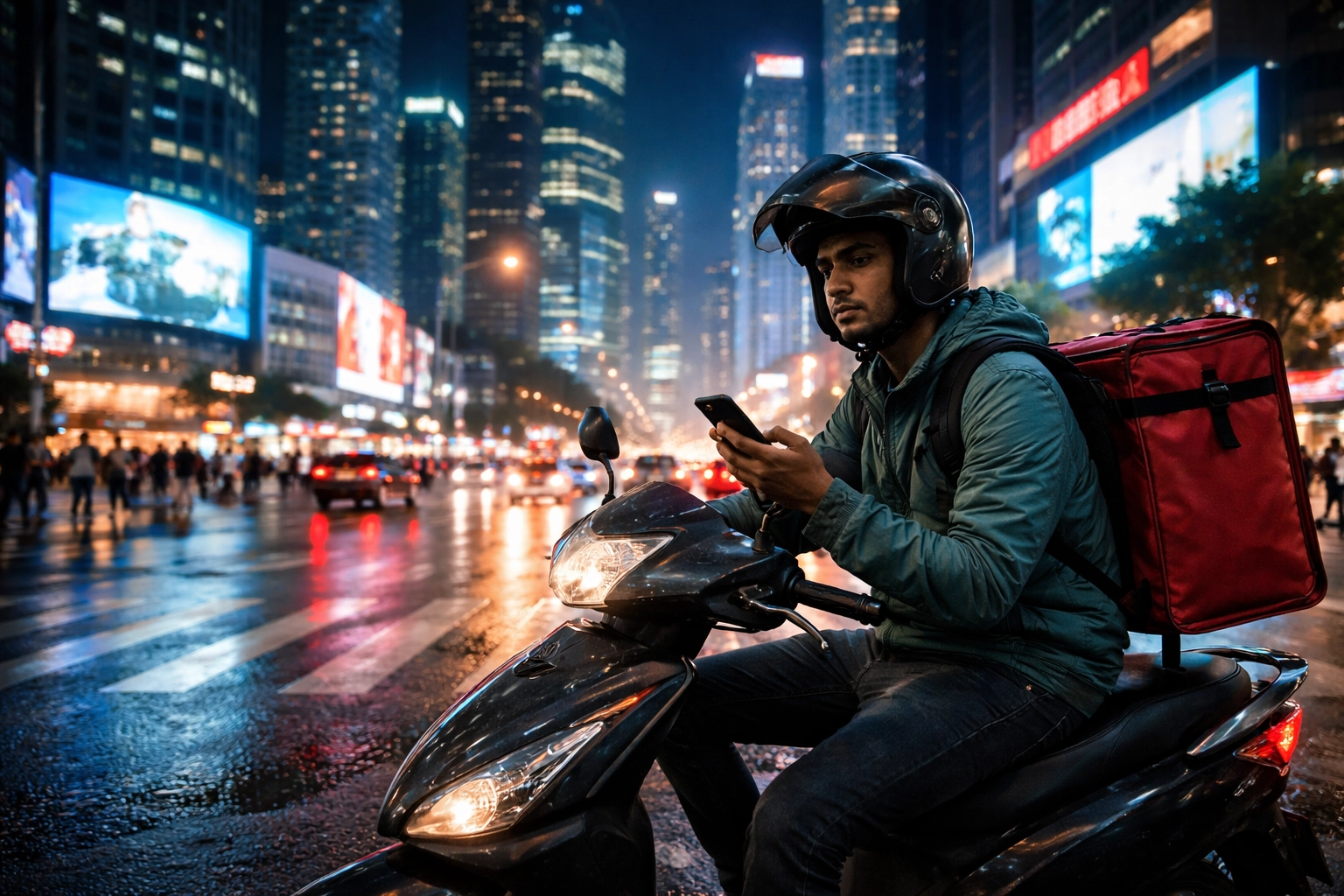
In a tier-2 Indian city, an engineering graduate begins his evening shift as a delivery rider. By day, he sends job applications. By night, he navigates traffic to deliver food ordered through an app designed in another country and funded by global investors. His income fluctuates weekly. He contributes to the economy, yet owns no asset, has no long-term contract, and little social security.
Scrolling through social media between deliveries, he sees images of luxury homes, startup success stories and international travel. He does not resent success, but he cannot see a pathway from his present reality to that world. He is not unemployed, not destitute, but suspended in a state of permanent uncertainty.
This quiet frustration is a defining feature of modern societies. It rarely makes headlines, yet it shapes political moods and social cohesion. Across continents, people who are technically employed or educated still feel economically insecure and socially marginalised.
In advanced economies, similar patterns emerge. Stable manufacturing jobs have declined in some regions, replaced by service or gig work. Housing costs in major cities have surged beyond the reach of average earners. Young adults delay milestones such as home ownership or family formation, not by choice but by constraint.
In large emerging economies, rapid growth coexists with uneven opportunity. Access to elite education or formal employment often depends on geography, networks or prior advantage. Those outside these circles may find mobility slow, even as national GDP rises.
These internal disparities weaken the social fabric. When citizens perceive that the system rewards a narrow group while leaving others to cope alone, trust in institutions erodes. Political discourse becomes sharper, sometimes angrier. Cultural differences are magnified into political divides.
Even states with strong administrative capacity are not immune. Authoritarian systems may suppress open dissent, but underlying economic and generational pressures remain. Democracies may allow debate, yet struggle to translate it into policy that bridges divides.
This internal instability influences international behaviour as well. Governments facing domestic discontent may adopt more assertive foreign policies to rally national unity, or become more inward-looking and less willing to cooperate globally. Either path complicates collective responses to shared challenges.
The lesson is clear: stability is not secured solely by borders or armies. It depends on whether citizens believe they have a fair stake in their society’s future. Where that belief weakens, fragility grows quietly, even without gunfire.
These internal fractures lead naturally to the final question: if both global and domestic systems show signs of strain, what changes might steer the world toward a more inclusive and stable path?


