



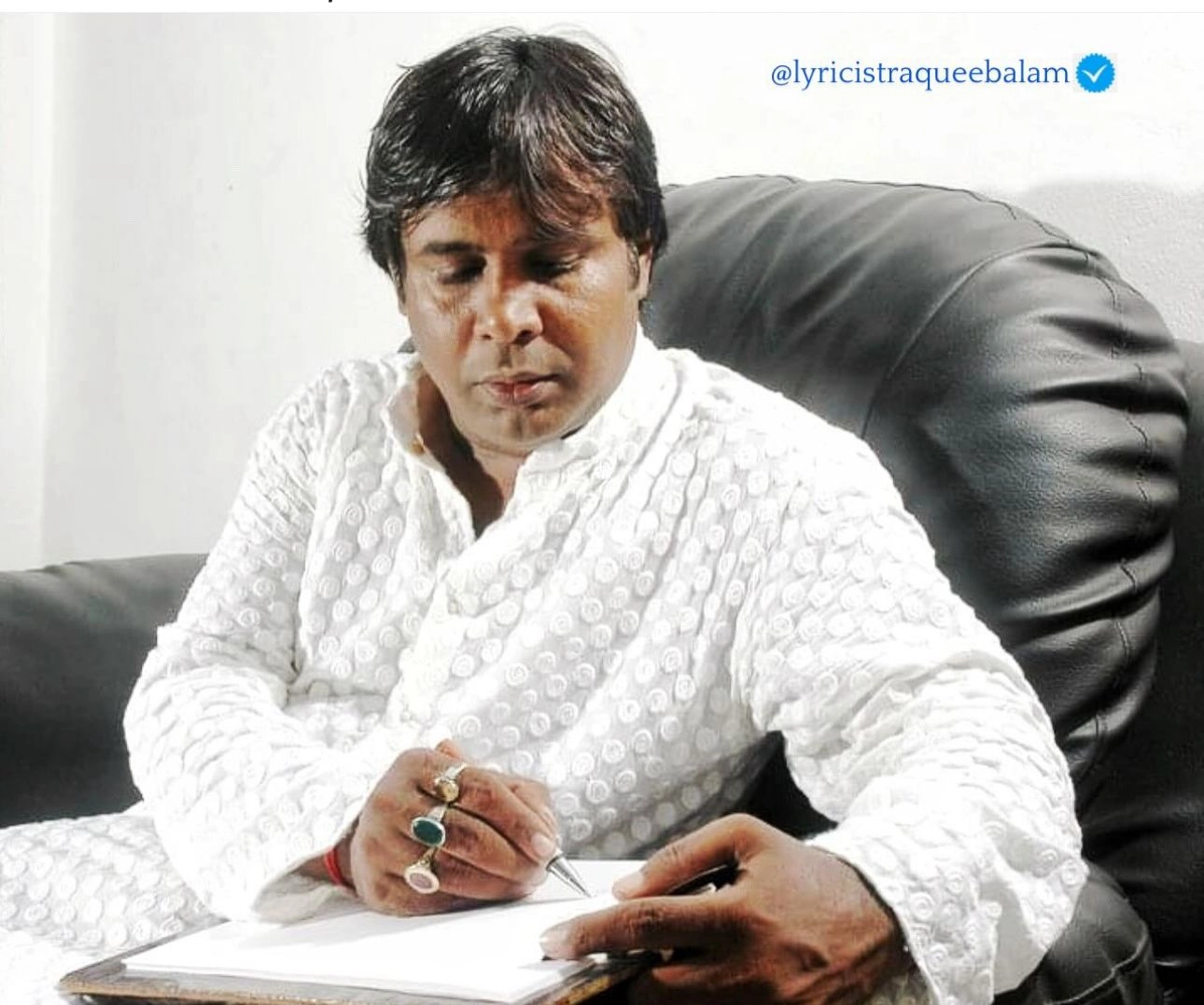
Lyricist Raqueeb Alam has issued a clarification amid the controversy surrounding the song Sarke Chunar Teri Sarke, featuring Nora Fatehi and Sanjay Dutt. The track, which recently drew sharp criticism online over its lyrics, led many social media users to target Alam, who was credited for the Hindi version. He has now stated that he did not write the original lyrics of the song.
According to Alam, Sarke Chunar Teri Sarke was originally written in Kannada by filmmaker Prem, the director of KD: The Devil. His role, he said, was limited to translating the lyrics into Hindi. While Alam has written five of the six songs for the Hindi version of the film, this particular song was not his original creation.
In an official statement shared on social media, Alam said he felt the need to clear the misunderstanding after facing sudden backlash. He said that although the song has now been taken down by director Prem following his request, he wanted to make it clear that he was only involved as a translator. He stressed that, as a lyricist, he takes pride in the words he writes and believes there must be a distinction between original writing and translation.
Alam further explained that once an artist signs a film contract, certain professional obligations follow. He revealed that he had initially refused to be part of the track after reading the Kannada lyrics. However, he was later asked to translate the song into Hindi and had to fulfil that responsibility under the terms of his contract. He also said he had warned Prem and requested him not to move ahead with the song, but the director chose to continue with it.
The lyricist also pointed to his recent work, which has earned appreciation from audiences. Among them are the World Cup track Feel The Thrill, composed by Anirudh Ramachandran, and the Women’s World Cup anthem Bring It Home, sung by Shreya Ghoshal.
Raqueeb Alam has built a strong reputation through his work across several Indian film industries. He is widely known for writing Hindi lyrics for dubbed versions of successful South Indian films, including Pushpa: The Rise Part 1 and Pushpa: The Rule Part 2. His credits also include projects such as Master, Jailer, Leo, Varisu, and Dasara.
Beyond dubbed films, his work spans Hindi, Tamil, Telugu, Kannada, and Malayalam cinema. Over the years, he has been associated with films and projects such as Slumdog Millionaire, Gangster, Maximum, and Deepa Mehta’s Water. His song credits include tracks from Raanjhanaa, 1921, Piya Tu Piya, Jiya Re Jiya, Ringa Ringa, and the Taj Anthem composed by A.R. Rahman. With this clarification, Alam has sought to separate his role as a translator from the original writing that has triggered the controversy.
