



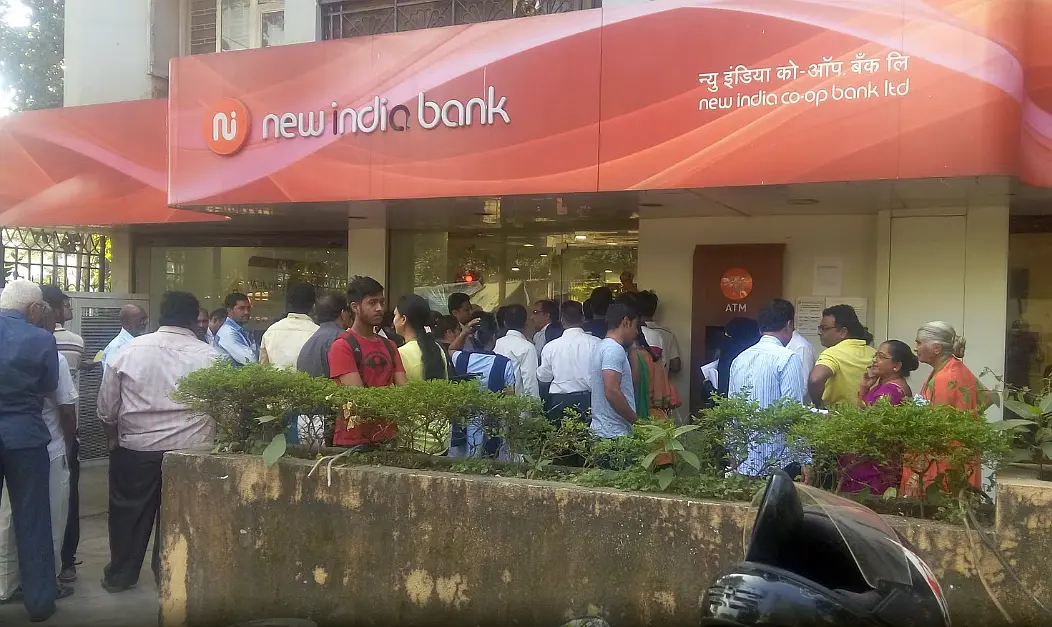
The Reserve Bank of India (RBI) has placed severe restrictions on New India Co-operative Bank Ltd, freezing fresh deposits and capping withdrawals for customers. The move comes after complaints of financial mismanagement and concerns over the bank’s ability to meet obligations, sending depositors into panic mode.

The RBI has superseded the bank’s board for 12 months, appointing an administrator to manage its operations. The regulator cited governance failures and liquidity concerns, prompting immediate intervention. Depositors can now withdraw only a limited amount, adding to worries among account holders, especially senior citizens who rely on the bank for their retirement funds.
Branches in Mumbai and Surat have witnessed chaotic scenes, with depositors demanding clarity on when they can access their money. Several senior citizens have expressed distress, stating that their entire life savings are now locked. A worried depositor outside a Mumbai branch said, “This is our hard-earned money. How can we survive if withdrawals are restricted?”
Reports suggest that missing funds and irregularities triggered the RBI’s action. While details remain scarce, sources indicate that the central bank is working to stabilise the situation and restore normal operations as soon as possible.

As per RBI norms, deposits in scheduled banks are insured up to ₹5 lakh per depositor under the Deposit Insurance and Credit Guarantee Corporation (DICGC). However, co-operative banks operate under a different framework, often leading to prolonged delays in fund recovery.
A source close to the matter said, “The RBI is working on a resolution plan, but depositors may have to wait for clarity on when normal banking services will resume.”
This crisis has reignited concerns about the governance of co-operative banks in India, many of which have struggled with poor financial management and regulatory oversight. The RBI has taken similar actions in the past, such as with PMC Bank and Rupee Co-op Bank, where depositors faced years of uncertainty before a resolution was reached.
The RBI is expected to provide a clearer roadmap for depositors and stakeholders in the coming weeks. For now, account holders are left hoping that this intervention will prevent a full-blown collapse and eventually restore their access to funds.
As the crisis unfolds, customers of other co-operative banks are also watching closely, fearing that this could be a sign of deeper troubles in the sector.
