











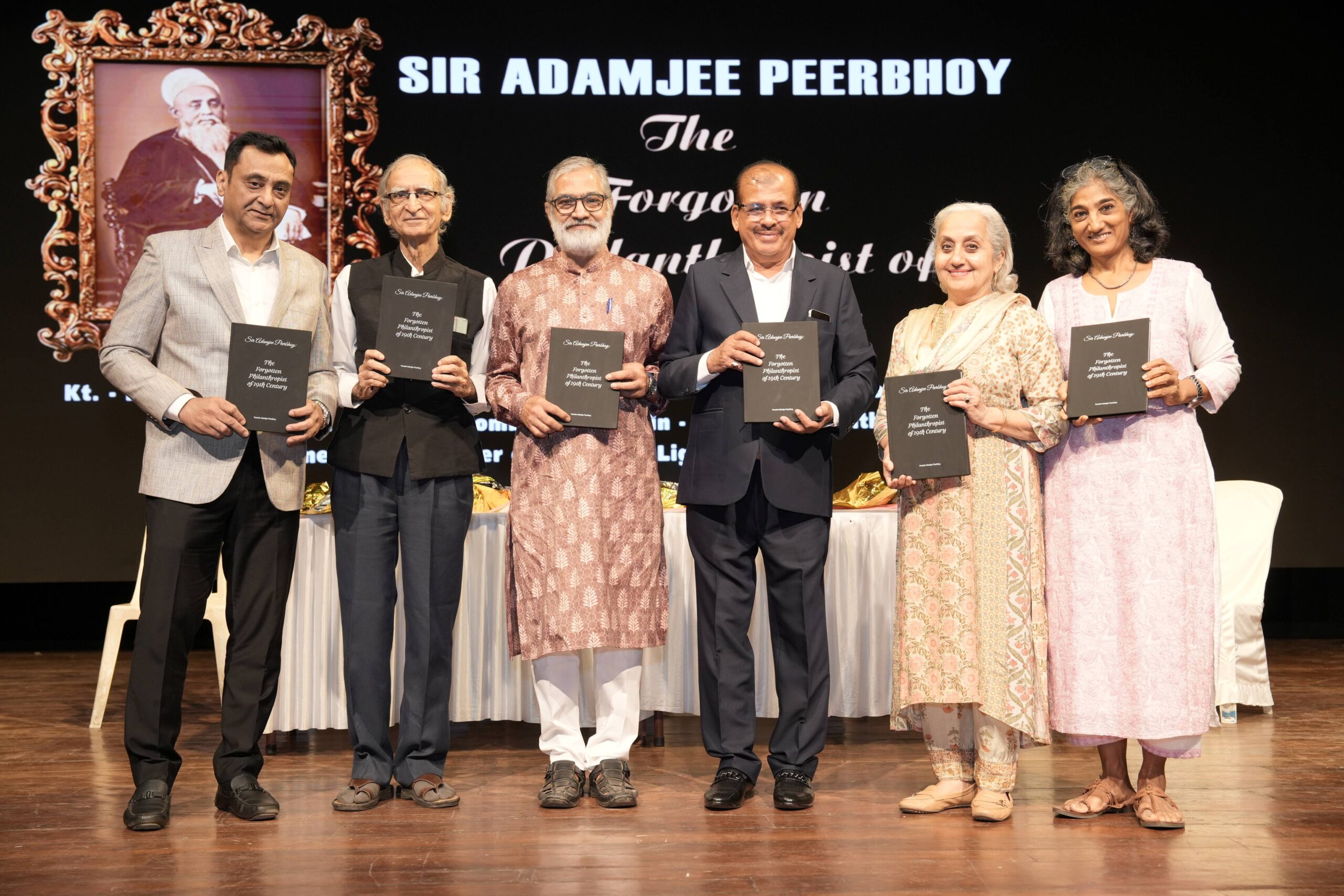
Mumbai: In a city that often overlooks its earliest visionaries, a new book is bringing back the remarkable story of one of Bombay’s most influential yet forgotten figures. Sir Adamjee Peerbhoy: The Forgotten Philanthropist of the 19th Century, authored by his great-grandson Hussain Adamjee Peerbhoy, was unveiled at St. Andrew’s Auditorium in Bandra in the presence of prominent community leaders, writers and activists.
Born in 1846 in Dhoraji, Gujarat, Sir Adamjee Peerbhoy arrived in Bombay as a teenager with just five rupees. Through determination and business acumen, he rose quickly to prominence. By his early twenties, he had established himself as a successful businessman and built the iconic Peerbhoy Palace on Malabar Hill, one of the city’s most prestigious locations.
However, it was his philanthropy that truly defined his legacy. At a time when organised charity was rare, Sir Adamjee dedicated his wealth to public welfare. He established more than two dozen schools that educated thousands of children, built hospitals and dispensaries, and supported women’s healthcare. His work extended beyond India, with contributions such as rest houses in Mecca and Medina and relief efforts in Yemen and other regions.
He also played a key role in public infrastructure. His contribution to the development of the Matheran Light Railway remains one of his most enduring achievements. In 1897, he became the first Indian Sheriff of Bombay, reflecting the immense respect he commanded. His contributions were recognised by the British Crown with a Knighthood in 1907.
Despite these achievements, his name gradually faded from public memory. The newly released multi-volume biography aims to correct that. Speaking at the launch, Hussain Adamjee Peerbhoy described the book as a fulfilment of a long-standing family effort to document and preserve this legacy.
The book combines historical research with personal archives and offers fresh insights into Sir Adamjee’s life. It also explores his association with the spiritual leaders of the Dawoodi Bohra community. A unique feature of the book is the use of QR codes that allow readers to access audio-visual content, making the narrative more engaging and accessible.
During his research, the author uncovered lesser-known aspects of Sir Adamjee’s personality, including his intention to build a veterinary hospital. Continuing his legacy, the family has established a free English-medium school near Matheran, helping students from rural backgrounds pursue professional careers.
More than just a biography, the book raises important questions about the meaning of philanthropy today. Sir Adamjee’s work stood out for its inclusivity, as he extended help without regard to caste, creed or community.
His legacy serves as a reminder of a time when generosity was driven by purpose and humility, values that remain deeply relevant in today’s world.
Subscribe Deshwale on YouTube


