








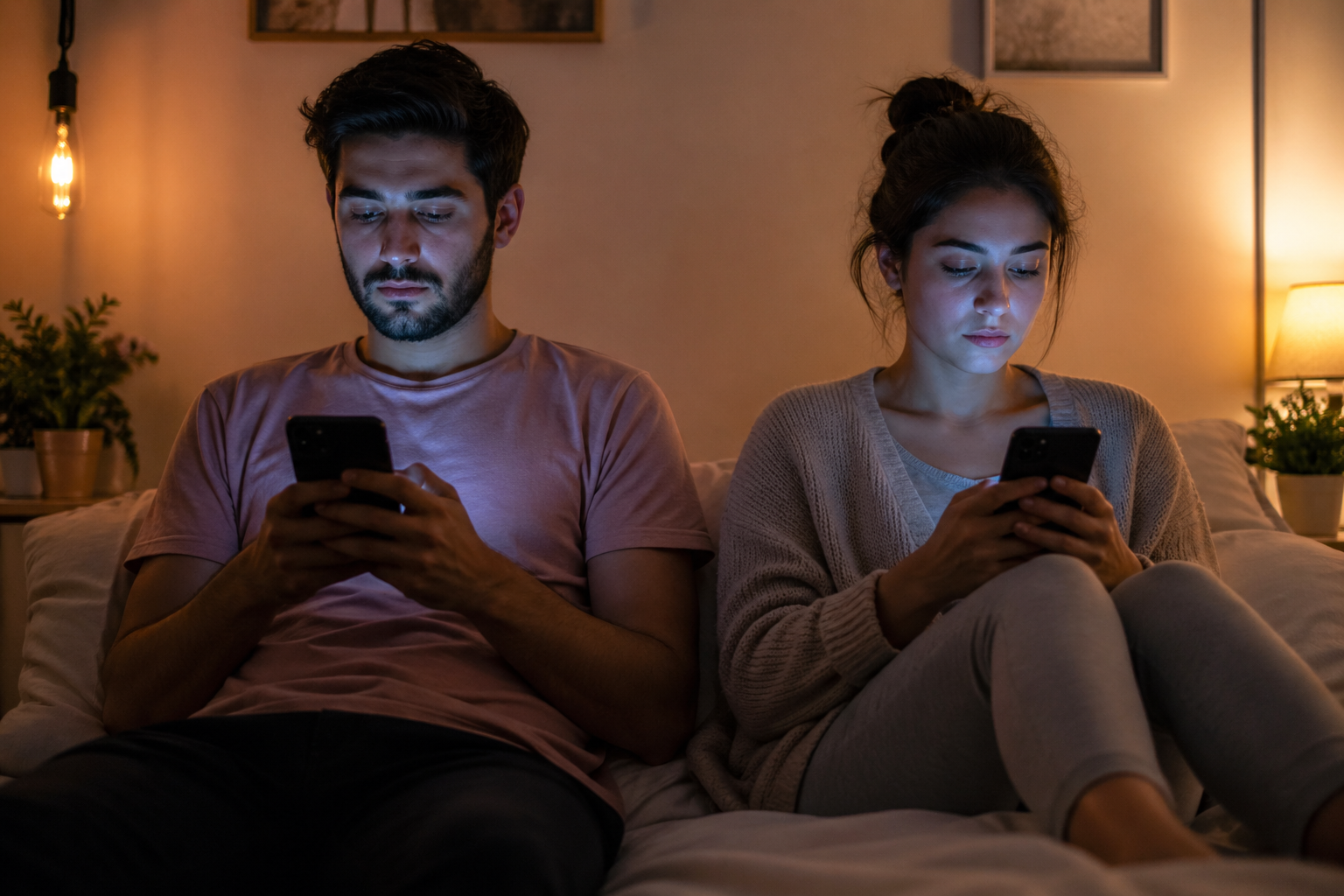
You wake up in the morning, reach for your phone, and before you’ve even said good morning to your partner, you’re already scrolling. A notification pops up. Your partner liked someone’s photo at midnight. Your stomach drops. Sound familiar? Welcome to modern love where a single tap can start a war.
Social media has changed the way we communicate, connect, and unfortunately, the way we love. What was built to bring people together is quietly tearing couples apart one notification at a time.
The numbers don’t lie
The damage is real and the data backs it up. 23% of partnered adults say they have felt jealous or unsure of their relationship because of the way their partner interacts with others on social media. Among adults aged 18 to 29, that number jumps to 34%.
It doesn’t stop at jealousy. A UK study that surveyed 2,000 married couples found that about one in four reported arguing at least once a week about a spouse’s social media use, and 17% said they fought about it daily. One in seven said they had even considered divorce because of it.
And a survey found something even more alarming — 52% of respondents have started doubting their relationships, wondering if they are “toxic,” and it’s all thanks to content they consumed on platforms like TikTok and Instagram.
These are not small numbers. These are millions of real relationships being quietly damaged.
The jealousy trap
At the heart of most social media relationship problems is jealousy. And it is not always irrational. Platforms like Instagram and Facebook give us a front-row seat to our partner’s every online move who they follow, who they like, who slides into their DMs.
Research has found that attachment anxiety is one of the strongest predictors of digital jealousy, the kind triggered by online interactions like likes, comments, and follows from others.
In simple terms if you already worry about losing your partner, social media gives your anxiety fresh fuel every single day.
The gender gap in this is also notable: 29% of women report social media-related jealousy compared to 17% of men. And among unmarried couples, 37% report social media jealousy, compared with just 17% of married people.
Comparison is the thief of joy and love
Beyond jealousy, social media sells us a fantasy version of relationships. Every couple you see online looks perfect: romantic dinners, beach holidays, loving captions. What you don’t see is the argument they had right before that photo was taken.
When we constantly compare our real, imperfect relationship to the curated highlights of others, we start feeling like something is wrong with us. We begin questioning whether our partner is enough, or whether we are enough.
Research shows that comparison content increases insecurity and dissatisfaction, and when we see partial information a like, a comment our minds fill in the blanks, creating doubt and anxiety where there may be none.
Phubbing the habit that kills connection
There is a word for when your partner is physically present but mentally lost in their phone phubbing (phone snubbing). It may seem harmless, but research says otherwise.
Studies show that people who have experienced phubbing report a reduced sense of emotional connection, empathetic concern, and interpersonal trust. Additionally, phubbing may lead to heightened jealousy between romantic partners, weaken their bond, and lower their satisfaction with the relationship.
Think about the last time you sat across from your partner at dinner while one of you was scrolling. That small moment of disconnection, repeated daily, adds up to a very large emotional distance.
When DMs become the problem
Private messaging has made emotional infidelity easier than ever. You don’t have to physically meet someone to cheat on your partner emotionally. A flirtatious DM thread can do the same damage.
In Italy, WhatsApp was cited in nearly half of all divorces more than emails, secret notes, or clandestine phone calls. The digital trail people leave behind has become the most common way partners discover infidelity today.
So, what can you do?
Social media itself is not the villain. The problem is how we use it and how much power we give it over our relationships. Here are a few simple steps that actually help:
- Create phone-free zones — no phones during meals or the first 30 minutes after waking up.
- Talk about your triggers — if something online bothers you, say it calmly instead of stewing over it.
- Audit your feed — unfollow accounts that make you feel insecure or compare your relationship to others.
- Be present — the person in front of you deserves more attention than the screen in your hand.
Love has always been complicated. But social media has added a new layer of noise, jealousy, comparison, distraction, and suspicion that previous generations simply did not have to deal with. A like is just a like. But in the wrong state of mind, it can feel like a betrayal.
The healthiest thing you can do for your relationship is to put the phone down and actually look at your partner. Real connection does not happen through a screen. It never did.
Subscribe Deshwale on YouTube


