









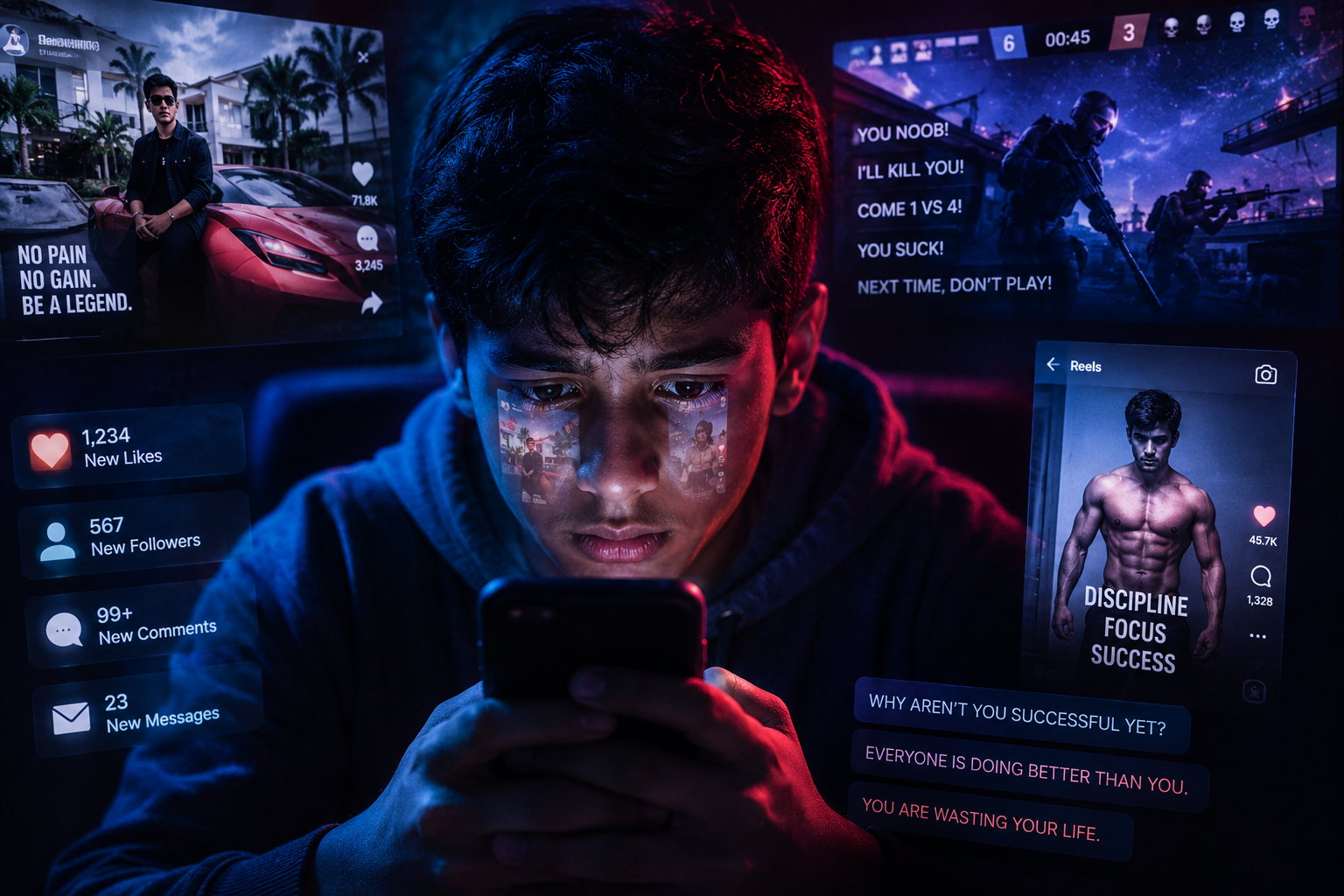
Not very long ago, teenage boys mostly learned about life from family, school, friends and the world around them. Today, much of that learning is happening through phone screens. From Instagram reels and gaming streams to podcasts and viral influencers, social media is playing a powerful role in shaping how young boys think, behave and see the world.
For many teenagers, the internet has become a guide for understanding masculinity, relationships, success and even self-worth. While social media can inspire creativity and learning, experts also warn that it is exposing boys to toxic ideas at a very young age.
One of the biggest concerns today is the rise of toxic influencers online. Many content creators build massive audiences by promoting aggressive behaviour, sexism, emotional suppression and unhealthy ideas of what it means to be a “real man.” Teenage boys, who are still emotionally developing, are often highly influenced by such content.
Videos that glorify dominance, anger and disrespect towards women frequently go viral on platforms like Instagram, YouTube and TikTok. These clips are usually packaged as confidence building advice or “male motivation,” making them appealing to insecure young audiences.
The problem is not just the content itself, but how quickly algorithms keep pushing similar videos once a teenager watches one or two clips. Within days, many boys can end up consuming hours of extreme content that slowly shapes their thinking.
Another growing issue is online misogyny. Experts across the world have raised concerns about how social media platforms are normalising disrespectful attitudes towards women. Jokes mocking consent, videos insulting girls, and content promoting controlling behaviour often receive millions of views online.
For teenage boys who may not yet fully understand healthy relationships, repeated exposure to such ideas can influence how they behave in real life. Teachers and psychologists have increasingly reported cases where boys use language or attitudes picked up directly from internet personalities and meme culture.
At the same time, social media is also creating unrealistic expectations of masculinity. Teenage boys are constantly exposed to images of muscular bodies, luxury lifestyles, expensive cars and “perfect” success stories. Influencers often present a version of manhood that appears emotionally cold, financially rich and physically flawless.
This creates pressure on young boys who are still trying to understand themselves. Many begin comparing their lives with carefully edited online content. Some feel insecure about their appearance, popularity or financial background. Others feel pressure to behave aggressively because they think sensitivity or emotional openness makes them appear weak.
The phrase “boys don’t cry” may be old, but social media has given it a modern digital version.
Gaming culture is another major influence shaping teenage boys today. Online multiplayer games have created large virtual communities where millions of young people spend hours every day. While gaming can improve teamwork, strategy and social interaction, experts also warn about rising aggression, toxic communication and online bullying within certain gaming spaces.
Many teenagers are exposed to abusive language, extreme competitiveness and hostile behaviour during gaming sessions. Some studies suggest that constant exposure to aggressive online environments may affect emotional responses and communication patterns in young users.
Social media platforms also reward extreme reactions. Angry opinions, controversial statements and dramatic content usually gain more attention than calm conversations. As a result, teenage boys may slowly begin believing that aggression equals confidence and dominance equals respect.
The culture of reels and short videos has added another layer to this issue. Fast scrolling content trains users to consume information quickly without deeper understanding. Complex subjects like relationships, mental health or gender issues are often reduced to simplistic, emotionally charged videos lasting only a few seconds.
For young minds, this can create confusion between entertainment and reality.
At the same time, experts stress that social media itself is not entirely harmful. Many boys also use online platforms for education, fitness motivation, creativity and emotional support. Positive creators discussing mental health, empathy and self improvement are gaining audiences too.
The real issue is guidance.
Many parents still avoid conversations about emotions, relationships and online behaviour. Schools often focus only on academics while ignoring emotional education and digital awareness. As a result, teenagers are left to learn about masculinity and relationships directly from the internet.
Psychologists believe open communication is the most important solution. Instead of banning phones completely, parents and teachers need to discuss what teenagers are watching online. Boys should be encouraged to question toxic content rather than blindly admire it.
Experts also emphasise the importance of teaching emotional intelligence. Boys need to understand that strength is not about suppressing emotions or disrespecting others. Confidence can exist alongside kindness, empathy and emotional maturity.
India currently has one of the world’s largest young populations, and social media will continue shaping this generation in powerful ways. The question is no longer whether the internet influences teenage boys. It clearly does.
The real question is what kind of lessons young boys are learning from it.
If families, schools and society fail to guide them properly, algorithms and influencers will continue filling that space. But if teenagers are taught empathy, critical thinking and healthy emotional behaviour early, social media can become a tool for growth rather than confusion.
The future of young boys may depend not only on what they watch online, but also on who helps them understand it.
Subscribe Deshwale on YouTube


