




Every year, thousands of young Indians leave their hometowns carrying dreams of studying, working and building a better future abroad. For many families, this journey represents years of savings, emotional sacrifice and hope. Yet the reality is that while some students and workers successfully settle overseas with proper guidance, many others become victims of misinformation, false promises and poorly understood immigration processes.
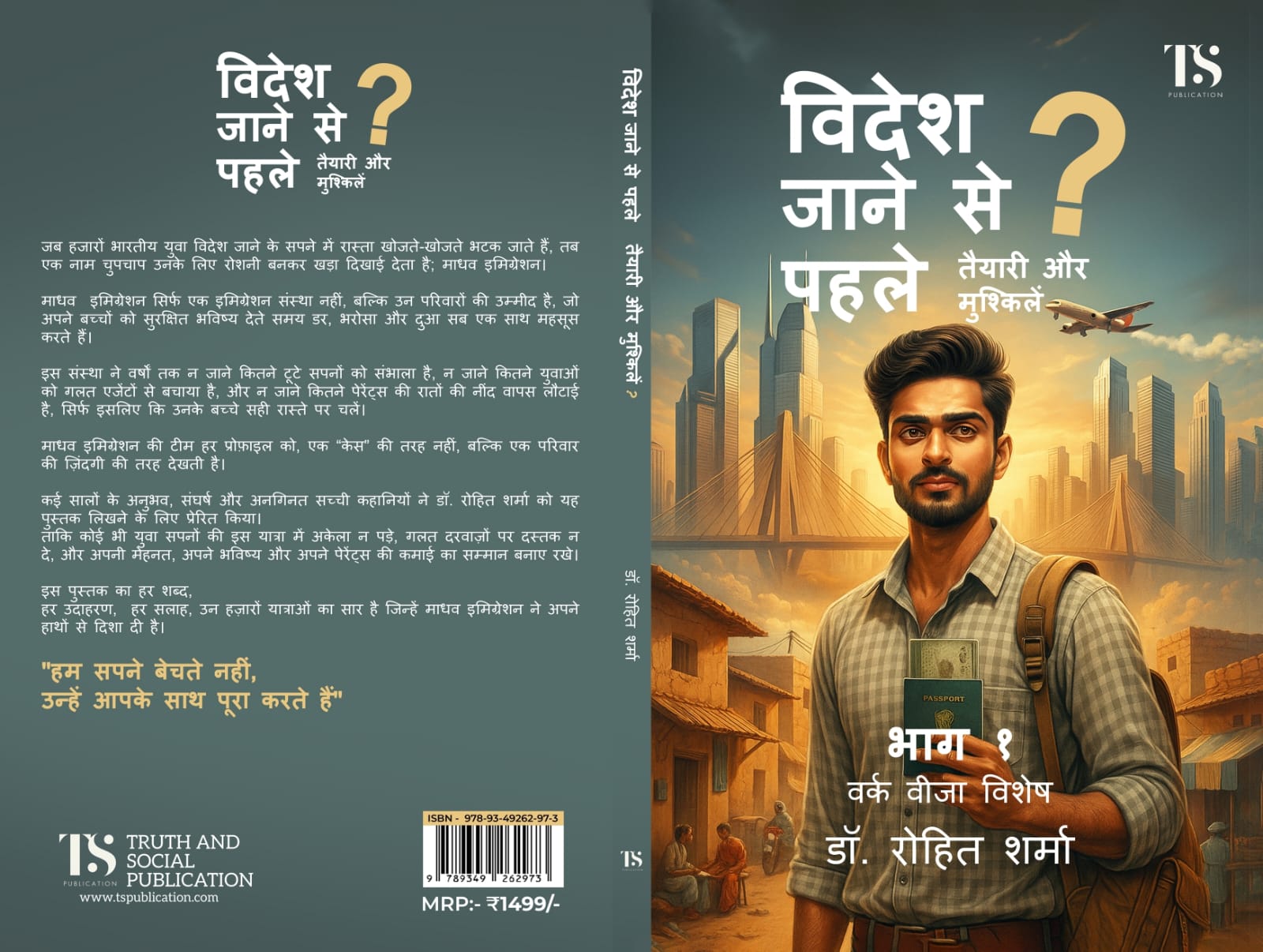
This is the space where Dr. Rohit Sharma’s book Videsh Jane Se Pehle finds its importance. Written in Hindi, the book serves as a practical guide for Indian families preparing for overseas education, work permits and migration. Instead of offering unrealistic dreams, the book focuses on helping readers understand the realities of the process before making life-changing decisions.
One of the strongest aspects of the book is its accessibility. Most detailed information about immigration, visas and overseas education is available only in English. For families living in smaller towns and Tier-2 or Tier-3 cities, this creates a major information gap. Important discussions about documentation, agents, study permits and financial planning often become confusing because people are forced to rely entirely on consultants or internet videos that may not always be trustworthy.
Videsh Jane Se Pehle attempts to simplify these conversations in a language familiar to ordinary Indian households. The writing style is straightforward, conversational and easy to understand. Rather than sounding technical or intimidating, the book reads like practical advice shared across a family dining table.
Dr. Rohit Sharma highlights an issue that has quietly affected thousands of families across India — the growing number of fraudulent or misleading immigration consultancies. While many genuine consultants exist, there are also cases where students are given false assurances about visas, jobs or settlement opportunities abroad. Families often invest their savings based on incomplete information, only to face financial and emotional stress later.
The book encourages readers to ask questions, verify information carefully and fully understand the differences between various visa categories, work permits and educational pathways. It repeatedly reminds readers that going abroad should never be treated as a rushed emotional decision.
What makes the book especially relatable is the way it recognises the emotional side of migration. The real decision-makers are often not only the students but also their parents. Families spend sleepless nights calculating expenses, worrying about safety and trying to trust people who sound confident. The book acknowledges these fears honestly instead of ignoring them.
Another important strength of Videsh Jane Se Pehle is that it does not try to glamourise migration. It presents overseas opportunities as something that requires preparation, awareness and responsibility. The message is clear: before boarding a flight, understand every step of the journey properly.
The title itself works as a warning and a guide. “Before Going Abroad” is not just a phrase but an instruction to pause, research and verify before making commitments that could shape a family’s future.
The book may not aim to be literary or dramatic, but that is precisely what makes it effective. Its purpose is practical. It seeks to educate and prepare people who often enter the immigration process without enough reliable information.
At a time when overseas education and migration continue to grow rapidly among Indian youth, Videsh Jane Se Pehle arrives as a timely and useful Hindi-language resource for families trying to make informed decisions with confidence and clarity.
Subscribe Deshwale on YouTube