










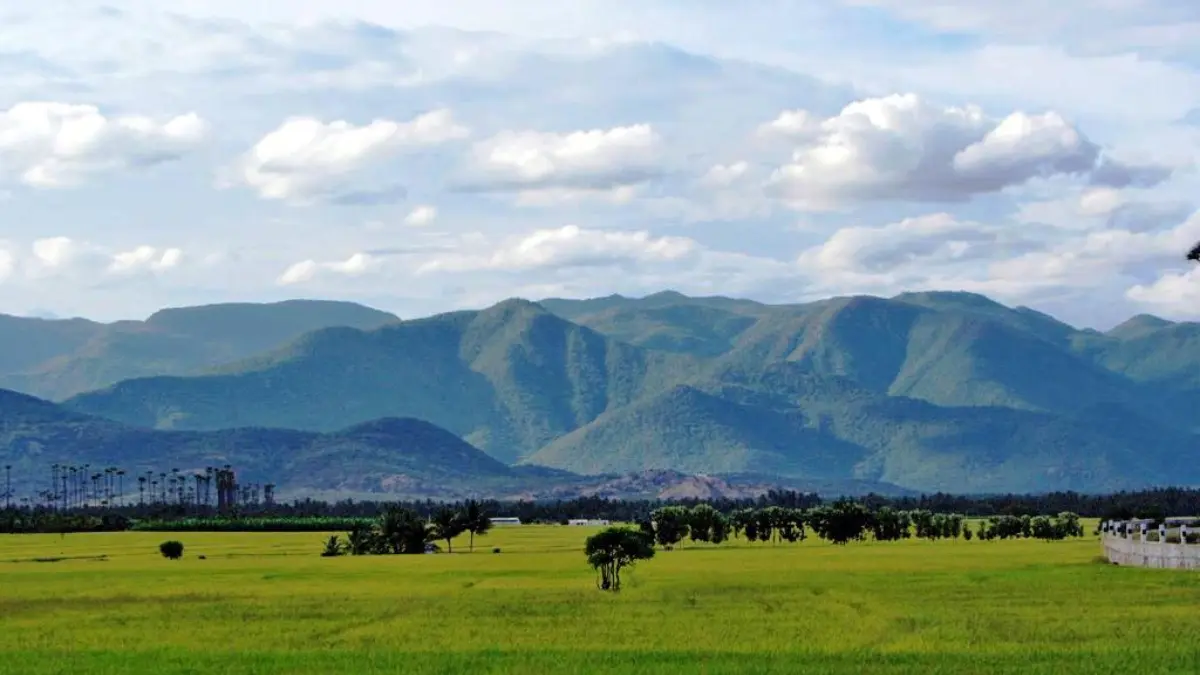
Running over 1,600 kilometres along India’s western coast, the Western Ghats are one of the oldest mountain ranges on Earth. Older than the Himalayas, these hills are packed with rare species and ancient secrets. Their natural richness is so unique that UNESCO has listed them as a World Heritage site.
Known as the “Great Escarpment of India,” the range rises sharply from the coastal plains. These steep cliffs and valleys create many microclimates where rare plants and animals thrive.
A Geological Giant
The Western Ghats began forming over 150 million years ago. This was long before India broke from Gondwana and hit Asia. Layers of basalt here come from ancient volcanic eruptions. They tell stories from Earth’s distant past.
Over time, monsoons, erosion, and tectonic activity carved the range. Now it holds cliffs, caves, and gorges across its vast landscape.
A Biodiversity Superpower
The Ghats are one of eight global biodiversity hotspots. Over 7,400 plant species grow here, with 1,600 found nowhere else. Rare animals like the lion-tailed macaque, Nilgiri tahr, and Malabar giant squirrel call this region home.
New discoveries happen often. In 2023, scientists found new species of frogs and geckos here. The mountains continue to surprise even experts.
Monsoon’s First Stop
The Ghats play a key role in India’s monsoon. They act as a wall that blocks southwest winds. These winds rise, cool, and turn into rain. This rainfall feeds key rivers like the Godavari, Krishna, and Cauvery.
The forests also help the cycle. Trees release moisture that keeps the rain going. This helps maintain India’s climate and water balance.
Ecosystems Within the Range
The Western Ghats have many habitats. Southern parts have rainforests. The Nilgiris have shola-grassland ecosystems. North Maharashtra holds dry deciduous forests.
Local communities protect sacred groves in the region. These forest patches are home to many rare plants and animals. They are preserved through age-old traditions, not official rules.
A Fragile Balance
The Ghats face growing threats. Deforestation, mining, and dams are major risks. Expanding tea, coffee, and rubber plantations make things worse. According to a 2011 report, the Ghats have lost 25% of their forest cover since 1947.
Protected zones like the Nilgiri Biosphere Reserve and Sahyadri Tiger Reserve offer some hope. Still, managing conservation with human needs is difficult.
More Than Just Hills
The Western Ghats are not just scenic mountains. They are vital to India’s biodiversity, rivers, and cultural life. Preserving them is not optional. It is essential for the survival of millions who depend on their rivers, forests, and rains.


