




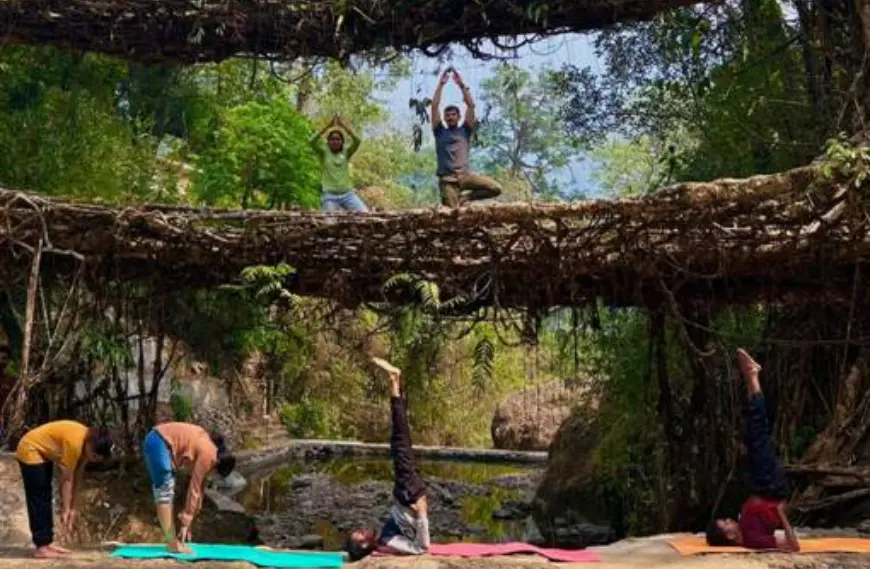
Meghalaya’s Double Decker Living Root Bridge recently became the centre of a unique yoga event, bringing together wellness and cultural heritage. Organised by the North Eastern Institute of Ayurveda and Homoeopathy (NEIAH), this session marked the countdown to International Day of Yoga (IDY) 2025.
Against the breathtaking backdrop of misty hills, cascading waterfalls, and lush greenery, participants immersed themselves in yoga practice, embracing the harmony between nature and human resilience. The Living Root Bridge, an architectural marvel created from the aerial roots of rubber fig trees by generations of Khasi artisans, symbolises strength, flexibility, and balance—qualities deeply connected to yoga.
Since the United Nations recognised 21 June as International Day of Yoga in 2014, India has hosted yoga sessions at iconic locations like the Taj Mahal, Red Fort, and Mysore Palace. This year, Meghalaya’s Living Root Bridge joins the list, reinforcing the country’s commitment to blending traditional wellness practices with cultural heritage.
As IDY 2025 approaches, such events highlight not just the physical and mental benefits of yoga, but also India’s rich natural and cultural legacy. They emphasise how yoga transcends conventional spaces, fostering a deeper connection with the environment and promoting mindful living.