



By: Hiren Gandhi
The annual World Economic Forum (WEF) in Davos, Switzerland, has once again brought together global leaders, policymakers, and business visionaries to discuss the state of the world economy. While the forum does not pass laws or sign treaties, its discussions carry significant influence over markets, policy decisions, and international investment trends.
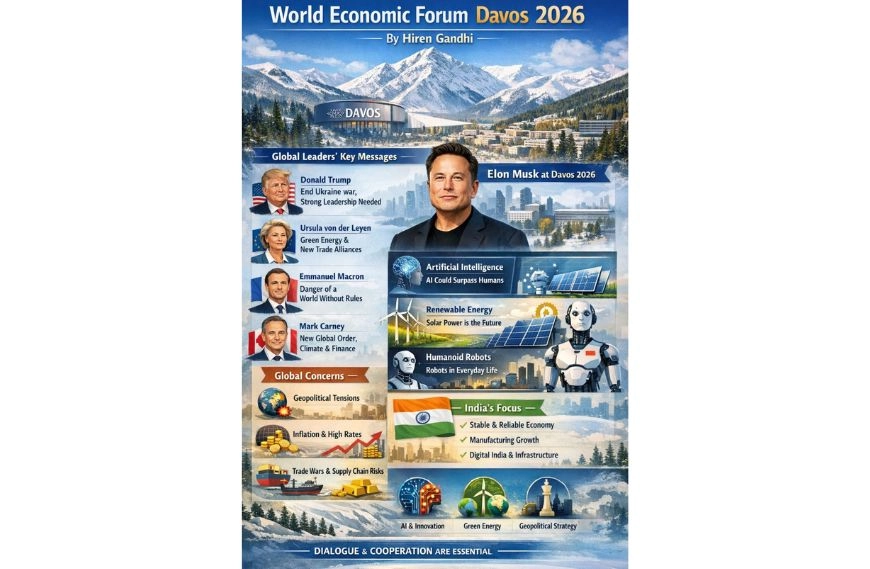
This year, Davos 2026 conveyed a clear message: the world remains unstable, and dialogue and cooperation are essential to navigate global challenges.
Global Leaders Stress Urgent Issues
US President Donald Trump highlighted rising global instability and emphasised the need for strong leadership. He reiterated that the Russia–Ukraine conflict must be resolved and reaffirmed his stance of prioritising national interest over international agreements. He also signalled increased pressure on Europe regarding trade and security matters.
Ursula von der Leyen, President of the European Commission, stressed Europe’s need to develop new trade partnerships and highlighted green energy and the digital economy as central to the continent’s future. She cautioned that supply chain resilience and security remain major challenges.
French President Emmanuel Macron warned that global governance is advancing without adequate rules, potentially posing long-term risks. He called for preserving the multilateral system and identified war and protectionism as key threats to the global economy.
Mark Carney, Canada’s former central banker and global financial leader, urged middle-power nations to collaborate in shaping a new international economic order. He highlighted the interconnectedness of finance, climate stability, and economic resilience, stating that trust is as vital to global markets as capital itself.
Elon Musk Captures Spotlight
Perhaps the most discussed address of Davos 2026 came from Elon Musk, making his first-ever appearance at the forum. Musk warned that Artificial Intelligence (AI) could soon surpass human intelligence, reshaping jobs, education, and society. He stressed the importance of AI regulation while cautioning against stifling innovation.
Musk also highlighted renewable energy, suggesting that solar power could become the world’s dominant energy source if policy barriers are removed. He further predicted that humanoid robots will soon be integral to daily life, transforming manufacturing, logistics, and service industries while necessitating continuous skill upgrades for humans.
Key Global Concerns
Delegates at Davos discussed ongoing geopolitical tensions, rising inflation, the possibility of prolonged high interest rates, and the growing appeal of safe-haven investments like gold. Trade wars and fragile supply chains were identified as critical risks to global stability.
India’s Growing Global Role
India was widely recognised as a stable and reliable economy, with international confidence in its manufacturing sector, Digital India initiatives, and infrastructure development. The country is gradually emerging as a strategic alternative in global supply chains, a key takeaway for investors and policymakers alike.
Davos 2026 reinforced that global instability demands dialogue, cooperation, and strategic foresight. Technology, particularly AI, and green energy are set to define the future, while political tensions continue to directly influence economic stability. Though Davos does not make binding decisions, it decisively shapes the world’s vision of the economic and strategic path forward.
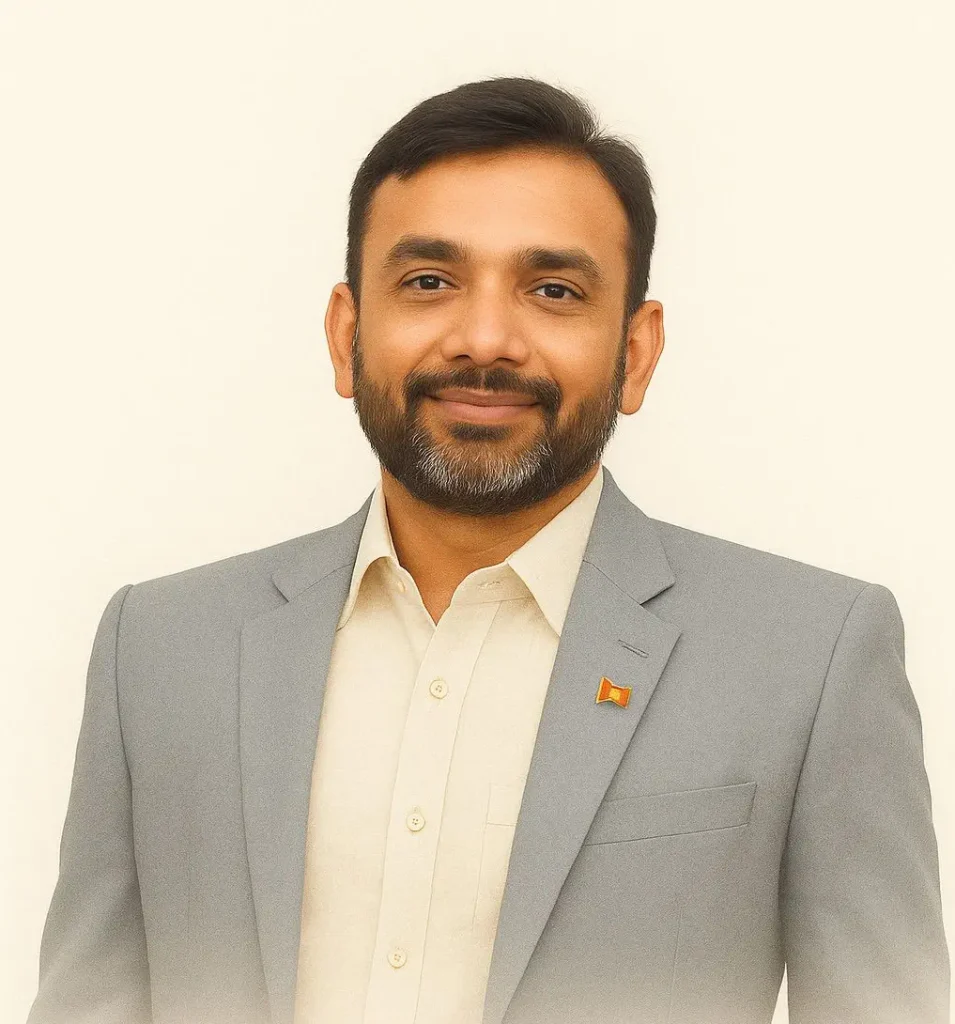
Secretary — InGlobal Business Foundation (IBF)
Director — ReNis Agro International LLP, Ahmedabad, India
Subscribe Deshwale on YouTube
