



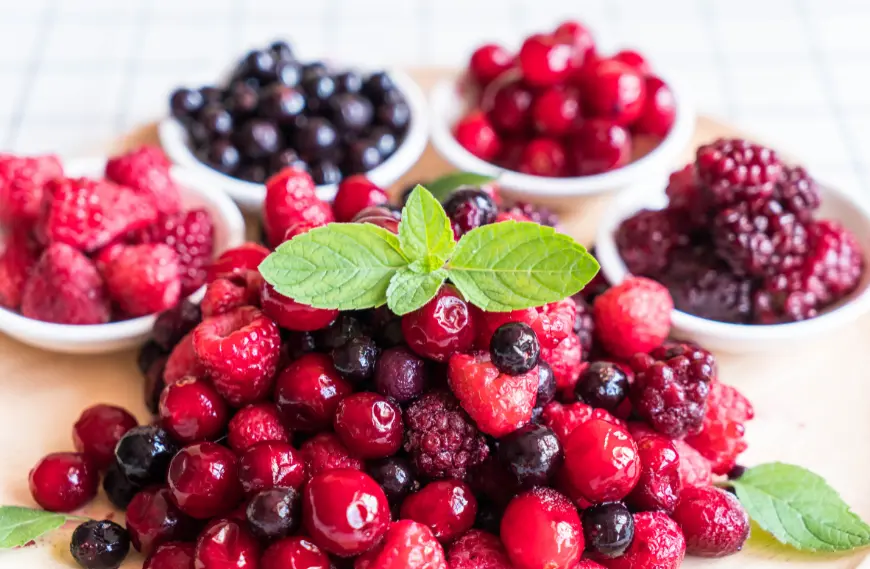
Berries like blueberries and strawberries are nutrition powerhouses. According to a 2024 Harvard Health study, they are packed with antioxidants, vitamins, and fibre. Just one cup of blueberries provides 24 percent of daily vitamin C, 36 percent of vitamin K, and 4 grams of fibre. This supports immunity, bone strength, and digestion, all with just 80 calories, as per USDA data. The anthocyanins in berries are strong antioxidants that reduce inflammation and cut heart disease risk by 15 percent, according to a 2023 Journal of Nutrition meta-analysis.
Eating about 150 grams of berries daily may lower bad cholesterol (LDL) by 10 percent and delay memory decline by up to 2.5 years, as shown in a 2021 Alzheimer’s Research study involving 2,000 people. Berries are also deeply rooted in local traditions. In Scandinavia, wild lingonberries are common, while in India, amla berries, rich in vitamin C, feature in traditional cooking, according to a 2022 AYUSH report. However, amla’s sour taste limits its popularity in modern dishes. Berries’ polyphenols help fight oxidative stress and may lower cancer risk by 12 percent, per a 2020 Oncology Letters study.
Berries have a low glycaemic index, helping regulate blood sugar, a major benefit for over 460 million diabetics worldwide, according to 2024 IDF data. But there are challenges too. In urban markets, berries can cost up to 5 dollars per pint. A 2023 EWG report found that 70 percent of US-grown berries had pesticide residues, although organic varieties reduce this risk. Berries also demand significant water, about 800 litres for 1 kg, raising environmental concerns, says a 2021 WWF study. To counter this, California farmers are turning to more sustainable berry-growing practices.
Culturally, berries are loved worldwide, from British summer puddings to the 80 percent of US homes using them in smoothies. However, cost is a barrier. In 2024, social media posts highlighted that 60 percent of low-income families still find them unaffordable. In rural parts of Africa and Asia, the lack of cold storage means 20 percent of berry harvests spoil before reaching markets, per FAO data. Still, including berries in daily meals like salads or yogurt offers a simple, science-backed way to support heart, brain, and overall health.
