










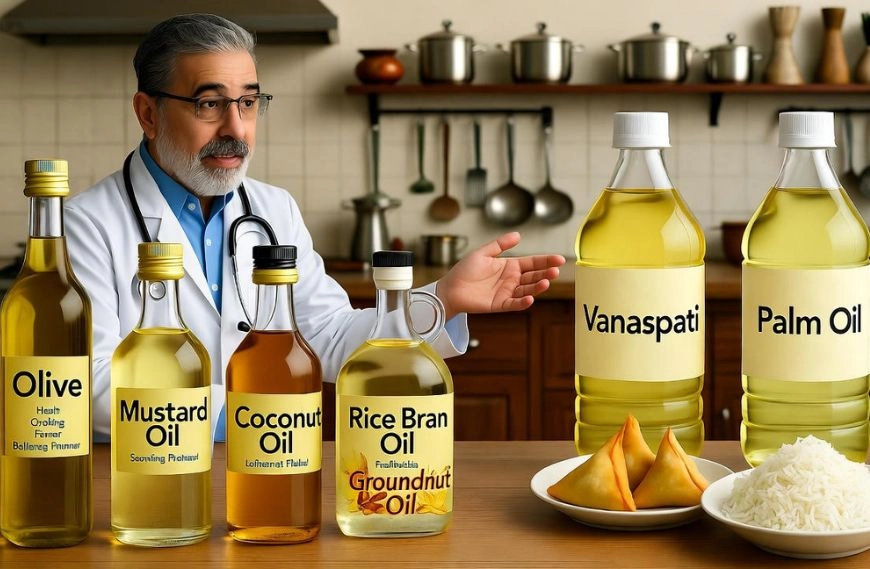
Cooking oil is something we often take for granted. It’s there in almost every dish we make from the crispy samosa on a rainy evening to the morning poha and parathas. But what if this everyday ingredient could be quietly affecting your heart health? According to doctors, the oil you choose can either protect your heart or slowly damage it.
The truth about the oil in your kitchen
In most Indian homes, one type of oil is used for everything: frying, roasting, sautéing, even baking. But cardiologists warn that not all oils are the same. Some contain healthy fats that help your body, while others are packed with harmful compounds that increase the risk of heart disease, cholesterol, and inflammation.
Dr. Palaniappan Manickam, a well-known cardiologist, points out that the problem isn’t just the quantity of oil people use, but also the type. Many people believe that “refined” means healthy, but that’s not true. During refining, most natural nutrients are lost, and chemicals are often added to make the oil look clear and last longer. Over time, these oils can harm your heart.
The science behind ‘good’ and ‘Bad’ Fats
Not all fats are bad. In fact, your body needs some fat to absorb vitamins, build cells, and keep your energy steady. The key lies in the type of fat.
- Monounsaturated fats (MUFA) and polyunsaturated fats (PUFA) are considered good fats because they lower LDL (‘bad cholesterol’) and increase HDL (‘good cholesterol’).
- Saturated fats and trans fats, on the other hand, raise cholesterol and block arteries. These fats are often found in processed or repeatedly heated oils.
So, the next time you buy oil, it’s not just about taste it’s about your heart’s long-term health.
The oils that love your heart
1. Olive oil – The gold standard of heart health
Extra virgin olive oil, especially in Mediterranean diets, is known to reduce the risk of heart disease. It’s rich in antioxidants and anti-inflammatory compounds. While it’s great for salads, dips, and light sautéing, it’s not ideal for deep frying due to its low smoking point.
2. Mustard oil – India’s traditional super oil
Mustard oil has been used in Indian kitchens for centuries. It contains omega-3 fatty acids that help reduce inflammation and keep the heart strong. It also gives Indian food a distinct, earthy flavour. The only thing to remember is to use pure cold-pressed mustard oil for best results.
3. Groundnut oil – Perfect for everyday cooking
Groundnut (peanut) oil is another heart-friendly choice. It’s rich in MUFA and stable at high temperatures, making it perfect for frying pakoras, puris, or dosas. It also has a mild taste that doesn’t overpower dishes.
4. Rice bran oil – The balanced all-rounder
Rice bran oil is becoming increasingly popular in urban homes. It contains oryzanol, a compound that helps reduce cholesterol absorption and promotes fat metabolism. It’s light, versatile, and blends easily with other oils.
5. Coconut oil – Use with caution
Coconut oil has its share of fans and critics. It’s high in saturated fat, but small amounts, especially virgin coconut oil, can be beneficial. South Indian diets have traditionally used coconut oil without negative effects but moderation is key.
The oils that don’t love your heart
1. Vanaspati or hydrogenated oil – The silent killer
Vanaspati is commonly used in street food, sweets, and packaged snacks. It’s full of trans fats, which are extremely harmful. They increase bad cholesterol, reduce good cholesterol, and block blood vessels, leading to heart attacks and strokes.
2. Palm oil – Cheap but costly for health
Palm oil is widely used in fast food and processed items because it’s cheap and lasts long. But it contains high levels of saturated fats that harm the heart if consumed regularly.
3. Reused cooking oil – A common but dangerous habit
Many households and restaurants reuse leftover oil after frying to “avoid waste.” However, reheating oil breaks down its healthy compounds and produces harmful toxins. These toxins can lead to inflammation, high blood pressure, and even cancer over time. Experts recommend using oil only once for frying and then discarding it safely.
Doctors say the best approach isn’t to stick to just one oil but to rotate between healthy options. For instance, you can use mustard oil for curries, rice bran oil for frying, and olive oil for salads or pasta. This way, your body gets a mix of nutrients and healthy fats.
Cardiologists also suggest cutting down on the overall amount of oil. Even good oils can become harmful when consumed in excess. Instead of deep-frying, try air-frying, grilling, or steaming. These methods not only reduce oil usage but also preserve more nutrients.
A heart-healthy lifestyle is about more than just oil. Regular exercise, stress management, and a diet rich in fruits, vegetables, whole grains, and lean proteins play a huge role. Including natural sources of good fats such as almonds, walnuts, flaxseeds, and avocados also supports heart function.
Doctors also emphasise the importance of regular health check-ups to monitor cholesterol and blood pressure. Small lifestyle choices, like choosing the right oil and staying active, can prevent long-term heart issues.
Your kitchen oil may seem like a small thing, but it plays a big part in your health journey. Oils rich in good fats like olive, mustard, and groundnut help protect your heart. But processed, hydrogenated, or reheated oils can silently damage it.
At the end of the day, the rule is simple: choose wisely, use less, and mix it up. A few drops of the right oil can keep your food delicious and your heart strong for years to come.


