










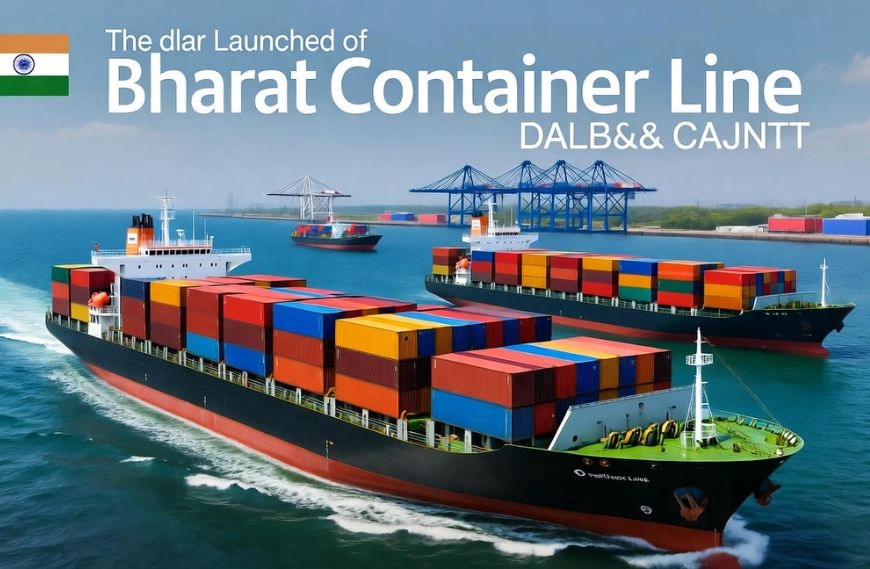
India has taken a big step towards shipping independence with the launch of Bharat Container Line (BCL) , the country’s first state-owned shipping company dedicated to container operations. This marks a new chapter in India’s maritime trade, where the focus shifts from relying on foreign shipping giants to strengthening domestic control over sea logistics.
A step towards self-reliance
For many decades, India’s exports and imports have depended heavily on foreign container shipping lines. This meant most of the profits, freight charges, and logistics decisions rested with international companies. With Bharat Container Line, India aims to keep this economic activity within the country, ensuring that Indian ports and Indian workers benefit directly from India’s own trade.
The launch also supports the Atmanirbhar Bharat (self-reliant India) vision, reducing the country’s dependence on global shipping players and giving Indian exporters and importers a local, reliable alternative.
Making India a Global Trade Hub
Bharat Container Line has been launched to boost India’s maritime capacity and improve its global competitiveness. It will help manage container movement between Indian and foreign ports more efficiently. By controlling more of its own shipping routes, India can also offer faster, cheaper, and more secure cargo movement for its businesses.
The company will operate under India Ports Global Limited (IPGL), a government-owned entity that already manages international port projects. This ensures that the new company is guided by experienced hands and can grow quickly to compete in the global shipping market.
Empowering Indian exporters and importers
One of the biggest benefits of this move will be felt by exporters and importers. Many small and medium enterprises (SMEs) often face high shipping costs and dependency on foreign carriers that dictate freight rates. Bharat Container Line will give them more flexibility and better pricing options, making Indian products more competitive abroad.
This will also reduce the impact of global freight disruptions, such as those seen during the COVID-19 pandemic when shipping rates skyrocketed due to container shortages and route delays.
Creating jobs and building skills
The new shipping line will also open opportunities for Indian seafarers, port workers, and logistics professionals. From operations and maintenance to crew management and technical services, Bharat Container Line is expected to create employment in both coastal and inland logistics sectors.
It will also boost the demand for training and skill development in the maritime industry, encouraging young Indians to take up careers in shipping and trade.
Strengthening India’s blue economy
India has over 7,500 kilometres of coastline and a strategic location along major global trade routes. Yet, its share in the global shipping industry has remained small. The creation of Bharat Container Line is a strategic move to change that by giving India its own presence in the global container trade.
This development is also part of a larger ‘Blue Economy’ vision using ocean resources sustainably for economic growth, jobs, and environmental protection. With a domestic shipping line, India can expand trade while ensuring long-term benefits for its economy and coastal communities.
Boost for Indian ports
The move will strengthen major ports such as Mumbai, Jawaharlal Nehru Port (JNPT), Kandla, and Cochin, as Bharat Container Line begins operations from these key hubs. It will encourage greater cargo handling at Indian ports, improve efficiency, and attract more trade partnerships.
Over time, India may also use BCL to expand its presence in regions such as the Middle East, Africa, and Southeast Asia building stronger trade corridors directly managed by Indian operators.
A strategic step for national security
Beyond economic benefits, Bharat Container Line also has a strategic security aspect. By reducing dependence on foreign carriers for sensitive or essential shipments, India gains better control over its maritime logistics during times of crisis or geopolitical tension.
This self-sufficiency ensures that India’s trade and supply chains remain resilient, even if global routes or foreign carriers face disruptions.
With the Bharat Container Line, India has entered a new era of maritime independence. It reflects a broader national push to build domestic capacity, retain economic value, and strengthen global presence under the Indian flag.
The success of this initiative will depend on how quickly BCL can scale up, build partnerships with exporters, and compete with global players. But one thing is clear India’s shipping story will now be written more firmly in Indian waters.
Subscribe Deshwale on YouTube


