



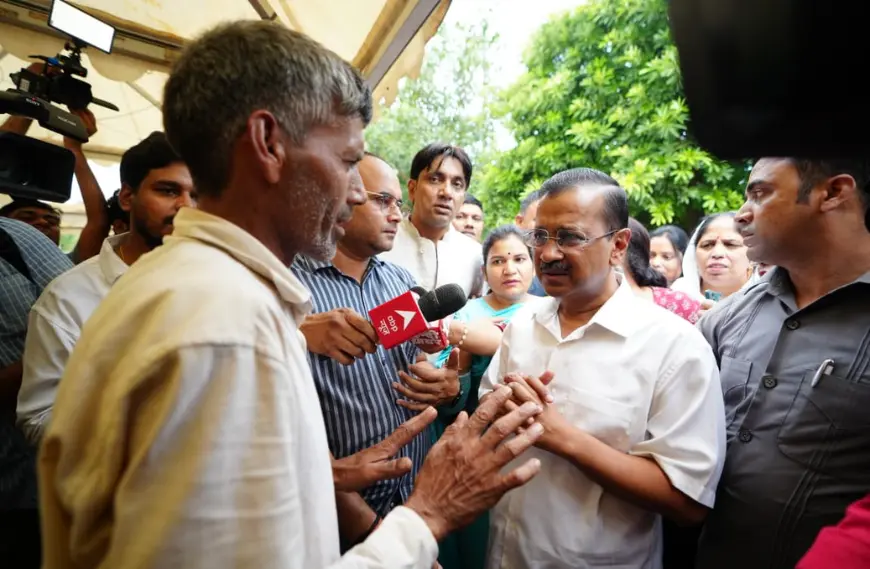
Delhi is grappling with severe flooding caused by continuous heavy rains, leading to widespread waterlogging and displacement of residents. The situation has left many families without adequate access to basic necessities such as food, clean water, and shelter.
Arvind Kejriwal, the Chief Minister of Delhi, visited a flood relief camp in Shastri Park, located in northeast Delhi’s Trans-Yamuna area, to assess the conditions firsthand. During his visit, Kejriwal observed that displaced individuals were facing significant hardships, including delayed food distribution, insufficient water supply, and inadequate shelter. He attributed these challenges to the government’s failure to conduct timely desilting of drains, which exacerbated waterlogging in several areas.
Kejriwal emphasized the urgency of providing prompt relief to those affected, stating that many residents had been forced to spend nights without proper shelter during the ongoing rains. He called upon both the Delhi government and the central authorities to expedite the delivery of essential aid to the flood-hit populations.
In his appeal, Kejriwal drew a parallel between the assistance provided to earthquake-stricken Afghanistan and the need for timely support for flood-affected areas within India. He questioned why relief materials were sent to foreign nations promptly, while residents in Delhi and other northern states were still awaiting aid.
The Chief Minister also highlighted that many individuals in the affected areas had resorted to establishing informal economies within the relief camps. For instance, families were selling salvaged goods and essential items to sustain themselves amidst the uncertainty. At Khel Gaon, a teenager named Arun, along with his siblings, was selling rescued potted plants to support his family. Other individuals, like former hawker Ratanlal Khevat, were selling necessities such as shampoo sachets to fellow evacuees, while ragpickers and flood-hit farmers were trading salvaged or damaged goods like bottles, chairs, and vegetables at reduced prices.
In response to the crisis, Delhi Chief Minister Rekha Gupta announced that her government was actively managing the flood situation and providing continuous relief to affected residents. Teams were delivering essential aid, including food, water, medical services, toilet facilities, and fodder for livestock. People were being relocated to relief camps where needed, and efforts were underway to evaluate crop damage and arrange compensation.
The recent floods in Delhi underscore the importance of effective urban disaster management and timely response to natural calamities. Kejriwal’s visit and subsequent appeal highlight the need for coordinated efforts between local and central authorities to ensure that relief reaches those in need without further delays.
